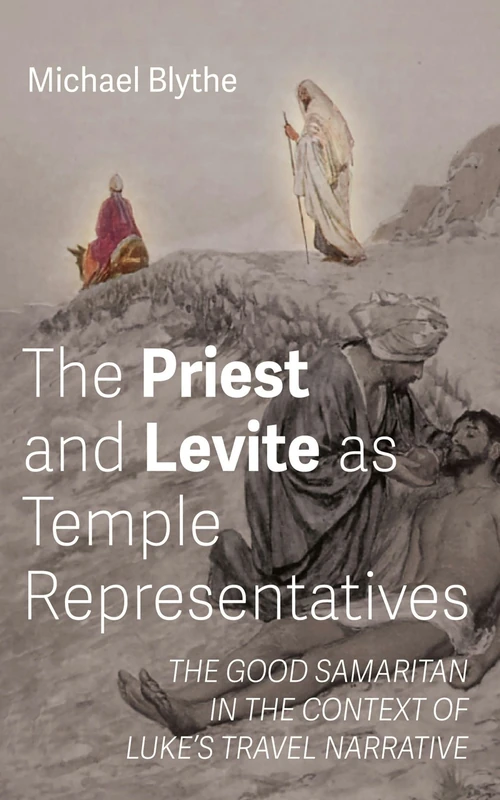
The Priest and Levite as Temple Representatives
The Good Samaritan in the Context of Luke’s Travel Narrative
- Biblical Studies & Commentaries
- Publisher: Wipf and Stock
- Published: 2023
FritzSearch.com earns a commission on purchases made through Bookshop.org links.
Publisher's Description
The parable of the good Samaritan is well-known, yet scholarship has not plumbed the depths of its meaning within its first-century Palestinian context. For the majority of Christian history, the parable has suffered either from extreme allegorical treatments or from unimaginative readings limiting the parable to a single-point example story of virtue. A creative reading employing social and historical methods generates a refreshing telling of the story, within Jesus's context, whereby each variable, from the Samaritan to the priest and even the innkeeper, takes on representative forms, not only indicative of widespread concerns from Jesus's audience, but also becoming symbols of the eschatological age when the new temple supplants the old.
Endorsements (4)
“The Priest and Levite as Temple Representatives provides an in-depth and thorough exegesis on the parable of the good Samaritan that draws out the often neglected social, economic, political, and cultic factors at play, bringing the parable to life in its first-century Palestinian world as well as within the context of the message of the Gospel of Luke. This book is a must-read for anyone who wishes to understand the full ethical impact of the parable.”
“The priest and the Levite, the less featured characters of the most well-known parable, are enlivened by Michael Blythe’s thorough research on Luke 10. Through this study, the parable of the good Samaritan can yet be read afresh. I highly recommend this book!”
“Michael Blythe shows us that there is much more to Jesus’s parable of the good Samaritan than we have previously thought. Blythe provides social and historical background information from the ancient world and Lukan studies which shed more light on the characters in this all-to-familiar passage such as the priest, Levite, Samaritan, and innkeeper to lead us to a fuller understanding the text’s meaning.”
“Michael Blythe has made a very strong case for a narrative reading of the story of the good Samaritan using the social-historical method. Blythe situates the parable within the travel narrative of Luke and argues that the characters of Luke 10:30–35 play a representative role in the Lukan narrative. He then proceeds to draw out the implications for the African church. However, this study has relevance to the global church, especially Luke’s economic ethics. I recommend this book to pastors, lay leaders, students, and biblical scholars.”
See something wrong on this page? Report a problem