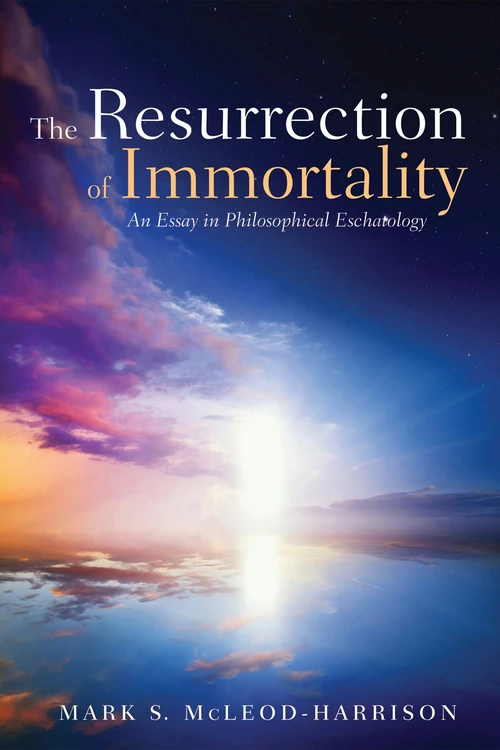
The Resurrection of Immortality
An Essay in Philosophical Eschatology
- Theology
- Publisher: Cascade Books (Wipf and Stock)
- Published: 2017
FritzSearch.com earns a commission on purchases made through Bookshop.org links.
Publisher's Description
If humans are not capable of immortality, then eschatological doctrines of heaven and hell make little sense. On that Christians agree. But not all Christians agree on whether humans are essentially immortal. Some hold that the early church was right to borrow from the ancient Greek philosophers and to bring their sense of immortality to bear on the interpretation of biblical passages about the afterlife. Others, however, suggest that we are inherently mortal, and only conditionally immortal. This latter view is usually associated with an annihilationist interpretation of the doctrine of hell and a rejection of eternal torment. In a philosophical analysis and argument, McLeod-Harrison proposes that humans are, indeed, immortal, but not essentially so. But neither are we immortal accidentally or conditionally. Instead, immortality is an enduring property--a property we cannot lose once created. McLeod-Harrison carefully delineates the sense of immortality he defends and provides a broadly Christian philosophical argument for it. The argument, if correct, leaves the recent suggestion that the unredeemed are annihilated on unsteady metaphysical feet. However, McLeod-Harrison does not defend eternal conscious punishment for the unredeemed, but suggests some ways to think about the possibility of a universal salvation.
Endorsements (3)
“McLeod-Harrison provides an admirably careful metaphysical analysis of the concept of human immortality, ultimately arguing for the impossibility of personal annihilation. Whether or not one finally agrees with his thesis, this work is an immensely valuable resource, especially as regards discussions of philosophical anthropology and the doctrine of hell.”
“In this fascinating, albeit complicated, argument against conditional immortality (annihilationism), the author makes no claim that the human soul is essentially immortal; he argues instead that, once a human offspring acquires a fully robust free will and thus becomes fully human, it is metaphysically impossible that it should cease to exist altogether. Whether or not one accepts every detail of this argument, it provides an original and intriguing twist to theological discussions of free will.”
“I often say the future of the hell debate is between conditional immortality and universal reconciliation, and it is no secret that I think the biblical case for the former is unassailable. However, while I am not persuaded by this volume’s case for enduring and universal human immortality, it nevertheless promises to add precision to the language of immortality and to feature prominently in the philosophical side of that debate moving forward.”
See something wrong on this page? Report a problem