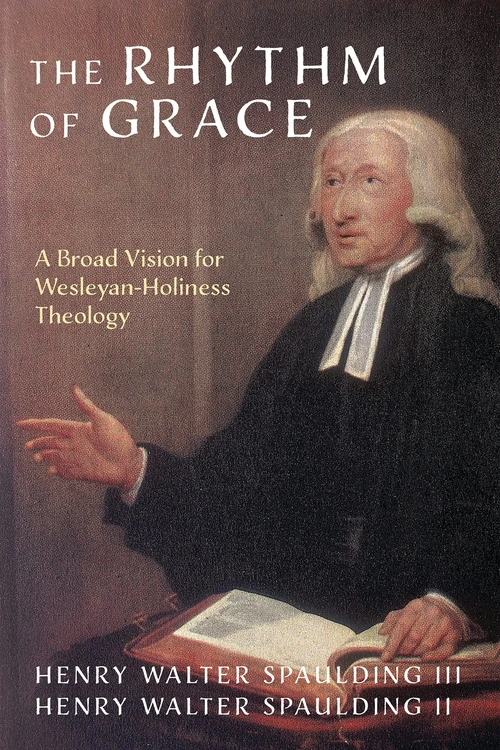
The Rhythm of Grace
A Broad Vision for Wesleyan-Holiness Theology
- Theology
- Publisher: Cascade Books (Wipf and Stock)
- Published: 2026
FritzSearch.com earns a commission on purchases made through Bookshop.org links.
Publisher's Description
The Rhythm of Grace: A Broad Vision for Wesleyan-Holiness Theology gathers decades of scholarly reflection from Henry W. Spaulding II and his son Hank Spaulding to offer a renewed, expansive, and justice-oriented vision of holiness. Through essays that engage theological aesthetics, political theology, Wesleyan ecclesiology, and the challenges of postmodernity, this collection weaves a tapestry of sanctified imagination for a fragmented world. With both previously published and original chapters, The Rhythm of Grace challenges the privatization of holiness and reclaims it as a public, prophetic witness. It is a book for pastors, scholars, and laity who long to see holiness reimagined as the liberating grace of God active in the world.
Endorsements (9)
“This is a monumental work for our times. It reminds us of the radical spirituality of Wesleyan ontological formation—ecclesiological, eschatological: ‘grace-drenched, cross-shaped, and incarnational’; and, at a time of geopolitical agonism, reminds us of the ‘expansive, liberating love of Christ,’ pointing the way to re-enter the rhythm of grace.”
“Henry and Hank Spaulding, father and son theologians, present a compelling, wise challenge to the idolatry of fundamentalism rooted in fear and resistance to change. They intricately weave a profound connection between the beauty of holiness and ‘apocalyptic forgiveness,’ disrupting false moral codes and perpetual patterns of violence within church and empire. Writing from retirement and exile, their insights invite us into a transformative rhythm of grace, revealing a communal witness to God’s Peaceable Kingdom. Nothing embodies the beauty of holiness more than a community practicing inclusive forgiveness without exception.”
“The Rhythm of Grace is for anyone interested in plumbing the depths and breadth of philosophical thought to debate Wesleyan-Holiness theological tenets. The Spauldings write with sincere concern and love for the church and careful scholarship in equal measure.”
“This superb collection of essays from the Spauldings, father and son—and each a gifted theologian in their own right—provides both rich introduction and critical insight into the serious and important debates in Wesleyan theology over the last four decades. This rich compilation, centered in the loci of ecclesiology, ethics, and political and public theology, makes an important contribution to the Wesleyan understanding of Christian perfection, fundamentalism, human sexuality, atonement, and, most importantly, the doctrine of Grace. Their treatment of the subjects chosen teems with quotes both ancient and modern, extending from Augustine and Aquinas to Paul Bassett and Billy Abraham. The footnotes and extensive bibliography are a rich mine of the necessary sources for providing a robust Wesleyan theology today. This is a ‘must read’ for any serious Wesleyan-Holiness thinker.”
“A profound and timely look into Wesleyan understandings of grace and holiness that reminds us that God’s heavenly vision—though ‘already/not yet’—is strange and radical. What a gift to observe the wisdom of father and son expanding the vision of Wesleyan theology, ecclesiology, education, and ethics.”
“This collection of scholarly essays is shaped by a pastoral concern and question: Can Wesleyanism ‘go on’ without a serious re-examination of what it means to be holy? An invitation and challenge await those willing to enter the conversation proposed by the authors. I can only hope those following in Wesley’s footsteps will find the courage to read this book and consider what is at stake in leaving the question unanswered.”
“In this wide-ranging and insightful set of essays, father and son theologians point a way forward for Wesleyan theology, especially as understood in the tradition of the Church of the Nazarene. They rightly point to problems in the tradition’s landscape today, most of which stem from a fundamentalist leavening. As an alternative, the two offer a Christ-centered, love-oriented, and ecclesial-grounded commitment to sanctified life today. I agree with the authors that reclaiming Wesleyan theology for the twenty-first century requires a turn away from theological legalism and toward a renewed imagination of grace. May the goals of this book be realized!”
“Could old-fashioned ‘holiness’ possibly have any relevance for today? In this creative, learned and engaging work, the Spauldings unfold a fruitful model of how to do Wesleyan theology, one rooted in our tradition while engaging crucial issues in our world. They make bold to embrace insights from many different, contemporary theologians—something not always found in older holiness theologies. Their proposal takes ‘the beauty of holiness’ seriously as a way of life for the church in greater communion with the Holy Trinity: a community which opposes injustice and oppression by the grace of God and in the power of the Living Christ. The result is a fresh, lively theology of holiness for the church today.”
“John Wesley’s heirs have too often forgotten that he was a serious intellectual, albeit one on horseback. Not so Henry Spaulding, in this lively series of essays. They show us why the Wesleyan Holiness tradition belongs to the Christian and Catholic mainstream, by bringing together the spiritual quest for deification of the East with the ethical quest for personal and social improvement of the West. Its message is uniquely relevant for today when we are realizing how the mere pursuit of compromise engenders global chaos and conflict. We need instead to listen once more to Wesley’s view that aiming for perfection is curiously the most realistic, pragmatic, and ‘methodical’ option.”
See something wrong on this page? Report a problem