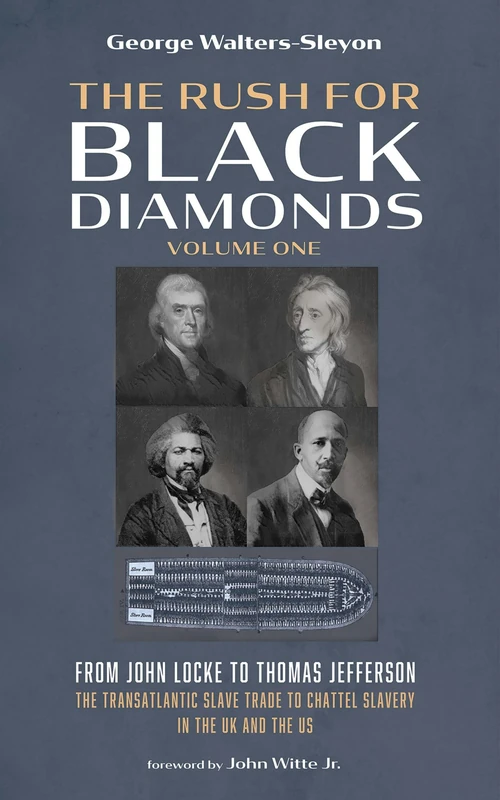
The Rush for Black Diamonds, Volume One
From John Locke to Thomas Jefferson—The Transatlantic Slave Trade to Chattel Slavery in the UK and the US
- Ethics, Culture & Social Issues
- Publisher: Cascade Books (Wipf and Stock)
- Published: 2024
FritzSearch.com earns a commission on purchases made through Bookshop.org links.
Publisher's Description
The Rush for Black Diamonds, Volume One is the first of two volumes. It explores the Transatlantic slave trade and its mutation into chattel slavery. Volume One focuses on the involvement of two prominent Enlightenment philosophers as the architects of the political, legal, economic, and philosophical justifications for the human trade in the United Kingdom and the United States: John Locke (1632-1704), a British philosopher and "Father of Liberalism"; and Thomas Jefferson (1743-1826), the third president of the United States. Both men, Locke and Jefferson, were also slave traders and slave masters. Referring to Lockean Slavery and Jeffersonian Slavery, The Rush for Black Diamonds, Volume One contends that Locke and Jefferson are responsible for the justification and sustainability of chattel slavery and its post-slavery racial perceptions and marginalization of Black people in the West. Used as a metaphor, Black Diamonds captures the exploration of Western nations' rush for Black people across the Atlantic Ocean to be used as economic units and chattel property. With impunity, it was the most disruptive act of human institutions, cultures, and socioeconomic and political stability, with substantial financial, social, political, and racial implications for centuries in human history.
Endorsements (3)
“In The Rush for Black Diamonds, George Walters-Sleyon anatomizes the legal and philosophical alibis that enabled slavery. In so doing, he casts new light on this crucial story, with scholarship, verve, and a passion for justice.”
“In The Rush for Black Diamonds, the Rev. Dr. Walters-Sleyon presents a compelling narrative that connects several durable and decisive threads within America’s philosophical, economic, and legal foundations to the persistence of white supremacy. An important and timely read.”
See something wrong on this page? Report a problem