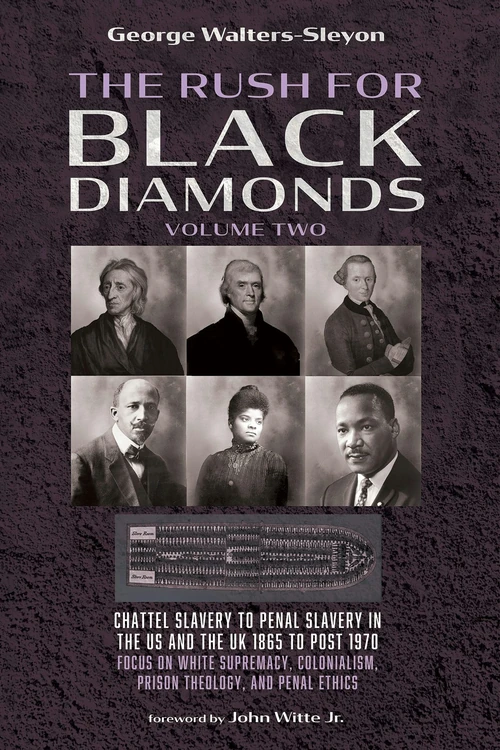
The Rush for Black Diamonds, Volume Two
Chattel Slavery to Penal Slavery in the US and the UK, 1865 to Post-1970 Realities
- Ethics, Culture & Social Issues
- Publisher: Cascade Books (Wipf and Stock)
- Published: 2025
FritzSearch.com earns a commission on purchases made through Bookshop.org links.
Publisher's Description
The Rush for Black Diamonds, Volume Two demonstrates the need for a Reform Prison Theology and a Holistic Penal Ethics in the United States and the United Kingdom (England and Wales, and Scotland). As a descriptive, analytic, and prescriptive engagement, it contends that colonialism and penal slavery are the modern vestiges of the transatlantic slave trade and the institution of chattel slavery also made possible by the Thirteenth Amendment of the US Constitution. This book explores the transition from the institution of chattel slavery to colonialism and penal slavery prior to and after 1970 by the superpowers of the transatlantic slave trade, including the US, France, and the UK. It shows the intersections of the economic and racial influences of chattel slavery, the Black Codes, the preservation of the cult of White supremacy on the development of the post-1970 penal industries and their collateral effects of the high rates of prisoner deaths in the US and the UK. Like John Locke and Thomas Jefferson, Volume Two argues that Immanuel Kant provided the most concise philosophical claims for the emergence of the cult of White supremacy and its militant preservation through the Invisible Empire of the Ku Klux Klan against Black humanity.
Endorsements (2)
“The Rush for Black Diamonds, Volume Two, is a remarkable and impressive work of scholarship and moral urgency. Walter-Sleyon’s command of intellectual history is on full display as he demonstrates the pervasiveness of white supremacist ideas and the through line from slavery to the modern carceral state. His moral clarity is bracing but humanizing, as he brings the reader into an encounter with the human toll of slavery and its legacy.”
“The enslavement of Africans, and the wealth generated by it, remains the essential source behind American penal exceptionalism into the twenty-first century. Black Diamonds provides an essential genealogy of the ideas that have sustained this engine of wealth and punitiveness and a critical starting point for any effort to escape this legacy.”
See something wrong on this page? Report a problem