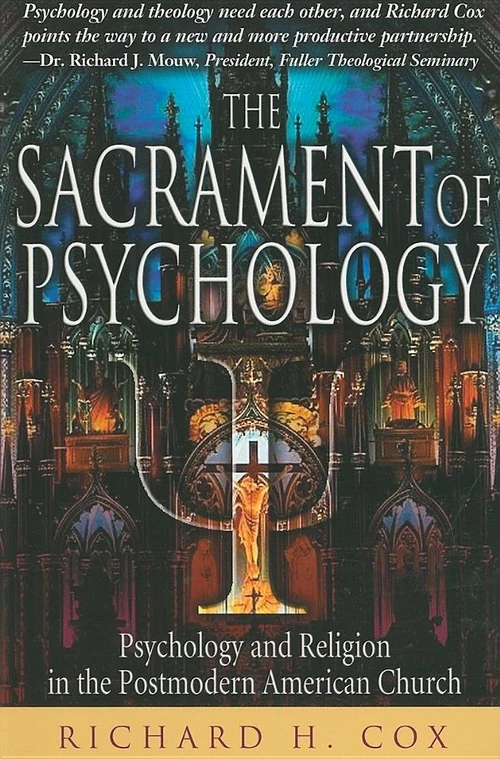
The Sacrament of Psychology
Psychology and Religion in the Postmodern American Church
- Counseling, Grief & Mental Health
- Publisher: Wipf and Stock
- Published: 2010
FritzSearch.com earns a commission on purchases made through Bookshop.org links.
Publisher's Description
This book is controversial. It is intended to provoke thought and hopefully action--action that will benefit the current practices of both religion and of psychology. As St. Peter wrote: "Be always in readiness to make an answer to anyone who asks you a reason for the hope that is with you, yet with gentleness and reverence" (1 Peter 3:15).
Endorsements (5)
“Psychology and theology need each other, and Richard Cox points the way to a new and more productive partnership.”
“Richard Cox frontally attacks popularized 'integration' of psychology and theology. This amalgam, he argues, is neither good psychology nor good theology . . . Cox's thoughtful book points to ways that the church can accomplish its core mission while satisfying modern seekers' true hunger. It is a provocative call, a well-researched book.”
“In an age devoted to narrow specialization, it is refreshing to encounter a book that successfully synthesizes research from disparate disciplines, thereby reaching conclusions that are stunningly prescriptive and courageous. The Sacrament of Psychology . . . identifies the institutional church's weakness of following trendy psychology, rather than of being true to its primary redemptive mission. At the same time, modern and postmodern psychology offers promises that it cannot fulfill, crippling a church with its denial of transcendence and its insistence on relativism. This is a call for both church leaders and psychologists to rethink their underlying premises and methods.”
“. . . a unique and highly readable set of reflections on the nature of the church and postmodern reality. It will set the new tone of interaction among theology and the social/behavioral-based sciences for many years to come.”
“This work catches up a great deal of our experience during the past half-century. It has a powerful yet clever way of developing the theme that our churches along with the psychological establishment have accepted our cultural norms uncritically . . . a thorough and comprehensive overview of the circumstances surrounding our present spiritual crisis.”
See something wrong on this page? Report a problem