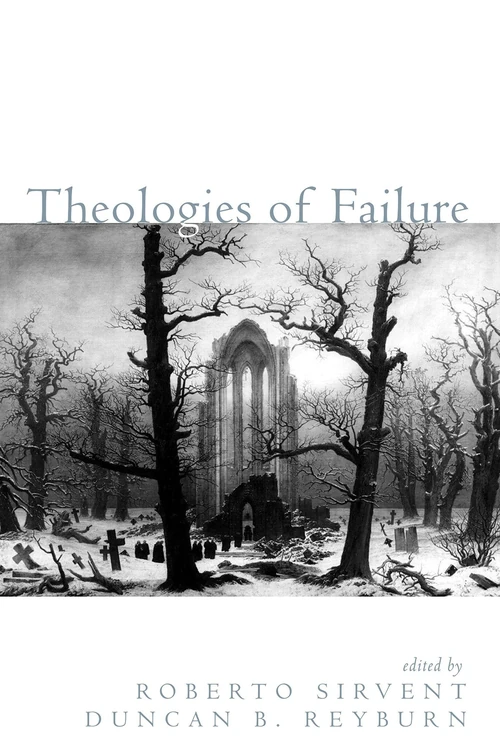
Theologies of Failure
- Theology
- Publisher: Cascade Books (Wipf and Stock)
- Published: 2019
FritzSearch.com earns a commission on purchases made through Bookshop.org links.
Publisher's Description
What does failure mean for theology? In the Bible, we find some unsettling answers to this question. We find lastness usurping firstness, and foolishness undoing wisdom. We discover, too, a weakness more potent than strength, and a loss of life that is essential to finding life. Jesus himself offers an array of paradoxes and puzzles through his life and teachings. He even submits himself to humiliation and death to show the cosmos the true meaning of victory. As David Bentley Hart observes, "most of us would find Christians truly cast in the New Testament mold fairly obnoxious: civically reprobate, ideologically unsound, economically destructive, politically irresponsible, socially discreditable, and really just a bit indecent." By incorporating the work of scholars working with a range of frameworks within the Christian tradition, Theologies of Failure aims to offer a unique and important contribution to understanding and embracing failure as a pivotal theological category. As the various contributors highlight, it is a category with a powerful capacity for illuminating our theological concerns and perspectives. It is a category that frees us to see old ideas in a brand-new light, and helps to foster an awareness of ideas that certain modes of analysis may have obscured from our vision. In short, this book invites readers to consider how both theology and failure can help us ask new questions, discover new possibilities, and refuse the ways of the world.
Endorsements (2)
“In this moment when theology is in danger of failing along with its traditional institutions, when politics threatens to fail us all along with the earth itself—these essays burst failure open from within. Vibrating with the art, the humility, and even the humor of our indelible inadequacies, this conversation enlivens a practice more important than success—an improvisational minding of failure that may indeed prove to be ‘a condition of the possibility of theology itself.’”
“Given the almost-irresistible temptation to which the Church regularly succumbs—to imitate the world’s obsession with glory and national greatness, success stories, triumphalism, celebration of the powerful and winners and denigration of losers—this book is a timely and perhaps timeless resource for resistance and renewal . . . It’s not clear what it means to construct a ‘successful’ book concerned with Christianity and failure, but Sirvent and Reyburn have done it.”
See something wrong on this page? Report a problem