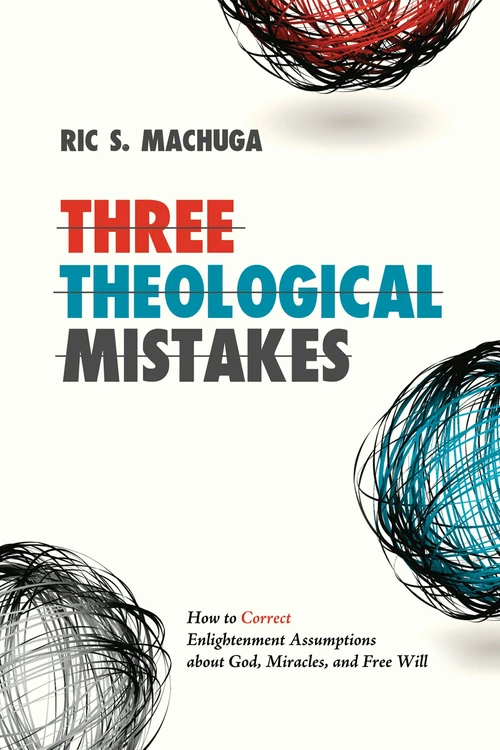
Three Theological Mistakes
How to Correct Enlightenment Assumptions about God, Miracles, and Free Will
- Theology
- Publisher: Wipf and Stock
- Published: 2015
FritzSearch.com earns a commission on purchases made through Bookshop.org links.
Publisher's Description
- Is the existence of God a matter of faith or knowledge? - Does God sometimes act miraculously or are there physical causes for everything? - Is morality absolute or relative? - Are humans truly free or does God's sovereignty determine everything? - When bad things happen, is God the cause or are they the fault of humans? Too frequently Christians answer these questions with a Yes to one side and a No to the other side. Thomas Aquinas and Karl Barth answer Yes to both. Following their model, Machuga defends a "third way" which transcends the Enlightenment dichotomies of fideism vs. rationalism, supernaturalism vs. naturalism, relativism vs. absolutism, free will vs. predestination, and God's justice vs. his mercy. Machuga begins by showing how these false dichotomies grew out of the Enlightenment assumptions of mechanism, universal quantification, and mono-causation. He then corrects these demonstrably dubious assumptions by articulating a theory of dual-causation. The result is a thoroughly biblical understanding of God, miracles, and free will that can withstand the contemporary criticisms of both science and philosophy.
Endorsements (2)
“This patient, lucid argument unpacks the false dichotomies that bedevil controversies about God's sovereignty, human freedom, and divine judgment, leading us persuasively to embrace humility, mystery, and confident hope.”
“So much confusion about belief in God, morality, and science arises, not from what people say they believe, but rather from mistaken assumptions about God, morality, and science that they don't know they believe. In Three Theological Mistakes, Ric Machuga, with clarity and grace, explains the genesis of these mistakes and provides the intellectual tools by which we can recover from them.”
See something wrong on this page? Report a problem