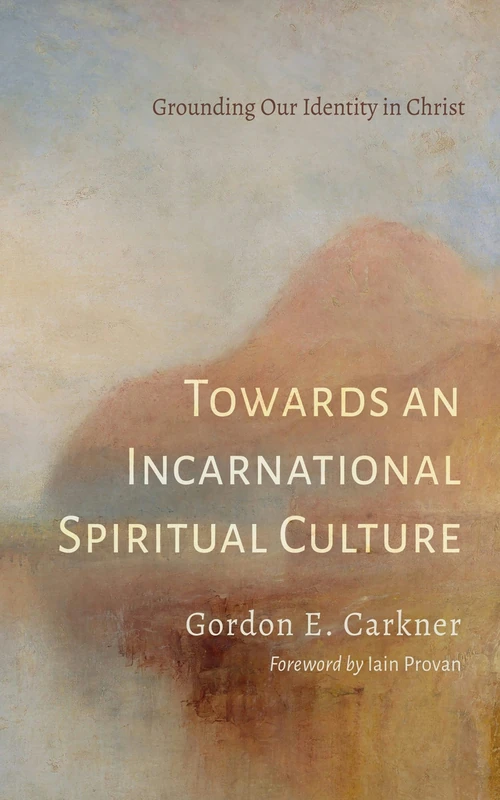
Towards an Incarnational Spiritual Culture
Grounding Our Identity in Christ
- Philosophy
- Publisher: Wipf and Stock
- Published: 2024
FritzSearch.com earns a commission on purchases made through Bookshop.org links.
Publisher's Description
Rooted in the robust discourse of eminent Canadian philosopher Charles Taylor (A Secular Age), this book takes the reader on a journey of deep reflection and discovery. Many things in today's culture misdirect, seduce, and confuse younger generations, when they actually need wise mentors with integrity. The discussion clarifies some of the core issues at stake in the late modern identity quest. In the process, it unpacks some of the most profound implications of the miraculous incarnation for personal flourishing. The author introduces us to the power of dialogue with both divine and human interlocutors. We are brought around the table for mutual engagement, while receiving a compelling vision for life. The discussion is deeply embedded in a rich understanding of the Judeo-Christian Scriptures. The effect is to spark a lively faith-and-culture investigation. The crucial question we are left with is this: Do we intend to be our own gods in some gnostic permutation--to invent ourselves from the ground up according to our own individual design? Or, should we investigate a relationship with God and agape love that can be life-transforming, freeing, and anchoring? Which direction will lead to a grounded, resilient identity?
Endorsements (8)
“The incarnation, at the center of Christian faith, provides a touchstone for understanding the world as God’s good creation and human beings as called to embodied, dialogical relationship with their creator. This ambitious book contrasts the incarnational Christian vision with contemporary permutations of ancient Gnosticism, teasing out philosophical implications of an incarnational spiritual culture for human identity in the twenty-first century.”
“It’s easy to see that we are in the grip of a cultural identity crisis! What’s not so easy to see is a way out. Gordon Carkner provides both the head and heart knowledge necessary to ground our identity in Christ in such a way that leads to the flourishing of ourselves and our communities. I highly recommend this thoughtful and passionate engagement with today’s most pressing challenge—our identity.”
“This book develops a profound idea: that in the incarnation, God’s glory and generosity have been revealed in Jesus as publicly accessible truth. Furthermore, the God who was incarnated invites us to try life with him. Be prepared for a provocative journey through several contemporary ideologies elucidated by the insights of philosopher Charles Taylor and other important thinkers. It may result in a deeper appreciation of the presence of the glorious creator whose signs of transcendence surround us.”
“Gordon Carkner surveys a wealth of philosophical literature and shares much of his own personal wisdom, showing clearly how strongly influenced our society is by modern versions of Gnosticism and how diametrically opposed that is to the biblical teaching of an incarnational life. An excellent book on a very timely topic which should be of interest to Christians and skeptics alike.”
“Having read widely and deeply in contemporary literature and philosophical thought, Gordon Carkner is able to alert us to the ‘minefields’ hidden along the highway of contemporary culture, especially contemporary Western culture. But this is not only a critique of that culture. Being deeply rooted in the Judeo-Christian faith, Carkner is also able to guide us to vistas of great grandeur embedded in the biblical account of creation and re-creation.”
“Gordon Carkner’s latest book is an important work of theological anthropology examining the grounds for human dignity through the lens of the incarnation of Christ. Carkner dialogues with thinkers such as Charles Taylor who increase our articulate grasp of the issues and broaden our understanding of the incarnation as the epicenter for a thick identity, grounded in God and nurtured by grace. Such an identity prepares us for a robust engagement with, and critique of, late modern culture.”
“This reflective work by Gordon Carkner comes to us at a poignant moment. More than ever, people need to grapple with the grandeur, beauty, and coherence of the incarnation—the Jesus story. At its core, it is a transformative, reversal narrative, where prodigals and cynics are invited to become compassionate healing agents, committed to justice and mercy. This book offers a tremendous resource for pastors and church members who want to live the artfulness of agape love.”
See something wrong on this page? Report a problem