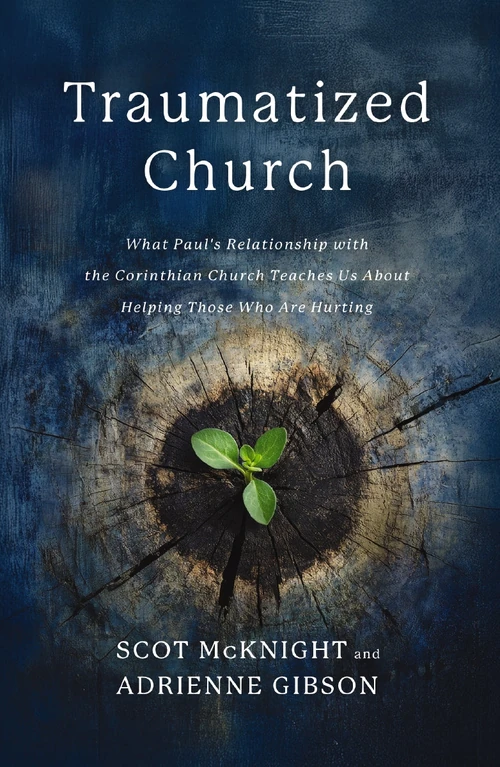
Traumatized Church
What Paul's Relationship with the Corinthian Church Teaches Us About Helping Those Who are Hurting
- Church Leadership & Ministry
- Publisher: Zondervan Reflective (Zondervan)
- Published: 2026
FritzSearch.com earns a commission on purchases made through Bookshop.org links.
Publisher's Description
A compassionate and practical framework to address the wounds of trauma and learn how to develop churches as trauma-informed spaces. Whether you're a pastor, counselor, church leader, or someone who has been hurt by the church, Traumatized Church —written jointly by New Testament scholar Scot McKnight and therapist Adrienne Gibson—will help you on the road to healing and understanding. Diving deeply into the realities of trauma—how it impacts individuals, communities, and ministries— Traumatized Church pairs theological insights with counseling expertise to guide readers through the four R's of trauma care: Realize, Recognize, Respond, and Resist. McKnight examines the life of the apostle Paul and his complex relationship with the Corinthian church, offering biblical wisdom from Paul's life that helps us shape a renewed response to trauma within the church today. Gibson relates stories of real experiences, practical advice, and scripturally grounded therapy insights to encourage a Kingdom-minded approach to community, rooted in love and restoration rather than re-traumatization. From understanding the symptoms of trauma in today's church members to providing actionable steps to foster safety, trust, support, collaboration, and empowerment, this book creates a roadmap for healing. If you're ready to transform your understanding of trauma and begin building spaces of redemption, Traumatized Church is an essential resource for your ministry or personal growth. Together, we can create churches that reflect Christ's healing and compassion.
Endorsements (10)
“Traumatized Church worked like a meat tenderizer on the hard, self-reliant lumps in my heart that seem to form overnight when I’m not vigilant about guarding it. McKnight and Gibson’s compelling and complex portrait of the agony and angst Paul went through when he was dealing with the Corinthian church is a poignant reminder that perfection is not a prerequisite for spiritual efficacy. The fact that at least one chapter in this great apostle’s story reveals tearstains on his face and grooves of grief in his soul proves we don’t have to curate our emotions to effectively communicate the unconditional love of Jesus Christ. And isn’t it almost always an acute awareness of our own brokenness that gives birth to the humility necessary for deep healing? Blessed are the vulnerable, because their longing for reconciliation points us all to the only true healer.”
“Every pastor I know will find themselves nodding their heads as they read Traumatized Church. Laypeople, too, will recognize how trauma has shaped their congregations. Though I’ve studied Paul for a lifetime, McKnight and Gibson have changed how I will see Paul and read 2 Corinthians. This is such a great book! If you’ve known pain in your church or in your ministry, or if you’ve struggled with Paul, you will find this book a remarkable gift.”
“In Traumatized Church, we meet St. Paul as we’ve never seen him: as a traumatized apostle. McKnight, a leading New Testament scholar, and Gibson, an experienced counselor, offer compelling stories and accessible information about the nature of trauma and how we can heal from it. Their persuasive arguments empower churches to establish and maintain healthy cultures and trauma-sensitive spaces. Scripture, read through a trauma lens, comes alive with hope and healing as the gospel reshapes our trauma through reflection on Christ’s life.”
“Traumatized Church gives us permission to see Paul as the weary and wounded human being he was: a gifted leader with a battered nervous system attempting to cope in his ministry context. It reminds us that holiness has never required superhuman strength—only honesty, humility, and hope.”
Dr. Chuck DeGroat
“This book offers a compassionate, wise, and much needed guide for those who long for churches to become safer places for the wounded in a season marked by culture wars, pastoral abuse scandals, and corrupted leadership models within the American evangelical church. With deep biblical grounding and trauma-informed insight, McKnight and Gibson teach us how to listen well, tell the truth with care, and embody Christ’s healing presence in communities that desperately need restoration.”
Rev. Caleb E. Campbell
“In Traumatized Church, McKnight and Gibson provide a fresh look at the significance of human experience in how we perceive God and participate in our Christian communities, even when that experience is traumatizing. But we aren’t alone. Through the lens of the apostle Paul and his own experiences with trauma, McKnight and Gibson offer a safe space for Christians to journey toward hope and healing, to become trauma healthy. This book is a gift to the church as it reveals how we can heal from our trauma. But Traumatized Church also offers the necessary preventive steps so that the church might be the safe place it was always intended to be.”
Dr. Kyle DiRoberts
“on how to move from trauma to healing and hope.”
“Paul failed to measure up to the expectations of his converts in Corinth. That put the apostle in a tough spot, having to defend himself to the very people who benefited from his ministry—a challenge many ministers know all too well. We may identify with Paul’s plight. But according to McKnight and Gibson, we should also find great wisdom in how he responded to his naysayers. Whether we’re professional ministers or amateurs like Paul, Traumatized Church is a timely word that helps us face and overcome a timeless problem: healing for Christians wounded by Christians.”
“How does reading Paul as one who experienced trauma change how we view the apostle? In Traumatized Church, McKnight and Gibson depict a vulnerable Paul whose pain and trauma both shape his relationship with the Corinthians and offer insights into how the church today may respond to the needs of its leaders and laity who are experiencing trauma. This book is a provocative analysis of trauma theory applied to Paul’s Corinthian correspondence. While one may not agree with all of the claims or interpretive trajectories in this study, it raises important and necessary questions regarding the church, pastoral leadership, relationship between congregants, and abuse in congregations. This book deserves a careful read by anyone interested in the contemporary applicability of the Pauline epistles.”
“over the shoulder of a biblical scholar help us to read Paul’s correspondence with the Corinthians afresh? This new look at 2 Corinthians humanizes Paul as an apostle traumatized by the verbal abuse he received from some Corinthian Christ-followers. McKnight and Gibson weave a close reading of 2 Corinthians with compelling stories that illustrate how unhealthy power dynamics and misbehavior have scarred pastors and congregants. Presented here is a vision for how a trauma-informed church might nurture healthy boundaries, mutuality, and the empowerment of its members, while also safeguarding itself against abuse. Reading about Paul’s emotions and his strained relationship with the Corinthians invites readers to reflect on their emotional lives and critically consider the power dynamics operating in their churches through a trauma-informed lens.”
See something wrong on this page? Report a problem