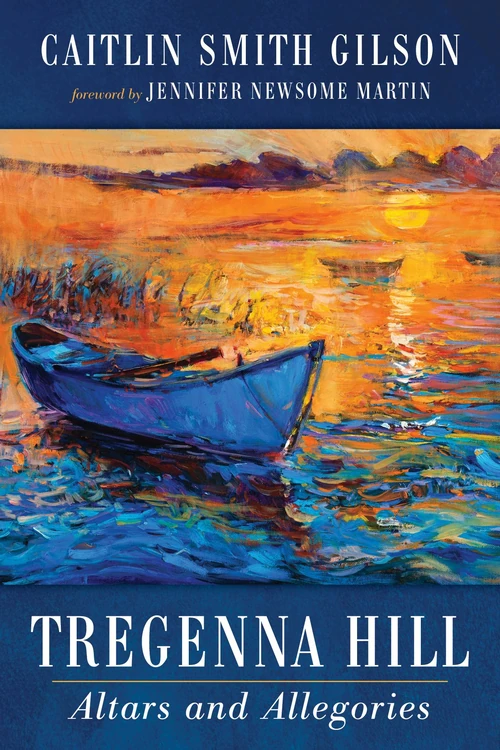
Tregenna Hill
Altars and Allegories
- Arts & Literature
- Publisher: Resource Publications (Wipf and Stock)
- Published: 2021
FritzSearch.com earns a commission on purchases made through Bookshop.org links.
Publisher's Description
Tregenna Hill: Altars and Allegories are love poems cutting through and across the many layers of love: personal, historical, religious, and philosophical; an elegy to the beginnings and ends, to the untranslatable moments in time which contain all that is Good and Beautiful. At the altar before God and human intimacy, there remains the gentle yet brutal yoking of eros and agape with innocence, ecstasy, confession, newness, temporality, death, and surrender.
Endorsements (4)
“As priest transforms bread into body, Caitlin Smith Gilson transforms reality into language. For Gilson, writing poetry is an act of apprehending the distinctiveness of every human experience . . . . In her art of representation, each phenomenon is laden with universal meaning, is something of a sacred event of undefinable significance. Her response to the phenomena of being, Eliotic and allusive but ever original, is nothing less than a passion of awe.”
“This book of poems . . . is about the pathways of the profane to the sacred, about how grace destroys and redeems nature, about how the susurration of transcendence in our very bodily lives cannot be satisfied with merely spiritual meaning. . . . Gilson’s very disciplined philosophical and theological reflections never cease to surprise and often give way to an incandescent poetics. . . . For Gilson, philosophy/theology and poetry are but two different sides of ecstatic register of speech.”
“Gilson deftly employs a quite-daring sacramental coupling of the sacred and the erotic, retrieving once-familiar biblical and liturgical guideposts with the startling freshness and in-between of lovers, . . . the immediacy of peering through the lattice, where the line between leisurely gazing and having license to stare is blurred, wherein I no longer know where I end and you begin, thereby witnessing anew to the very incarnational faith that cries out with astonishment, ‘Caro cardo salutis.’”
See something wrong on this page? Report a problem