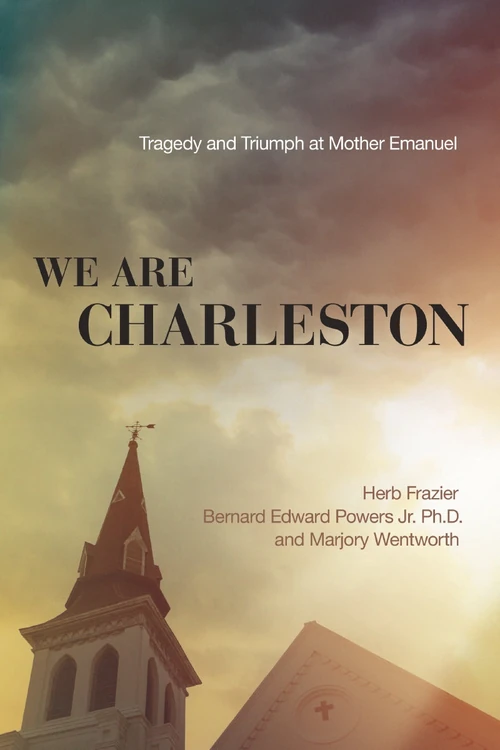
We Are Charleston
Tragedy and Triumph at Mother Emanuel
- History & Biography
- Publisher: W Publishing Group (Thomas Nelson)
- Published: 2025
FritzSearch.com earns a commission on purchases made through Bookshop.org links.
Publisher's Description
We Are Charleston not only recounts the events of that terrible day but also offers a history lesson that reveals a deeper look at the suffering, triumph, and even the ongoing rage of the people who formed Mother Emanuel A.M.E. church and the wider denominational movement. On June 17, 2015, at 9:05 p.m., a young man with a handgun opened fire on a prayer meeting at the Mother Emanuel African Methodist Episcopal (AME) Church in Charleston, South Carolina, killing nine members of the congregation. The captured shooter, twenty-one-year-old Dylan Roof, a white supremacist, was charged with their murders. Two days after the shooting, while Roof’s court hearing was held on video conference, some of the families of his nine victims, one by one, appeared on the screen—forgiving the killer. The “Emanuel Nine” set a profound example for their families, their city, their nation, and indeed the world. We Are Charleston not only recounts the events of that terrible day but also offers a history lesson that reveals a deeper look at the suffering, triumph, and even the ongoing rage of the people who formed Mother Emanuel A.M.E. church and the wider denominational movement. In many ways, this church’s story is America’s story—the oldest A.M.E. church in the Deep South fighting for freedom and civil rights but also fighting for grace and understanding. Fighting to transcend bigotry, fraud, hatred, racism, poverty, and misery. The shootings in June 2015, opened up a deep wound of racism that still permeates Southern institutions and remains part of American society. We Are Charleston tells the story of a people, continually beaten down, who seem to continually triumph over the worst of adversity. Exploring the storied history of the A.M.E. Church may be a way of explaining the price and power of forgiveness, a way of revealing God’s mercy in the midst of tremendous pain. We Are Charleston may help us discover what can be right in a world that so often has gone wrong.
Endorsements (4)
“Emotional, careful, and rich, We Are Charleston makes sense of the senseless, the Charleston, South Carolina, massacre of June 2015. From one abominable event the book shapes a testament, an investigation, and a history. We Are Charleston sets the crime within the flow of race, church life, and Southern history and offers moving portraits of the victims. It does the near impossible, which is to redeem tragedy on behalf of hope.”
“This is a beautifully woven story, rich in history and narrative detail, that describes how the Mother Emanuel AME Church turned hate into forgiveness, and an act of brutality into a lesson that has inspired the nation and the world.”
“The authors intensely probe the sanctified character of African Methodism and reveal how the members of Mother Emanuel in Charleston and other AME churches stress personal holiness that undergirds forgiveness and social holiness that mandates militant opposition to the social sin of racism. These attributes, deeply embedded in African American religion, have shown the nation and the world a sure route to healing and reconciliation.”
“In We Are Charleston a sharp investigative reporter, a distinguished historian, and a gifted poet have blended their skills, their knowledge, and their humanity in order to craft a probing account of and an insightful meditation on what happened to nine people who got caught being black and trying to be Christian on a warm night in Charleston. This unsentimental yet sensitive book will become a very important part of the way that we remember and honor those nine unique individuals. It will also become an indispensable part of the way that we try to understand the spiritual, racial, social, and political meanings of a tragic moment in a long history that we all share.”
See something wrong on this page? Report a problem