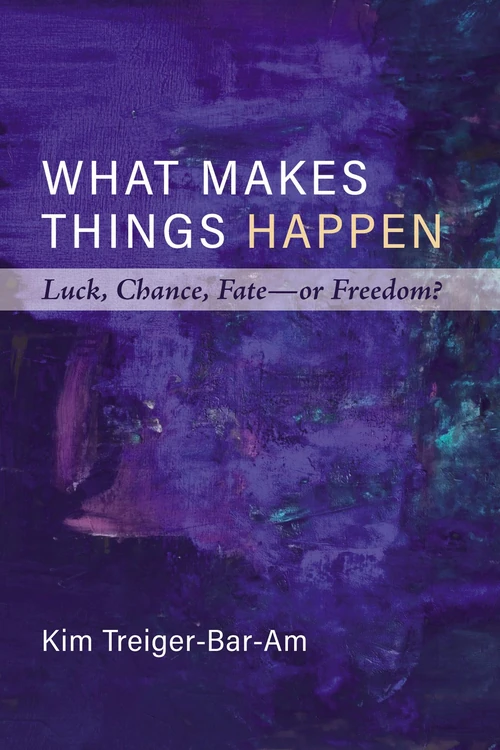
What Makes Things Happen
Luck, Chance, Fate—or Freedom?
- World Religions
- Publisher: Resource Publications (Wipf and Stock)
- Published: 2025
FritzSearch.com earns a commission on purchases made through Bookshop.org links.
Publisher's Description
People consider luck, chance, fate, and freedom to be forces that bring about events. This book explores the customs associated with each of these concepts, alongside practices rooted in Judaism. Sometimes incidents seem to be the result of luck. Often no apparent reason lies behind them. Indeed, people live with uncertainty. It is also often supposed that chance causes things to occur. In modern science the world is deemed to be governed by randomness. Perhaps it is fate that makes things happen. Yet the Jewish tradition does not abide by the idea from classical Greece, which has continued until today, that one's path in life and its endpoint are predetermined by fate. Rather, in Judaism repentance is an open avenue, always. People have free will and at any moment can change their behavior for the better. In Jewish thought as well as in many modern day notions, freedom is presumed to be the "real" cause of events. With freedom, someone can choose to act, and can make things happen. The instances of climate change, democracy, and the current war that Israel faces illuminate the necessity of holding onto the belief in our freedom. People can make a difference.
Endorsements (2)
“Dr. Kim Treiger-Bar-Am mines the forces—the philosophy, theology, and real-life choices—that motivate Jews to build and rebuild throughout centuries, culminating in the sovereign state of Israel. In a world often ruled by victim mentality and blame, this is a must-read for anyone who is motivated to be proactive—to be God’s partner in creation and redemption.”
“This elegantly argued work addresses a fundamental tension in human life—the distinction between events that occur by luck or coincidence and those that stem from the exercise of free will. It also establishes the relevance of this tension to many contemporary issues such as democracy and the environment. Any person interested in this tension and, in particular, the Jewish outlook on it will find this book rewarding.”
See something wrong on this page? Report a problem