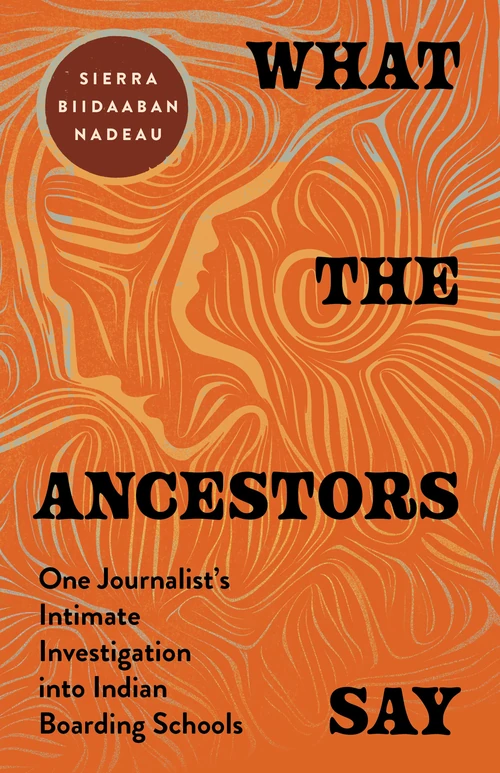
What the Ancestors Say
One Journalist's Intimate Investigation into Indian Boarding Schools
- Ethics, Culture & Social Issues
- Publisher: Broadleaf Books (Augsburg Fortress)
- Published: 2026
FritzSearch.com earns a commission on purchases made through Bookshop.org links.
Publisher's Description
An Indigenous journalist's reporting on her state's Indian boarding schools becomes a sweeping journey through her family's history, the memories of survivors, and Native strategies of survival and resilience. Reporting for her local newspaper, Odawa Anishinaabe journalist Sierra Biidaaban Nadeau stumbles onto a family's--and a nation's--buried stories. In enrollment records of Michigan boarding schools, she finds the names of ten of her ancestors thrown into the maw of American settler colonialism: Her great-grandfather and his siblings, along with generations before them, were forced to attend Indian boarding schools. More than five hundred Indian residential schools operated in the US and at times enrolled more than 80 percent of Native children. The facilities, often run by churches, aimed to erase Indigenous life, one child at a time. Physical and sexual abuse was rampant. Young children were stripped of their homes, cultures, languages, hair, and dress. Sifting through archives and the records of five Michigan schools whose names belie what happened there--Mt. Pleasant, Holy Childhood--Nadeau begins publishing articles. And the flood of emails and phone calls from Anishinaabek begins. Elders want to tell her their stories, so she drives around the state--to school gymnasiums and community centers and homes--and listens. Her uncle Tom, son of a survivor, becomes a gentle guide into the past they are discovering together. Nadeau writes it all down, not to collect traumas but to uncover deeper seams of resistance. In this personal and communal odyssey through ancestral legacies, intergenerational trauma, and Native resistance and resilience, she calls us to attend to the truths of the past. "I am the sentence my ancestors whispered through wind, through prayers, through dreams," Nadeau writes. Now, in a powerful act of reclamation, she brings forward stories of people the government tried--and failed--to break.
Endorsements (6)
“There is a kind of collective amnesia, a forgetting and covering up of the history that brought us to this current moment. These stories of Indian boarding schools and their afterlife, woven with Sierra Biidaaban Nadeau's own family and community history, are a critical read.”
“If you want to understand how Indian boarding schools continue to shape Native families and communities, this book is essential. Sierra Biidaaban Nadeau weaves family history and community memory with care, honoring survivors while illuminating the lasting impacts of colonization. This is a powerful work of truth-telling and resilience, an essential read for those committed to truth, remembrance, justice, and repair.”
“Through the fierce, yet elegant, writings of Sierra Nadeau, readers are centered into the epigenetic response reality of the Indian boarding school era. The intersectionality of dedicated journalism and raw DNA reactions offers insight into the complexities of the sacredness these truths hold. This book helps those who are seeking the tribal historical perspectives needed to begin or deepen responsible advocacy within the justice and healing efforts of the Indian boarding school legacy.”
“"For the very first time, someone listened to my story and felt compelled to include it in theirs. Years of understanding, but a flood of tears arrived when I finished. Both of my personal issues were approached with caution but truth-telling. Miigwech for your tenacious behavior. You followed and answered a big enough portion that people who read this will look for more of the same. I applaud Sierra and appreciate her heart!”
“In this astonishing book, Sierra Biidaaban Nadeau weaves many voices into a narrative masterpiece. 'I am the word my ancestors were forced to swallow,' she writes. These pages are haunted: by generations that were silenced, by broken treaties, and by Nadeau's own lived experience of intergenerational trauma. What makes this work so powerful is that it is so relatable, so personal, not just to the author but to all of its readers as well.”
“The stories in What the Ancestors Say must be told so that we can all heal together. My mom was a boarding school survivor. The stories she told me about her experience were like a horror show. I, too, had my own horror stories, which were side effects of the boarding school system. Growing up on the reservation was awesome, but the school experience was terrible. Government teachers would be contracted in from other parts of the country. We would be hit by these government workers, and our parents couldn't do anything because they feared the government would take their kids away. This book contains so many stories that need to be told. Thanks to Sierra Biidaaban Nadeau for writing this amazing book, which will help so many people to begin their healing journey.”
See something wrong on this page? Report a problem