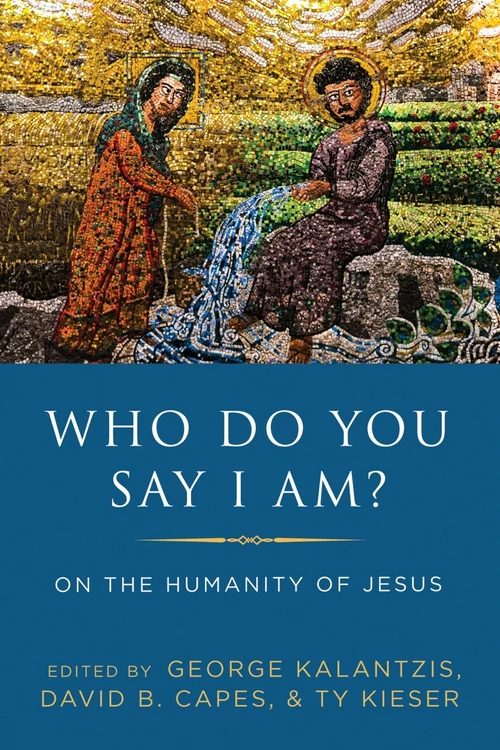
Who Do You Say I Am?
On the Humanity of Jesus
- Theology
- Publisher: Cascade Books (Wipf and Stock)
- Published: 2020
FritzSearch.com earns a commission on purchases made through Bookshop.org links.
Publisher's Description
Human existence is a bodily existence. A first principle of historic Christianity has been that Jesus assumed our humanity and everything essential to it in order that God may redeem all of our existence. Christ is the revelation of God and the revelation of true humanity. As we seek to understand our embodied experiences of the world and one another we do so in light of the embodied life of Jesus Christ. Jesus's humanity shows us what it means to live an embodied human life rightly and how we, as embodied human beings, can relate to the world around us. In this book we invite readers to explore with us why the humanity of Jesus is central to the Christian understanding of community, society, salvation, and life with God. Over the span of these ten chapters this book draws from biblical, historic, and cultural discussions as it enters into the breadth of the significance of the humanity of Jesus and explores how the reality of the Incarnation challenges and redeems our broken social structures, racial and ethnic divisions, economic systems, and sexuality.
Endorsements (3)
“Christians for centuries have been convinced that it matters greatly that Jesus is both divine and human. But just what, more precisely, does it mean to say that the eternal and divine Son is also human? How should we think about the humanity of Christ? What difference might it make? These well-informed and articulate essays address fascinating issues, and the book provides guidance for future reflection on the meaning of Christ’s humanity.”
“Now well into the twenty-first century, we face the temptation to live our whole lives ‘in the cloud’ of social media and online entertainment and work. The Christian doctrine of the Incarnation, the humanity of Jesus, has the possibility of helping us re-claim our own embodiment for the good of self and community. Who Do You Say I Am? is not just helpful readings about Jesus, but also an important set of reflections on human life in the world. Here is a powerful antidote to over-spiritualized versions of Christian faith.”
“Too easily, even believers become almost agnostic about God. We prefer to keep things amorphous, universal, esoterically spiritual—because we fear the fleshly love that meets us on the cross. The deeply moving and inspiring essays in this volume invite us to see and touch and hear Jesus Christ again.”
See something wrong on this page? Report a problem