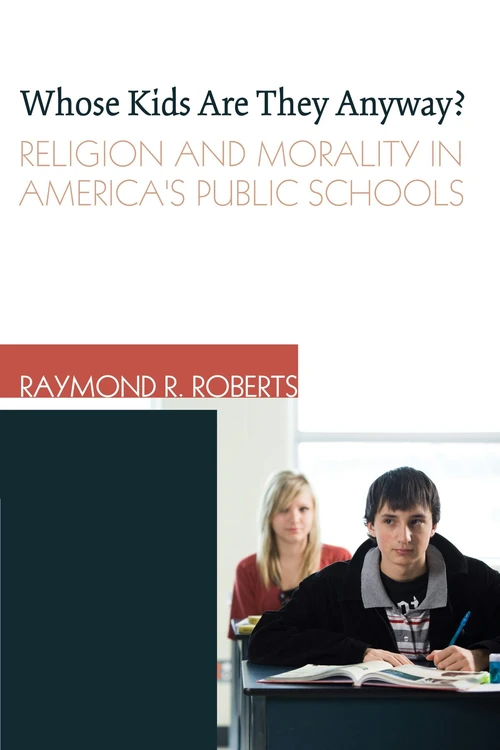
Whose Kids Are They Anyway?
Religion and Morality in America's Public Schools
- Ethics, Culture & Social Issues
- Publisher: Wipf and Stock
- Published: 2010
FritzSearch.com earns a commission on purchases made through Bookshop.org links.
Publisher's Description
Raymond R. Roberts makes a liberal's case for teaching religion and morality in public schools by first examining the intersection of religion and public education. He shows how proposals for moral education in public schools are shaped by definitions of religion. He argues that the public education's critics overstate the failures of public education because they examine public schools in isolation from negative trends in the family, the economy, the media, etc. From there he describes how a theory of spheres of influence gives us a better perspective from which to understand public education, including its relationship with religion.
Endorsements (7)
“A thoughtful and provocative exploration of key worldviews that have helped shape the national debate about moral education in public schools.”
“Dr. Roberts' timely work effectively examines diverse religious perspectives that shape the moral education debate currently engaging our public schools . . . He directly confronts those issues related to religion and morality in the public schools in a democratic society.”
“[Roberts] examines the sensitive subject of the role of public schools in the character formation of children. Through a theological lens, [he] rejects the prominent myths associated with public school failure.”
“Whose Kids Are They Anyway? ponders the issues of faith in public schools in a calm, open-minded manner. If you are a believer in public education, and also a believer in something larger than yourself, Ray Roberts will show you the resolution of seemingly insolvable issues.”
“[Roberts'] exposition of competing views lays out typical alternatives in a clear and understandable way. His critique is fair and penetrating, inviting discussion and further conversation.”
“A careful and illuminating analysis of some leading perspectives on the question, and a promising way to move forward.”
See something wrong on this page? Report a problem