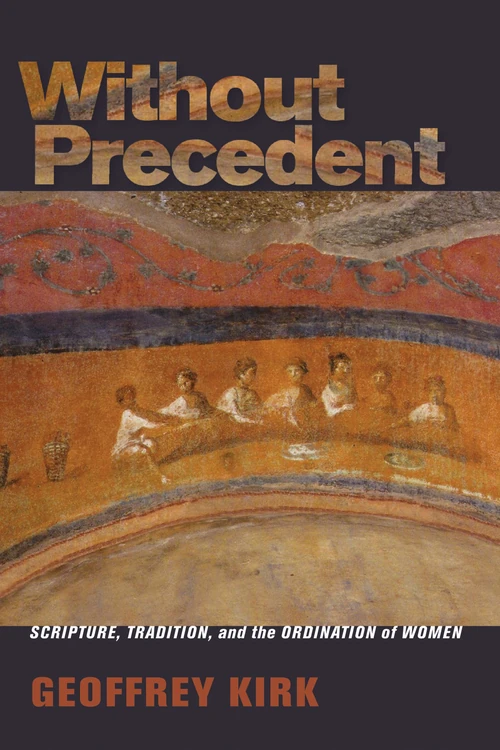
Without Precedent
Scripture, Tradition, and the Ordination of Women
- Theology
- Women
- Publisher: Wipf and Stock
- Published: 2016
FritzSearch.com earns a commission on purchases made through Bookshop.org links.
Publisher's Description
Though the ordination of women has been hotly debated in a number of churches (and in particular in the world-wide Anglican Communion) there has been a strange silence on the subject from academic theologians. "They have left the debate," says the author of this book, "for the most part, to the also-rans." Without Precedent seeks to examine the arguments that, in the absence of serious academic contributions, have been advanced. In particular it looks at claims of ancient precedent for modern practice. What did Jesus think about women? Was Paul a misogynist or a feminist, a reactionary or a revolutionary? Does the role of Mary of Magdela, in scripture and tradition, offer any guidance (as many have claimed)? Were there female priests, and even bishops, in early Christianity? Extravagant claims have been made and repeated in all of these areas, and have crucially influenced decisions taken. This book provides, in the words of former Archbishop of Canterbury, Rowan Williams: "a lucid and helpful survey, which quite rightly punctures some awful historical nonsense."
Endorsements (3)
“I read it with appreciation for its clarity and comprehensiveness. It is undoubtedly a lucid and helpful survey, which quite rightly punctures some awful historical nonsense.”
“This elegant survey will no doubt cause quite a stir, and rightly so.”
“Disagree though I may with Geoffrey Kirk's final position, I must strongly recommend this sparkling volume on women's ordination to the priesthood. Dr. Kirk skillfully engages the pertinent Scriptural texts and historical record, and witheringly exposes the largely flabby arguments still making the rounds in church debate. Along the way, he uncovers logical missteps and conceptual failures that have littered the discussion. This is a book that will make reflection wiser and more honest, and finally, one hopes, more faithful to the integrity of our Christian common life.”
See something wrong on this page? Report a problem