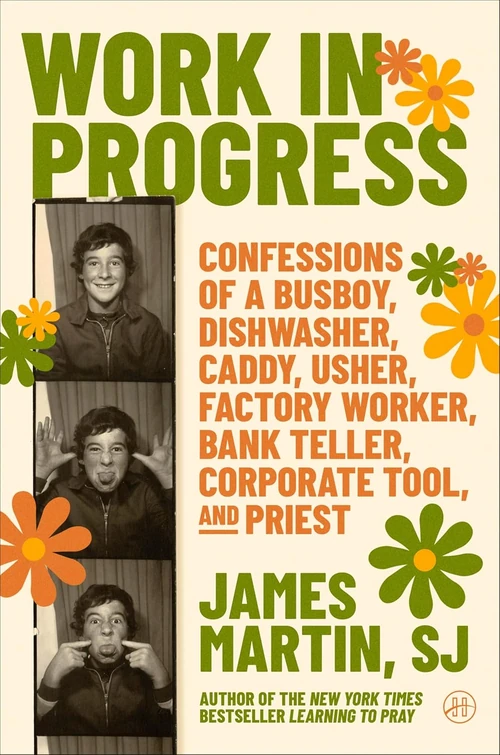
Work in Progress
Confessions of a busboy, dishwasher, caddy, usher, factory worker, bank teller, corporate tool, and priest
- History & Biography
- Publisher: HarperOne (HarperCollins)
- Published: 2026
FritzSearch.com earns a commission on purchases made through Bookshop.org links.
Publisher's Description
New York Times Bestseller In this humorous memoir, New York Times bestselling author and podcast host of The Spiritual Life, Father James Martin tells the story of a busboy, dishwasher, caddy, usher, factory worker, bank teller, and corporate tool and, finally, a Jesuit priest. "Funny, charming, inspiring and wise—this is a memorable memoir." — Stephen Colbert Work in Progress is a snapshot of several years—first as a boy, then as a teenager, and finally as a young adult--of being thrown into a series of jobs for which Martin had zero training. He had never set foot in a restaurant kitchen before working as a busboy and dishwasher; never stepped onto a golf course before working as a caddy; and had never seen a factory floor before working as an assembly-line worker. He almost always felt uncomfortable, unsettled, and uneasy. But, like many of us, he needed the money. This coming-of-age story is set in the 1960s and 1970s, a lighthearted tale for readers who enjoy personal narratives, and it’s unlike anything Father Martin has written before. As he puts it, "This is a spiritual memoir from a different angle … told 'slant' as Emily Dickinson might say." Each chapter features photos of memories and milestones throughout Father Martin's young life. If you're an aficionado of snafus, you won't be disappointed. He's not the hero of these stories, more a hapless teenager who learns in each job, even the ones he loathes, something about the value of work, about what it means to be an adult, about people, and about life overall. Work in Progress teaches us small but important life lessons such as: work hard and be on time, don't be mean, apologize when you need to, and forgive frequently, ask if you don't know something, don't misuse power, pay attention to those who are struggling, listen and, above all, be kind. Martin shares, "My summer jobs, crazy and funny and varied as they were, had something to do with who I am. As we Jesuits would say, the lessons I learned helped to 'form" me."
Endorsements (4)
“My summer jobs, crazy and funny and varied as they were, had something to do with who I am. As we Jesuits would say, the lessons I learned helped to 'form' me.”
“To my shelf of well-worn books by Father James Martin, I add his moving, hilarious new memoir about summer jobs. With a keen eye for detail, he renders his quest as swashbuckling as any action tale—and as unlikely. The kid who busses tables at fifteen and puffs spliffs as an Ivy-Leaguer who’ll land in the corporate world. But a chance encounter with the late Trappist monk Thomas Merton transforms this business dude into a novice in the Society of Jesus. There is no greater quest or romance than this. Martin’s graceful storytelling voice and keen eye for detail makes this his most layered and lyrical effort. I hope he calls it Portrait of the Artist as a Young Jesuit . Like Joyce’s book, I suspect Martin’s will garner a cult readership.”
“I love any book about a dog-fearing paperboy, wasp-stung lawnmower, bumbling busboy, nearly-electrocuted caddy, popcorn-popping usher, bored assembly-line worker, sunburnt bank teller, pot-smoking undergrad, and ambitious 'corporate tool' …who ends up a priest! Funny, charming, inspiring and wise -- this is a memorable memoir.”
“Martin ( In All Seasons for All Reasons ) amplified his inclusive message for LGBTQIA+ Catholics by joining Twitter in 2010. Today, the Jesuit priest ’s followers are modest in number by social media standards—less than 300,000. However, his public recognition has grown dramatically in recent years, having received mainstream commentary opportunities with major broadcasters as well as warm and encouraging receptions from Pope Francis and Pope Leo. His memoir provides the backstory of the Jesuit priest renowned for his message of acceptance to the queer community. He walks through the diverse list of teenage and post-college jobs that, he argues, shaped his adult character. While the last chapters explore his decision to enter seminary and become a priest, this is primarily the story of bygone America with its soda jerks and paperboys and does not focus on Martin’s popular message of inclusion. It’s much more a biographical Chocolate War than Merton’s The Seven Storey Mountain . VERDICT This memoir will circulate well among Catholic readers or as a book group selection for those nostalgic for the bicentennial-era United States.”
See something wrong on this page? Report a problem