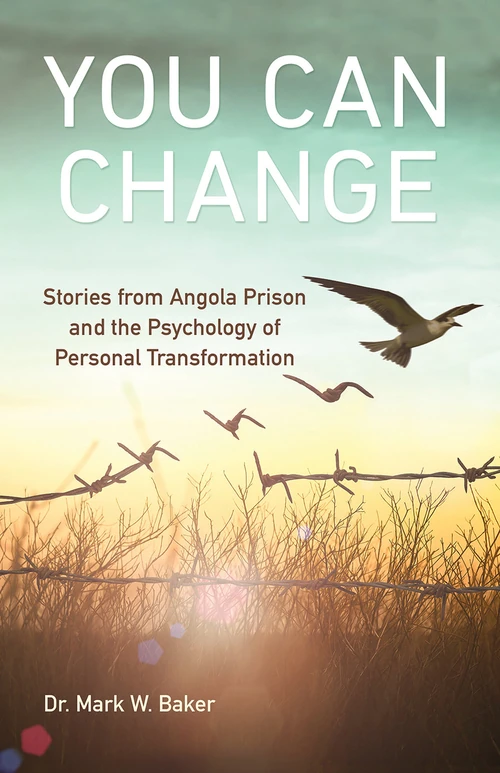
You Can Change
Stories from Angola Prison and the Psychology of Personal Transformation
- Christian Living
- Publisher: Fortress Press (Augsburg Fortress)
- Published: 2020
FritzSearch.com earns a commission on purchases made through Bookshop.org links.
Publisher's Description
Once the most brutal prison in the country, Angola was transformed into one of the most effective sites for rehabilitation in the United States. Baker uses stories from inside Angola, along with his decades of experience as a clinical psychologist, to share with readers the amazing human potential for change and personal growth. Drawing on themes of forgiveness, community, justice, hope, and spirituality, Baker shows all of us how to change our lives for the better--no matter who we are or what we've done.
Endorsements (4)
“Dr. Mark W. Baker takes us to Angola Prison to show us that change can happen to anyone. He gives us his scientific research and insight but then he tells us stories—gripping stories of people who truly made lasting change against all odds. If they can, we can, too.”
“Through Baker's personal anecdotes—as well as stories from inmates, guards, wardens, and others—the reader gains insight into the amazing stories of faith and justice in the lives of men in Angola Prison.”
“Among all social locations in American society, Angola Prison is among the darkest and most desolate. Yet there at Angola, by necessity, also shines the brightest light of faith and redemption. In You Can Change, Dr. Mark W. Baker digs deeply into the inner workings of religiously motivated compassion and forgiveness for achieving redemption in the minds and hearts of inmates. Required reading.”
“Hallelujah! Thank you, Dr. Baker, for your courage in eloquently sharing your first-hand knowledge of the powerful and true stories of positive moral rehabilitation taking place in one of our country's most infamous maximum-security penitentiary communities.”
See something wrong on this page? Report a problem