Benno van den Toren
Biography
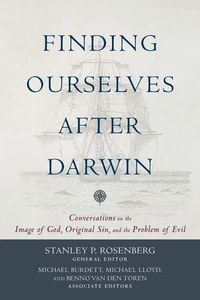
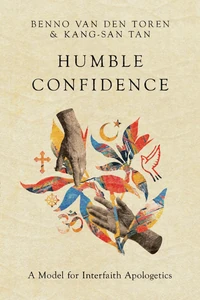
Benno van den Toren co-wrote Humble Confidence with Kang-San Tan, and co-edited Finding Ourselves after Darwin with Michael Burdett and Michael Lloyd.
Bios generated by automated processes. · Report a problem
History & Biography
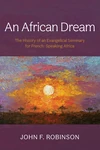
“It is rare that the history of a theological institution can be told by someone who has been intimately involved for fifty years. Jack Robinson allows us close-up view in the development of one of the leading theological institutions for French-speaking Africa, a vibrant part of Christianity worldwide that often remains outside the purview of anglophone Christianity. This history of FATEB is at the same time the story of how African Christianity developed during and after the waning of the protestant missionary era. It also shows how African evangelicalism grew in the expression of its own theological voice so that it could properly address contextual challenges that Western theologians working in the region too often neglected or misunderstood.”
Theology
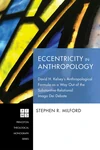
“David Kelsey’s Eccentric Existence has been called one of the most significant theological contributions in a quarter of a century and it certainly is in the area of theological anthropology. Nevertheless, his magnum opus is not very accessible because of its sheer size and the particular style of theological reasoning. Dr. Stephen Milford provides an introduction to, analysis, and a critical appreciation of this unique theological anthropology. He thoroughly examines its background in postliberal theology and skillfully analyzes the complex use of the crucial terms of Kelsey’s central anthropological formula. . . . Milford has done all those interested in theological anthropology and postliberal theology a great service. Most importantly, in helping us understand our humanity as eccentric existence, Milford helps us come to a deeper understanding of ourselves as centered in the life of the Triune God.”
Evangelism & Missions
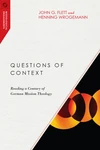
“The discipline of missiology has been one of the major drivers of the growing awareness of the need for intercultural theological exchange. At the same time, missiology has in other respects become more monochrome because of the dominance of the English language. Flett and Wrogemann have done us a great favor by making a selection of insightful German missiological contributions available in English and placing them in context with their careful introductions and conclusions. In the mirror of this missiological tradition we discover that understandings of mission and contextualization are themselves also shaped by their particular contexts. Their contextual limitations or even distortions remain hidden unless we engage in intercultural conversations about contextualization itself.”
NOTE: Only includes books currently in our catalog; not necessarily a complete list.
See something wrong on this page? Report a problem