Bruce Ellis Benson
Biography
Bruce Ellis Benson earned a PhD at Katholieke Universiteit Leuven and previously taught at Wheaton College. Benson has served as distinguished visiting scholar in philosophy at Loyola Marymount University and as executive director of the Society for Continental Philosophy and Theology. Benson's books include Liturgy as a Way of Life (2013) and Graven Ideologies (2002).
Bios generated by automated processes. · Report a problem
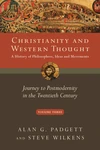
Christianity and Western Thought
Philosophy
“Covering the twentieth century's major figures and movements in philosophy and theology in one volume is truly a feat! That the authors have managed to narrate the history of both analytic and continental varieties of thought in an engaging and lively way is even more impressive. But what is perhaps most remarkable is how judicious and measured the authors have been in their appraisals of the respective figures and movements. The result is a most welcome achievement.”
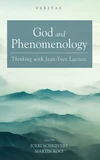
Philosophy
“While Jean-Yves Lacoste is a thinker of great erudition in the fields of both philosophy and theology, his work has received far less attention than it deserves. This is the first collection of essays on his thought, and it will no doubt lead to further ones. Although this volume is not intended as an introduction to Lacoste, anyone familiar with the interactions between the phenomenological and theological traditions will find this volume immensely helpful and will soon want to read Lacoste for themselves.”
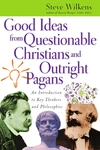
Good Ideas from Questionable Christians and Outright Pagans
Philosophy
“Anyone who wonders whether philosophers might actually have something to teach Christians should read this book. Wilkens does a masterful job of clearly explaining some of the most influential philosophers, carefully unpacking the implications of their thought, and evenhandedly assessing their respective strengths and weaknesses. And ultimately, he demonstrates that each of these philosophers does indeed have something to teach us.”
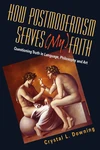
How Postmodernism Serves (My) Faith
Philosophy
“Crystal Downing provides us with a wonderfully personal glimpse into the ways in which postmodernism has served to deepen her faith. Drawing in the reader through everyday vignettes, Downing shows that postmodernism isn't necessarily the 'dangerous' entity that so many evangelicals take it to be. Of course, Downing in no way uncritically accepts all things postmodern. Rather she deftly guides the reader through the positive contributions--and pitfalls--of postmodernism. Although Downing writes on postmodernism in terms of her own faith journey, I suspect that many readers will readily identify with that journey, and find that postmodernism likewise serves their faith.”
Philosophy
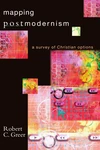
“Even at the beginning of the twenty-first century, many evangelicals remain unclear what postmodernism means and how it affects current theological dialogue. Greer adeptly navigates the terrain by defining terms, considering the effects of 'modern' concepts on theology, critically examining various types of theological 'realism' and ultimately pointing us to what he calls 'post-postmodernism.'”
Theology
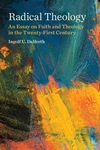
“Ingolf Dalferth's Radical Theology is 'radical' in the best sense of the word—returning to the root of theology. Although his text admirably serves as an introduction to theological hermeneutics, it is his positive contribution to understanding what radical theology is all about that makes it so distinctive. Dalferth shows us that theology is not one science among many but is all about what is possible. While employing scientific methodologies is perfectly appropriate, what makes theology 'radical' is that it is grounded in faith, which represents a new perspective and a way of life that focuses on the Creator. All in all, a remarkable achievement.”
Recovering Theological Hermeneutics
Theology
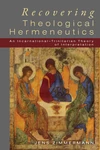
“In Recovering Theological Hermeneutics, Zimmerman offers a compelling argument for the claim that hermeneutics must be theological if it is to be truly hermeneutical. Through a fair and careful reading of premodern and postmodern hermeneutical theorists, he shows their true kinship. Building appreciatively (though not uncritically) upon insights of Gadamer, Levinas, and Derrida, Zimmerman draws from Bonhoeffer and Balthasar to construct an incarnational hermeneutic. Zimmerman provides us with a deeply Christian view of human understanding--one that results in nether hermeneutical triumphalism nor hermeneutical despair but affirms understanding as relational, historical, and ultimately based on God's revelation.”
Whose Community? Which Interpretation?
Theology
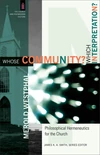
“Westphal deftly navigates between hermeneutical despair and hermeneutical arrogance to arrive at a hermeneutic that affirms the vital importance of interpretation and yet insists that Scripture itself truly speaks. The result is not only a judicious and correct theory of interpretation but also a striking demonstration of what such a humble and respectful hermeneutic looks like in practice.”
NOTE: Only includes books currently in our catalog; not necessarily a complete list.
Philosophy
World Religions
See something wrong on this page? Report a problem