Bruce L. McCormack
Biography
Bruce L. McCormack wrote Orthodox and Modern, and edited Engaging the Doctrine of God.
Bios generated by automated processes. · Report a problem
Theology
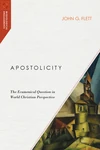
“The missiological movement in the nineteenth century was a powerful force in the creation of the ecumenical movement in the twentieth. Today, it would seem that missiological theology gives promise of reorienting an ecumenical movement that is threatening to retreat into a form of splendid isolation, making itself unwittingly supportive of the attitudes of colonization that missiologists (through a lengthy period of self-criticism) have largely left behind them. At the heart of this book lies a searing indictment of those 'communion ecclesiologies' that, through their identification of the being of the church with practices internal to them, foster an understanding of mission in terms of the cultivation of precisely those practices in other contexts, without regard for the fact that the church itself is being treated in the process as a culture whose task then becomes the subsumption of other cultures into itself. This is a book that is bound to make some folks angry. Hopefully, it will awaken many others to the need for more culturally-sensitive accounts of Christian mission.”
Theology
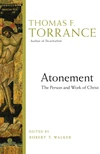
“The posthumous publication of T. F. Torrance's New College lectures on soteriology is indeed an event. What is intended here is an account of the saving work of Christ which does justice to the full sweep of biblical testimony (Old Testament as well as New). What is achieved is something on the order of a model of models--an appropriation of the values resident in traditional ontological, forensic and moral models in an original synthesis that commands attention and respect. Torrance's stature as the leading Scottish theologian of the twentieth century will only be enhanced by these lectures, ably edited by Robert Walker.”
Theology
Foreword
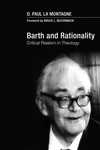
“With the publication of La Montagne's book, a new day has dawned in which Barth's 'post-Kantian' theological epistemology has to be taken seriously by those engaged in the theology and science debates . . . My gratitude to Paul La Montagne, for what I have learned from him is profound. I now eagerly look forward to seeing what others will do with the hard-earned results of his inquiry.”
Theology
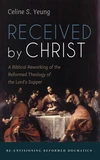
“This is, in my judgment, the most compelling case against ‘sacramentology’ yet to be written. Simple, elegant, and profound in style and execution, Celine Yeung shows that the meaning of the Lord’s Supper is only rightly apprehended where the institution narratives are read against the background of the institution of the Passover in Exodus 12 and the covenant meal in Exodus 19–24. The result is a non-sacramental rite of inclusive forgiveness, extended to those who are being made to be God’s people through obedient participation in an event with political implications. I love this book!”
Theology
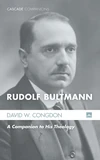
“Being master of a subject matter as demanding as Rudolf Bultmann's theology and a master communicator, capable of introducing that subject-matter to beginning students in a manner both interesting and arresting (!) is rare. David Congdon has that rare combination of skills. This is a wonderful 'guide' to Bultmann's thought. Indeed, it is hard to imagine one more perfectly executed. It is a companion worthy of the thought of one of the real giants of twentieth century theology.”
The Transgression of the Integrity of God
Theology
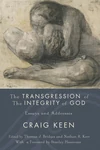
“"Talk of self-involving knowledge and performative speech has become so widespread in recent years that I almost hesitate to use it. But in relation to Craig Keen's work, there is really no alternative. Keen's writing is animated by a deep personal desire for an authentically kenotic existence, and a longing for the coming of a community of women and men who understand that they cannot live until they die. There is pain and anguish in these essays but there is also well-founded hope. I cannot read them without being reminded very forcibly of the crisis theology of the young Karl Barth. This is a book to be read and savored-and read again.”
Theology and the End of Doctrine
Theology
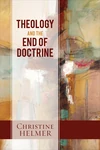
“The title is deliberately ambiguous: the true ‘end’ (purpose) of doctrine is to point beyond itself to the relation of the living God to human beings in this world. Where this ‘end’ is lost to view, we are threatened with the ‘end’ (demise) of doctrine. Christine Helmer wants to reinvigorate doctrine. To accomplish this goal, she takes us on a historical journey through twentieth-century theology: from the Ritschlian reaction against mysticism and metaphysics and Brunner’s critique of Schleiermacher through Barth’s theology of the Word to the creation of an epistemic model by the so-called Yale School in which doctrine has lost its referential status altogether and thus its connection to divine and historical reality. Helmer’s constructive solution proceeds through a recovery of Schleiermacher’s epistemology (exploding a few myths about the great Berliner along the way!) in order to advance an understanding of doctrine as the expression of a socially conceived interaction with the ‘real.’ What emerges from this fine study is a theological epistemology that expands and deepens Barth’s concept of the Word in important ways and an understanding of doctrine that repairs the damage done to its reputation in recent decades.”
Theology's Epistemological Dilemma
Theology
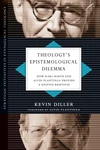
“Bridging the divide between an analytic philosophy like Plantinga's and a Christologically-based account of theological knowledge like Barth's will seem counterintuitive to many. But given the rancorous, often divisive character of so much theological debate these days, it is much needed. Beginning with the observation that neither Plantinga nor Barth is a 'non-foundationalist'—that both are, in fact, 'theo-foundationalists' who ground knowledge of God in a trinitarian conception of revelation—Diller goes on to argue that Barth's theological epistemology, while not dependent upon any general theory, is at least compatible with Plantinga's. The results are intriguing and give promise of opening a conversation between the followers of these two great Reformed thinkers.”
NOTE: Only includes books currently in our catalog; not necessarily a complete list.
Theology
See something wrong on this page? Report a problem