C. Stephen Evans
Biography
C. Stephen Evans wrote Why Believe?, A History of Western Philosophy, and Why Christian Faith Still Makes Sense.
Bios generated by automated processes. · Report a problem
Apologetics
“This book is a thoughtful introduction to Christian apologetics that is focused on the needs and interests of students but embodies a deep understanding of the underlying philosophical issues. It is a wise and helpful book.”
Philosophy
“Kierkegaard famously described his task as 'reintroducing Christianity into Christendom.' In this wonderfully rich and clearly written book Mark Tietjen helps us understand what Kierkegaard meant by this, and thereby helps us see how vital it is for the contemporary church to encounter Kierkegaard's thought. Kierkegaard's message will pull us away from complacency and help us understand anew what it means to be a follower of Jesus. Kierkegaard shows us that this is a task for a lifetime; we never 'arrive' short of death, but we can go ever deeper in faith, hope and love.”

History & Biography
“Kierkegaard believed that to understand a historical figure, one must be able, imaginatively, to become the person’s contemporary. In this gripping biography, Stephen Backhouse helps us become contemporaries of Kierkegaard himself. In these pages the Danish thinker comes alive. This book gives us an extraordinary portrait of an extraordinary human being.”
Kierkegaard’s Theological Sociology
Philosophy
“Everyone supposedly knows that Kierkegaard was an ‘individualist’ who had little understanding or appreciation of society. This book completely undermines that myth by showing us how much Kierkegaard has to contribute to social theory. The author also thereby helps us see that theology cannot only learn from sociology but has much to contribute to social theory in turn.”
Christian Living
“As the title implies, this book shows that a Christian worldview is not merely something of intellectual importance, but it has relevance to the whole of life. Clearly written and powerfully argued, Living at the Crossroads is rooted in biblical faith but reaches out to engage the contemporary world in a historically informed way. This is essential reading for thoughtful Christians who wish to live out the gospel and love God with all of their being.”
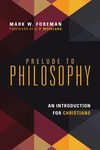
Philosophy
“This book is a helpful study of what philosophy is, how it is done and why it is valuable, especially for Christians. It is clearly written, with lots of real-life examples and stories, and will be of real value to students beginning work in philosophy.”
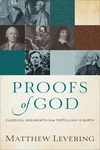
Theology
“Levering's work is a careful, scholarly treatment of the history of attempts to argue for and against the existence of God. Levering recognizes the limits of such arguments and understands that they do not provide the kind of knowledge of God that Christian faith considers necessary for true relation to God. Nevertheless, he defends the value of such arguments as pointing to a mystery and majesty that requires Christian revelation to fully understand. The book is especially good in retrieving the contributions of patristic and medieval thinkers and gives a helpful account of the work of more recent thinkers, such as Maurice Blondel, Pierre Rousselot, and Réginald Garrigou-Lagrange, who are often ignored in contemporary Anglo-American philosophy.”
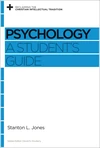
Counseling, Grief & Mental Health
“An insightful account of contemporary psychology and its relation to the Christian faith. Jones helps readers understand where psychology is today and how it got there. He shows how Christians can learn from and contribute to psychology while preserving a critical perspective rooted in biblical faith. A wise and helpful book.”
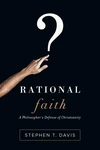
Apologetics
“In this book, Stephen Davis offers a clear and cogent case for the reasonableness of Christian faith. In a relatively short book, Davis manages to treat just about every issue that an honest person concerned about Christian faith might want to ask, ranging from reasons to believe in God and Jesus as God's Son to problems connected to science, religious diversity and uniqueness, and evil. Davis is fair to the critics of Christianity and careful not to claim more than his arguments warrant. This is a book that will be helpful to both believers and unbelievers. The tone is personal and down-to-earth; the reader comes away with a sense of having had an enjoyable, stimulating, and possibly life-changing conversation.”
Theology
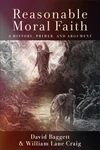
“This book is a stunning achievement. The authors have done more than one would imagine one could in a single book: They have given a careful and informative history of moral arguments for God, provided a careful and charitable account of the contemporary debate about the issues, and developed a comprehensive, multipronged version of the argument, dealing along the way with a host of issues and alternative views. Of course, not every claim will be convincing to all readers, something the authors concede; I myself wish they had been kinder to the long tradition of Christian Platonism. However, Reasonable Moral Faith will be helpful to anyone who wants to think seriously about the relation of morality to God. It is a work to which I will often return and for which I am deeply grateful.”
The Aesthetics of Discipleship
Christian Living
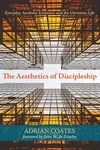
“Coates draws on several important thinkers to make a case for understanding the role of aesthetics . . . for Christian discipleship. I think his treatment of Kierkegaard is especially valuable, since he shows that Kierkegaard in the end is a kind of Christian humanist, not the ‘anti-humanist’ some of his critics make him out to be.”
The Integration of Psychology and Christianity
Counseling, Grief & Mental Health
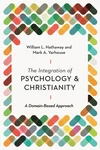
“This book is a clear and thoughtful attempt to take stock of the movement to connect contemporary psychology with Christian faith and to advance this project. Hathaway and Yarhouse give a fair and appreciative look at critics of the project in an attempt to derive helpful insights from them. This book would be a helpful starting place for those thinking about the relation between Christian faith and psychology, but it will also be valuable for those who are already familiar with some of the issues that have been part of the debate. There is a generous and irenic tone to the book that is highly welcome, and the authors show that the term integration can mean very different things.”
Theology
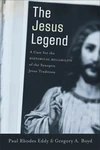
“Eddy and Boyd provide a clearly written, carefully researched, and powerfully argued defense of the historical reliability of the Synoptic Gospels. What makes this book noteworthy is the careful treatment of underlying issues in historical methodology and philosophy. A pleasure to read and a wonderful resource for those who have encountered troubling skeptical claims about the Gospels.”
Philosophy
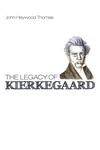
“"In The Legacy of Kierkegaard Thomas gives us a reading of Kierkegaard which manages to be both faithful to the text and deeply original. While taking Kierkegaard's Christian faith with the utmost seriousness, Thomas shows us a Kierkegaard who is a profound philosopher with deep things to say about metaphysics and ethics, time and immortality.”
Apologetics
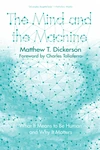
“An engaging and probing exploration of some of the fundamental questions humans ask about themselves: Is a human being just a machine made out of protein? Are humans completely determined by the physical processes going on in their bodies? Is the belief that humans are spiritual just a vestige of prescientific thinking? Dickerson attacks these questions--and many others--with verve and elan. The book is a model of interdisciplinary inquiry, drawing on a deep understanding of contemporary philosophy, science, and computers.”
Philosophy
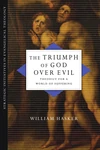
“A serious and original work of philosophy that will engage thoughtful pastors, educated lay Christians of an intellectual bent, and advanced undergraduates in philosophy and theology, as well as professional philosophers.”
Philosophy
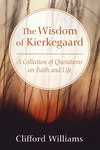
“Here Clifford Williams, who is himself a fine philosopher, has judiciously selected a host of insightful, provocative, and sometimes humorous quotations from Kierkegaard. A fine introduction to Kierkegaard's thought and a wonderful resource even for those who know Kierkegaard's writing well. Williams reminds those of us who love Kierkegaard why we continue to do so.”
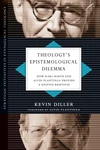
Theology's Epistemological Dilemma
Theology
“In this work, Kevin Diller attempts to show that Alvin Plantinga's religious epistemology and Karl Barth's theology of revelation are not only consistent, but mutually supportive. Many will initially find this conclusion surprising and perhaps downright implausible, but Diller's arguments for his claim are careful and clear and show a deep understanding of both Barth and Plantinga. Many theologians who know Barth well know little about contemporary Christian philosophy in general and very little about Plantinga. Many Christian philosophers have only a superficial understanding of Barth's theology. This book will be profoundly helpful to both groups.”
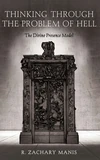
Thinking Through the Problem of Hell
Theology
“The Christian doctrine of hell is a problem for many—both believers and non-believers. Thinking Through the Problem of Hell provides a clear and persuasive case that the doctrine can be understood in a way that does justice to God’s love. R. Zachary Manis connects the problem of hell to the more general problem of why God allows evil as well as the problem of divine hiddenness. His solution draws together biblical teachings and church tradition to solve a number of pressing philosophical and theological problems.”
Philosophy
“"Christian" authorship as well as the more widely-known pseudonymous works.”
NOTE: Only includes books currently in our catalog; not necessarily a complete list.
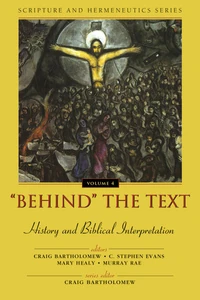
A History of Western Philosophy
Philosophy
Philosophy
New Dictionary of Christian Apologetics
Apologetics
Apologetics
Why Christian Faith Still Makes Sense
World Religions
See something wrong on this page? Report a problem