Carl R. Trueman
Biography
Carl R. Trueman earned a PhD at the University of Aberdeen and has served as professor of biblical and religious studies at Grove City College, contributing editor at First Things, and fellow at the Ethics and Public Policy Center. Trueman previously served as Paul Woolley Professor of Church History at Westminster Theological Seminary in Philadelphia and as a visiting fellow at Princeton University. Trueman's books include Classical Theology for the Modern Mind (2026) and Crisis of Confidence (2024).
Bios generated by automated processes. · Report a problem
Biblical Studies & Commentaries
“all-too-common rubbish written on the theme, and an encouraging challenge to us all to be conformed more closely to the mind of Christ, not simply in our personal lives but, most important of all, in our corporate church lives. I hope it is widely read. It deserves to be so.”
Theology
“Gerald McDermott is well known as a Jonathan Edwards scholar. Now he has stepped into the role of updating the great theologian’s work by offering his own account of the history of redemption. But this is no mere rehash of Edwards. Instead, McDermott works to bring out the astounding beauty of redemption (a much-neglected category in Protestantism) for a new generation. A very encouraging volume.”
Theology
“Recent studies of Reformation and post-Reformation theology have pointed to both the consensus nature of confessional documents and the diversity that existed within the context of overall confessional agreement. In this fine study, Master offers an analysis of that key Protestant doctrine, assurance, which is also sensitive to precisely the kind of range of confessional opinion which is now understood to be an established part of Reformed theology of the period. This is an excellent book, embodying extensive use of primary sources, sound knowledge of the state of contemporary scholarship, and judicious judgments on the nature and range of Reformed opinion on the topic.”
Christian Living
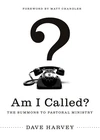
“The issue of the call to pastoral ministry is a complicated one, involving matters of character, technical ability, and the guidance of the Holy Spirit. In this book, Dave Harvey offers a good overview of the things that anyone contemplating the ministry needs to consider. In an accessible, conversational style, Dave guides the reader through the biblical teaching on this matter—carefully balancing the external and the internal aspects of the call. He also provides apposite anecdotes from church history to illustrate his points. Full of wisdom and wit, Am I Called? is a delightful and challenging book for potential ministers, their wives, and, indeed, those already in the ministry to read. Highly commended.”
Apologetics
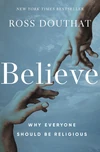
“At a time when strange things are happening, a time when even notorious atheists are willing to call themselves themselves cultural Christians, there are some amazing opportunities for unexpected conversations between Christians and those outside the faith. That’s where Ross Douthat’s book is so useful. Like a modern-day Greek apologist, he makes a gentle and thoughtful case for religion in general and Christianity in particular. Christian readers will be helped both by his style and content to discuss their faith with the curious, and the curious will find much to make them think. And all of this comes with Douthat’s customary clarity, wit, and precision.”
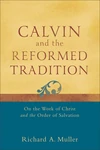
Calvin and the Reformed Tradition
Theology
“Richard Muller has been the key player in the extensive revision of how the theology of Calvin and his contemporaries is understood to relate to that of the later Reformed tradition. Wide-ranging in scope, penetrating in argument, and breathtaking in scholarship, these essays are representative of Muller at his very best.”
Theology
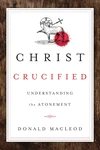
“Those who have heard Donald Macleod preach or who have read his writings will know that the crucified Christ is, of all theological topics, his forte. He has dazzling insight matched by a way with words which together serve to bring out aspects of the person and work of Christ with memorable beauty. Thus it is a pleasure to be able to commend this book. If you are familiar with Donald?s work, you know what to expect and know that you will be challenged and edified. If you have never read him before, you are in for a treat.”
Christian Living
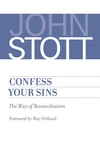
“Drawing on the classic texts and major authors of his own Anglican tradition, Stott offers a compelling case that particular sins should be confessed particularly and that private confession to an offended party should be an important part of the Christian life. . . . An excellent biblical, historical, and practical treatment of the subject from which all Christians will profit.”
Theology
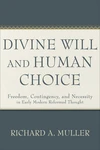
“There is not a more contested area in the study of Reformed orthodoxy than issues of divine foreknowledge, human free will, and the nature of contingency. The matter is highly complicated and involves multiple questions of interpretation and reception, including how Aristotle was appropriated by medieval schoolmen, such as Aquinas and Scotus, and how the medievals were then used by the Reformed. Those new to the field can easily become overwhelmed by the sheer volume of primary literature and the confusing subtlety of the arguments. In this context, Divine Will and Human Choice is a welcome addition to the literature because it offers both the neophyte and the scholar a superb account of the various questions involved and provides judicious critiques of the contemporary debate.”
Christian Living
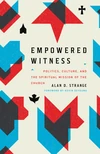
“The spirituality of the church is a doctrine that has fallen on hard times in recent years, and perhaps understandably so, given its very real historical association with a laissez-faire attitude to slavery in the antebellum American South. Nonetheless, at its heart, it expresses a vital truth: the church’s business is primarily heaven, not earth; yet Christians still live in the earthly city, and our faith is to make a difference in all areas of our lives. In this context, Alan Strange’s book is to be heartily welcomed as a guide for the perplexed who seek to honor the church’s task in dwelling on heavenly things while using this mindset as a motive for loving neighbors and being a good citizen. It is a tricky and controversial subject, but Strange’s thoughtful, clear, and kind book gently threads the needle. I hope it receives a wide readership and generates many constructive discussions.”
Theology
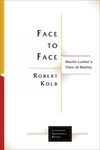
“The face is one of the key things that separates humans from all other animals: in a mysterious sense, we are our faces, and face-to-face encounters with others are always personal and relational. In this creative and ingenious work, Robert Kolb explores the significance of the face, and of the language of face-to-face encounter, in the theology of Luther. In so doing, he brings to life and to relevance the greatness of the reformer's thought in a new way that is of real significance for our contemporary discussions of what it means to be human, and especially to be human before God.”
Theology
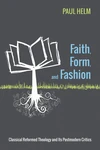
“Classic Reformed Theology has always been under threat, both externally from enemies and internally from misguided friends. In this book, Paul Helm offers a trenchant exposition and defense of Reformed Theology, deploying his usual artillery of historical, confessional, and philosophical arguments. This book will hopefully persuade non-Reformed readers to take the Reformed faith more seriously and also provide those already Reformed with better arguments for their beliefs.”
History & Biography
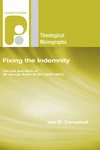
“Dr. Campbell sheds light on a number of issues: the often complex relationship between scholarship and ecclesiastical commitment; the subtle nature of the negotiation between higher criticism and confessionalism in church life; the response of the church to the social and cultural upheavals of the late nineteenth and early twentieth centuries; and the perennially vexatious question of the relationship between heartfelt piety and hard-headed theological work.”
Give Me Understanding That I May Live
Christian Living
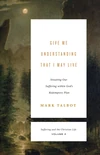
“With this volume, Mark Talbot continues what looks set to be a tour de force on Christianity and the suffering Christian. In his first book, he pressed the existential power and importance of individual narratives of pain and anguish. Here he steps back and sets those stories within the larger framework of the great narrative of God’s dealings with his people. If it is true that every story of human suffering has its unique pain for those involved, Talbot demonstrates with characteristic conviction and authority that all redemption from suffering must be understood in terms of the unique revelation of God in Christ.”
NOTE: Only includes books currently in our catalog; not necessarily a complete list.
Theology
Discipleship & Christian Education
Christian Living
Ethics, Culture & Social Issues
Ethics, Culture & Social Issues
Editor
See something wrong on this page? Report a problem