Carl Raschke,
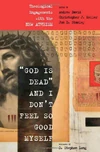
"God Is Dead" and I Don't Feel So Good Myself
Apologetics
“In this exceptionally readable and engaging volume of essays--ranging from the accessibly academic to the largely belletristic--the diverse authors, along with their editors, pose one of the most effective answers to the so-called 'new atheists' that has come down the pike in recent years. Avoiding both the baroque scholasticism of so much contemporary postmodernist philosophy and the kitschy special-pleading of many popular theologians, God is Dead and I Don't Feel So Good Myself is special soul food for today's thinking Christian. . . . The book is a must read for all those frustrated onlookers who feel the new atheists have received far more attention than they deserve.”
Ethics, Culture & Social Issues
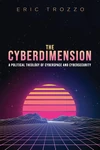
“Eric Trozzo's book is a welcome, first-of-its-kind exploration of the deeper ‘spiritual’ and theological significance of the dominant role of digital media in today's world. Trozzo does not traffic, like many before him, in half-baked metaphors and superficial comparisons, but through an understanding of the technical aspects of the internet persuasively argues that the so-called ‘cyberdimension’ mimicks, perhaps fatefully, divine incarnation in ways we have never encountered before.”
Theology
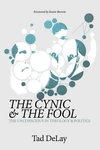
“At a time when vicious partisan politics has replaced the wars of religion with their odium theologicum of bygone ages, Tad DeLay's Cynic and the Fool is a must-read for thoughtful people, regardless of their ideological persuasion. Through storytelling, personal anecdote, and frequent flashes of magisterial pedagogy, DeLay entices us into confronting the knotted tangles of our own 'political unconscious' and offers us hope that we will eventually know the truth and that it might free us, even if we are in a so-called 'post-truth' era.”
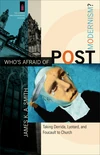
Who's Afraid of Postmodernism?
Theology
“Who's Afraid of Postmodernism? by James K. A. Smith is a powerful and persuasive rejoinder to those in the evangelical academy who persist in pushing the now discredited canard that postmodernism is incompatible with both historical Christianity and the history of orthodoxy. Smith weaves an incredibly insightful exposition of three key postmodern philosophers--Derrida, Lyotard, and Foucault--with illustrations from both popular media and culture. He concludes with a proposal for recovering liturgy and 'redeeming dogma' while rethinking the mission of 'confessing' Christianity in a global setting. Postmodernism, according to Smith, is something you not only don't need to be afraid of any longer but you can even take it to church!”
NOTE: Only includes books currently in our catalog; not necessarily a complete list.
Theology
Ethics, Culture & Social Issues
See something wrong on this page? Report a problem