Celia Deane-Drummond
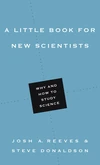
A Little Book for New Scientists
Science & Faith
“This book is essential reading for Christians contemplating a vocation in science. It will, in addition, be fascinating for those who are not scientists but are interested in how and why science works the way it does. The authors not only successfully debunk common myths about the history of science and religion, they also provide a very honest and insightful account of scientific practices, including both its temptations and achievements. Too often the science-and-religion debate has resisted engaging with science studies alongside the specific religious quandaries opened up by scientific knowledge. This little book manages to achieve a great deal in just a few pages, which makes it particularly useful for introductory teaching contexts.”
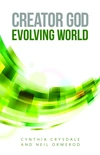
Science & Faith
“In this lively and clearly written book, the authors present a clear case for the compatibility of cosmological and evolutionary science and classic belief in God as Creator. Crysdale and Ormerod achieve the complex task of building up insights from physics, biology, metaphysics, theology and ethics in a way that makes it much more manageable for the general reader. Above all this is a book that helps challenge stereotypes set up in the clash between science and Christian religion and allows for a more nuanced classically informed theology to emerge.”
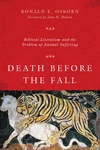
Science & Faith
“In this book the author invites his readers to share his own profound journey arising out of melding his formative early experience of wildlife in Africa, contemporary evolutionary accounts and creationist biblical literalism. In clear, coherent and well-argued narratives he takes apart the assumptions common to scientism and creationism and draws on the Christian tradition and biblical sources in order to construct an alternative. This is an intelligently argued yet pastorally sensitive exploration of the challenges faced by evolutionary theists and creationists alike, but its implications go much further than this. For Osborn succeeds in achieving something that few authors manage, namely, a self-critical but compassionate and sometimes humorous account of the difficulties for theists in coming to terms with suffering in the animal world. It deserves to be read and appreciated not just in student courses on God and evolution, but more widely from different ecclesial traditions.”
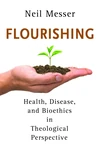
Science & Faith
“In this lively and informative book Neil Messer demonstrates his intellectual alacrity by engaging in a careful and thoughtful way with some of the most pressing issues facing those in the health caring professions. . . . His achievement is to produce a critical framework for thinking through difficult and highly charged bioethical problems and illustrating this by close attention to particular examples, drawn from particular medical cases and disability studies. . . . Flourishing deserves to be widely read, not just by specialists in theological bioethics, but also by health practitioners and other health professionals.”
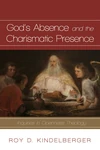
God’s Absence and the Charismatic Presence
Theology
“This book draws on a lifetime of Christian leadership experience alongside patient biblical analysis in order to make a case for a dynamic understanding of how God acts in the world. . . . This book will be intriguing, inspiring, and challenging, but wherever the place of the reader on the Christian journey, this book will offer guidance that will feed the mind as well as the spirit.”
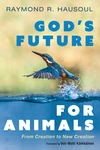
Theology
“In this honest, probing book, the author argues convincingly—drawing on a detailed analysis of a wide range of biblical sources—that all animals, not just humans, are included in creation, covenant, redemption, and future expectation. This highly accessible yet thoughtful book will challenge, encourage, and stimulate the reader to think differently and more positively about the place of animals in salvation history.”
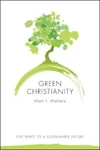
Ethics, Culture & Social Issues
“In this provocative book, written for a general audience, Mark Wallace challenges his readers to go to the limit of ecological Christianity. His creative interweaving of practical, almost poetic encounters with the natural world, alongside reflection on raising awareness in local deprived social communities, serves to base this book on everyday lived experience. But this book is also unusual in its deliberate yoking of environmental responsibility with reclaiming a positive approach to sensual, bodily, erotic desire inspired by alternative radical feminist readings of biblical texts. By adopting a version of what he terms a Christian animism, he challenges notions of separation that have dominated Christian thought. This book should carry a health warning: be prepared to be disturbed. But this unashamed polemic for human communities to change in order to create a more sustainable future is a message that this generation desperately needs to hear in Western societies.”
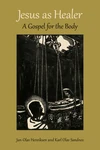
Theology
“This book is an example of fine scholarship at its very best: two erudite scholars from different disciplines — New Testament studies and philosophical theology — combine their talents in a joint work on Jesus’ healing ministry and its significance for contemporary theology. This fascinating and richly diverse text covers many topics connected with healing, but perhaps is most persuasive because it pushes readers beyond their current experience. . . . A convincing case for the continued significance of the healing aspects of Jesus’ ministry.”
Theology
“In this thoughtful and wide-ranging book, the author tackles some of the pressing issues that have bothered those engaging in ecological ethics from a theological perspective for decades, presenting them in a fresh light. His integration of theological questions around other animals with ecological concern becomes filtered through core systematic perspectives on cosmology, anthropology, and eschatology, using classic and contemporary sources. McLaughlin weaves this critical analysis into an argument for a thesis that resists anthropocentrism and remains relatively undeveloped in the theological literature, namely, cosmocentric transfiguration. Jürgen Moltmann and Andrew Linzey are familiar figures in ecotheology and animal ethics but feature here as new bedfellows. This is a substantial book that deserves to be widely appreciated.”
Theology
“In this moving and deeply pastorally sensitive book, Moltmann demonstrates once again his ability to write on difficult and culturally relevant topics of enduring significance. The theological meaning of death, dying and bodily resurrection becomes transformed through imaginative dwelling with the witnesses in the biblical account, particularly women. This is a book that deserves to be read time and time again.”
The Art of Living for A Technological Age
Ethics, Culture & Social Issues
“In this boldly imaginative book, the author tackles the fundamental question of how humanity may learn to live and indeed flourish within a technologized world that carries ontological status, bearing the marks of human sin. Techno-ontology is, he argues, a form of betrayal of human identity that raises the possibility of active dissent, though without withdrawal. He proposes a renewed anthropology caught up in a labor of long-suffering that takes its richest meaning and resourcefulness from the Christian narrative. This is theological ethics at its best.”
Science & Faith
“In this clearly written and comprehensive book, the author introduces her readers to the whole gamut of applications of AI and their accelerating pace of development. Her assessment of the risks and benefits of AI takes its cues from Karl Barth's relational theology, weaving in broader anthropological issues of the risks of AI as a means to gain political or economic control. Humanity is at risk of being deluded by the very machines we have created, but at the same time is offered the more hopeful possibility of partnership. A compelling read that will be of great interest to students and ministers of religion.”
Theology
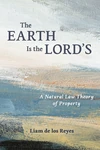
“This deeply scholarly, original, and carefully crafted book fills an important gap in the literature in developing a coherent theory of property informed by philosophical analysis and Catholic social traditions. The author makes a convincing philosophical argument that theories of justice have so far lacked adequate reflection on theories of property. The book develops a case for property as a convention arising out of our social and creaturely nature. Importantly, it allows for equity, equality, sufficiency and liberty in divine intention becoming embedded in the establishment of property regimes. This is achieved primarily by drawing on scholastic theories of natural law which are grounded in humanity’s earthed and rational nature. Such a theoretical grounding rules out the possibility of tyranny and interprets dominion over the earth as the right direction and ordering exercised by human reason. The book also engages in an interesting way with Catholic social teaching and more specifically the work of liberation theologian Ignacio Ellacuria. Scholars interested in theories of social justice and property rights, the development of Catholic social thought, and the application of natural law will find in this book a treasure trove of carefully argued critique, analysis and creative insight.”
NOTE: Only includes books currently in our catalog; not necessarily a complete list.
Theology
Science & Faith
Science & Faith
See something wrong on this page? Report a problem