Christopher Gehrz
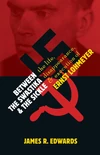
Between the Swastika and the Sickle
History & Biography
“Whenever I teach the history of 20th-century Europe, I incorporate stories from Christians who resisted the evils of totalitarianism. . . . Thanks to theologian James R. Edwards, this fall I can add one more name to that cloud of witnesses: the German Lutheran Ernst Lohmeyer, who stood fast against Nazism as survived fighting in two world wars, only to be executed by Soviet authorities in 1946.”
The Fearless Christian University
Discipleship & Christian Education
“Whether I agree or disagree with him, no one makes me think more deeply, critically, and creatively about Christian higher education than John Hawthorne. Drawing on his extensive experience as a professor, administrator, and accreditation peer reviewer, John offers knowledgeable analysis of the challenges facing Christian universities and a hopeful vision for their future. Thought provoking and wide ranging, The Fearless Christian University will be especially valuable reading for the leaders whose decisions now will shape their institutions for years to come.”
World Religions
“I’ve been using John Fea’s textbook for as long as I’ve taught my department’s Introduction to History course, and I’m eager for my students to start reading his updated edition. Why Study History? remains an accessible, winsome, and thought-provoking case for the power of history from a leading scholar who approaches the study of the past as a Christian vocation.”
Word-Spirit Communal Revelationalism
Theology
“American religious history often takes its most surprising turns in the stories of smaller denominations, which both echo larger themes and complicate prevailing dichotomies. Such is the case with the Ashland Brethren, whose European ancestors harmonized Anabaptism and Radical Pietism . . . . Through his examination of Miller’s Word-Spirit synergy and conservative-progressive dialectic, Brethren theologian Jason Barnhart may offer contemporary readers a ‘blessed middle way’ between twenty-first century polarities.”
NOTE: Only includes books currently in our catalog; not necessarily a complete list.
History & Biography
Co-author
See something wrong on this page? Report a problem