D. Stephen Long
Biography
D. Stephen Long, an ordained elder in the United Methodist Church, has served as Cary M. Maguire University Professor of Ethics at Southern Methodist University. Previously, Long served as Professor of Systematic Theology at Marquette University. Long's books include The Art of Cycling, Living, and Dying (2021), The Perfectly Simple Triune God (2016), and Saving Karl Barth (2014).
Bios generated by automated processes. · Report a problem
Preaching & Worship
“Christian Preaching brings together two disciplines that have sadly grown apart such that they almost developed irreconcilable differences--preaching and theology. Pasquarello offers a brilliant critique of theology as technique and draws on the theology and sermons of Irenaeus, Augustine, Luther, Wesley, and others, convincingly demonstrating that effective, pragmatic preaching requires substantive theological engagement (and vice versa). This book accomplishes its purpose so well that it should be used not only in preaching courses but also in basic theology courses. No preacher should be let loose on a congregation without passing through Pasquarello's Christian Preaching.”
Ethics, Culture & Social Issues
“Modern life and thought has a centripetal force, separating into discrete units what should be held together: politics, economics, theology, metaphysics, liturgy, and history. This division of labor creates specialists who can see the units but lack focus for a larger vision . . . In this substantive, readable, brief history of the relation between theology and politics, Pecknold focuses our vision by bringing together his own considerable acumen for both theology and politics. This comprehensive work shows connections that only someone of his breadth of knowledge could see. The result is a first-rate work that sets the bar for political theology.”
Theology
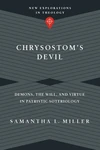
“In an age when we have lost the ability to discern the principalities and powers, Miller's Chrysostom's Devil is a welcome intervention. She offers a historically substantive demonology and its place in the theology of the early church, particularly that of Chrysostom. As important as the historical analysis is, this work offers much more. It is a profound investigation into moral theology. The discussion of proairesis is brilliant. Given its ongoing importance for theological and philosophical ethics, her work should be required reading for anyone interested in a theological rendering of human action and practical reasoning. Miller not only shows us why we should have 'no sympathy for the devil,' she shows us how we can avoid it.”
Theology
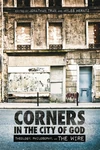
“This book should create a conversation about those places we have 'left behind,' but God has not. It is an imaginative synthesis of culture, politics, and theology. Every undergraduate theology curriculum would be well served by creating a course that explores these 'corners' through the analyses in this work.”
Theology
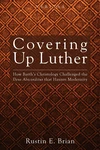
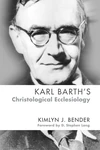
“Rather than accepting well-worn interpretations of Barth (and Luther), Brian breaks fresh ground with a provocative--and for that reason all the more interesting--interpretation. Barth was not a dialectical theologian indebted to a Lutheran Deus absconditus. Instead, he was a theologian of the glorious paradox of the fullness of God present in Christ. . . . Brian's book marks an important contribution for a new direction in Barth studies.”
Theology
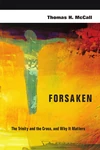
“By addressing the thorny question of how we speak well of God given Jesus' cry of dereliction, Thomas McCall's Forsaken offers not only a welcome but also an indispensable contribution to theology proper. He challenges much modern theology that sets God against God and implicitly or explicitly presents a broken Trinity that inclines toward a denial of essential Christian teachings such as God's simplicity and impassibility. He accomplishes this through a careful biblical and theological argument that is faithful to Scripture and trinitarian doctrine. Generously confronting this modern inclination, he persuasively demonstrates it is misguided and unnecessary. In the process he offers a beautiful and truthful doctrine of God worthy of the triune God Christians confess. Careful readers of this book will avoid tempting but misguided modern theological confusions.”
Christian Living
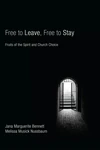
“A friend of mine once said, 'You have an aisle seat in the Methodist Church.' He was right. Like many I have struggled with the question if I should stay or leave the church that formed me and that I love. So many seem to be dissatisfied with their church these days that the movement among churches is dizzying. Liberal Catholics become Episcopalians. Evangelicals turn to Orthodoxy. Nazarenes find freedom with the Methodists. But is this constant back and forth a sign of sin or can it be faithful? Does it violate the need for a vow of stability? Bennett and Nussbaum offer us a careful, biblically grounded means of discerning how we might be 'free to leave' or 'free to stay' in the context of the fruits of the Spirit. No one should jump from one church to another without spending significant time with these deeply considered reflections. Hopefully, as Bennett and Nussbaum themselves point out, this will be done in the presence of others.”
God’s Apocalyptic Insurrection
Theology
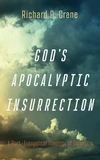
“How do Christians who know something has gone terribly wrong with Christianity in the US go on? God’s Apocalyptic Insurrection offers a compelling way. Assuming that what we need saved from is the very notion of what it means to be saved, Crane sets forth a much more beautiful vision of what we should be saved for that includes practical material guidance in the here-and-now within an eschatological vision of hope. Filled with wise counsel, it deserves a wide reading.”
Ethics, Culture & Social Issues
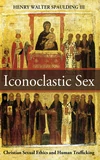
“Tearing down cherished beliefs about purity, Henry Spaulding sets forth an unusual but compelling sexual ethic. Read this book and you will weep for what is lost and hope for what can yet be found. It is a fully human book, and no greater endorsement than that can be given.”
Ethics, Culture & Social Issues
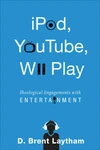
“Brent Laytham is one of the most creative and substantive theologians working today. In this work he directs his considerable skills to a theological analysis of technology and culture. It is a delightful read and a profound critique. It deserves to be read and discussed widely within the church, the academy, and any other place where people gather to seek truth and wisdom--for there is much of that here.”
Theology
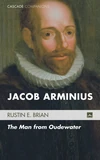
“Jacob Arminius is a theologian known more from the perspective of his antagonists than from his own substantive theological work. Dissatisfied with any theology that set God's will above God's truth and self-diffusive goodness, Arminius resisted the pull of some powerful modern theological tendencies. His theology needs reconsideration in light of the collapse of those theological tendencies. In this important work, Rustin Brian provides what we need -- an excellent introduction to Arminius as a theologian in his own right.”
Theology
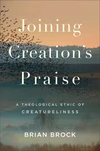
“Wise, insightful, judicious, faithful, comprehensive, clarifying—these are just a few apt descriptions of Brock’s magisterial Joining Creation’s Praise. As a leading theological ethicist in our post-Christendom era, Brock shows us how we might find ourselves at home. Without certainty, without moralism, without avoiding the difficulties we face, he successfully brings us to where we can and should be. This work deserves to be the standard Christian ethics text for the foreseeable future.”
Theology
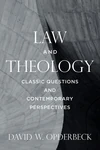
“I know of no other book like this. Opderbeck develops a constructive theology of law that draws upon his deep knowledge of theology and the theory and practice of law. He offers substantive reflection on God’s being and attributes, superbly navigating the various controversies such reflection brings, for the purpose of constructing a theology of law that makes a significant contribution to moral and political theology. The breadth of knowledge is impressive. The masterful attempt to reconcile Christianity’s nonviolent ethics with law is a joy to observe. But this is only the first part of this splendid work. The second applies his theology of law in the US context, showing its relevance to the pharmaceutical industry, the lingering effects of slavery and racism, and much more. Opderbeck has set the standard by which all other attempts to address law theologically will be judged.”
Living on Hope While Living in Babylon
Ethics, Culture & Social Issues
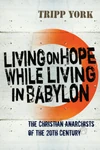
“This work offers one of the most constructive political theologies I have read for some time. Refusing any merely reactive logic, York develops a theological an-archy that neither seeks relevance to nor reaction against a specific construal of state sovereignty. The 'arche'' is the Risen Lamb who was slain, who calls into question the disorder created by materialism, racism, and militarism. Dr. King's triple axis of evil provides a focus for York's discussion of the Catholic Worker, Koinonians, and Berrigans. But Holy Scripture, from Daniel to Revelation, provides the framework within which that axis can be assessed. This is lively, enjoyable, and convicting reading. Not only every undergraduate, but anyone who sits in a pew on Sunday will benefit from York's sage counsel on living in Babylon.”
Ethics, Culture & Social Issues
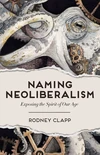
“If you sense that something seems wrong with current manifestations of US Christianity, with our economic inequality, and our culture warring, but naming it is not easy then this book is for you. Clapp's Naming Neoliberalism is the best historical and theological analysis of where we are, how we got here, and what might be done about it, available to us. From a history of enclosures to an examination of slavery, a journey through the Thatcherite and Reagan complete capitulation to neoliberalism, followed by the Clinton willing acquiescence and much more, Clapp traces the history of neoliberalism judiciously, carefully, and with theological insight. This book is a must read for every thoughtful person and is even more important for those who are thoughtless.”
Theology
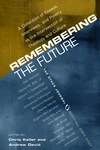
“Explorations among theology, culture, and politics are all the rage and subject to trendy, superficial, and predictable conversations. The Other Journal bucks this trend, offering substantive theological engagement that is often surprising but always illuminating. It surprises because it breaks down old walls of division. It is illuminating because it points in a direction that affirms Christian faithfulness with a genuine generosity. It is always worth reading.”
NOTE: Only includes books currently in our catalog; not necessarily a complete list.
Theology
Theology
Theology
Theology
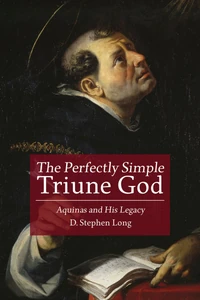
The Perfectly Simple Triune God
Theology
Theology
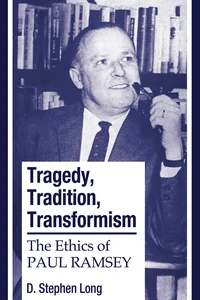
Tragedy, Tradition, Transformism
Ethics, Culture & Social Issues
See something wrong on this page? Report a problem