Douglas A. Campbell
Biography
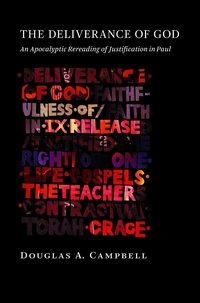
Douglas A. Campbell wrote The Deliverance of God, Pauline Dogmatics, and Framing Paul.
Bios generated by automated processes. · Report a problem
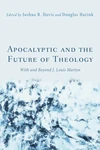
Apocalyptic and the Future of Theology
Theology
“Many Pauline scholars have long recognized the importance of Martyn's apocalyptic reading of Paul's gospel in Galatians, while some view it as the sine qua non of accurate work on Paul. But questions then arise: where should interpreters go after Martyn? What other interpretative trajectories need to be engaged? And how should the apocalyptic reading be teased out further? This collection is an array of vigorous responses to these questions, whose diversity indicates the debate will certainly continue, and whose depth suggests the conversation will be rich and significant.”
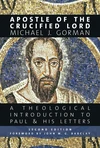
Biblical Studies & Commentaries
“Gorman's learned, sustained, inclusive advocacy of participation as the center of Paul's gospel is one of the key features of the modern scholarly landscape. This second edition of his balanced yet probing introduction to Paul's thought is therefore profoundly welcome.”
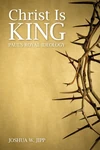
Biblical Studies & Commentaries
“It seems that scholars have greatly neglected the royal dimensions resonating in and around Paul's repeated designation of Jesus as Christ or Messiah. In Jipp's skillful hands, the rich and complex discourse of kingship prevalent in Paul's day is shown to lie at the heart of many of his most important motifs and arguments. The result is the introduction of significant new interpretative angles on almost all the key questions in current Pauline analysis, coupled with the advocacy of a bold new proposal for the center of Paul's thought as a whole. This is an important book, creative, comprehensively researched, and thoroughly argued, by a New Testament scholar of rapidly increasing stature.”
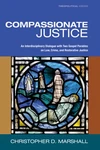
Ethics, Culture & Social Issues
“Few but Marshall could have written this book. In it he brings the parables of the Good Samaritan and the Prodigal Son into a lovingly detailed conversation with the main facets of restorative justice. The result is a deeply instructive journey . . . The gospel announces peace, and Marshall maps out here, recalling the words of Jesus, the only path--a steep and narrow way, much overlooked--that leads to peace. Those who reject the tyranny of the urgent and attend to Marshall's patient prose will experience an insightful, remarkable, and profoundly important book.”
Biblical Studies & Commentaries
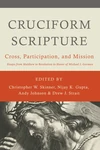
“It is a sign of truly important scholarship that it not only receives recognition but also inspires other scholars to continue to press its insights. Michael Gorman has been one of the key providers of truly important scholarship in our generation as he has tirelessly promoted the significance of participation to any deep understanding of what the New Testament is trying to say. The debt we owe Gorman is attested not just by the fine assembly of scholars in this volume who honor his life and work but also by the way their scholarly contributions here engage directly with his interpretations and continue his work, deepening and widening its insights still further.”

Christian Living
“This book builds an important bridge between a profoundly constructive but difficult theological tradition and attendant approach to knowing, and the rest of the church that so needs this counsel but that usually finds it obscure, if it finds it at all. And across this bridge flows a great deal of warm-hearted and life-giving wisdom.”
Biblical Studies & Commentaries
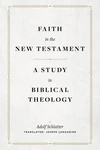
“We are greatly indebted to Joe Longarino for this elegant translation into English of Adolf Schlatter’s classic analysis of faith in the New Testament. And Schlatter’s work is still well worth reading. It combines linguistic precision, historical perception, and theological insight, in a way that much modern New Testament scholarship and exposition can still profit greatly from engaging. An old treasure has been brought forth from the great storehouse of German scholarship and piety that English readers can now peruse, ponder, and enjoy.”
Christian Living
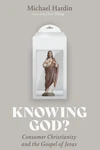
“Hardin begins by expressing the sense of frustration, at times mounting to rage, that many Christians feel at the moment as they contemplate the fractious, fake, and frequently vicious landscape of American Christianity. He unleashes a prophetic ‘no’ upon this ‘church,’ laying bare its problems at their root. As we read on, however, we find that Hardin’s ‘no’ is undergirded by a far more powerful ‘yes.’ Behind the fake Jesus is the real Jesus, whom Hardin knows and serves so faithfully. So the book leads us on with undiminished pace and passion, beyond the dreadful mess that is much of current Christianity, into a life of authentic discipleship. . . . Hardin’s short, urgent book is, quite simply, a book many of us need to read. By turns I resonated, I laughed, and I repented. I urge you all to do likewise.”
Mimetic Theory and Biblical Interpretation
Theology
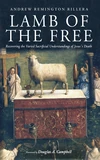
“This is a passionate statement connecting Girardian theory with the interpretation of the Bible in the modern US context, with a dash of Barthianism thrown in for good measure. . . . Hardin’s uncompromising assessments will challenge some of his readers. But this book has a touch of the prophetic. Its exposés of violence are needed now more than ever.”
Theology
“McSwain's work blends scholarly accuracy, practicality, and unswerving integrity. Here, in dialogue with some of the greatest minds of the church, he recovers and re-communicates the original Gospel of grace for those who have lost sight of it--that God has come all the way to us but also lifted us back decisively and permanently to Himself in His Son, Christ, who is now the reality out of which we all live. These pages will correct, liberate, and inspire.”
Theology
“Entering the lists in support of Talbott, Kimel, Reitan and Kronin, and Hart—lists where I not infrequently charge in support as well—Andrew Hronich advances here with a sustained case for universalism that combines biblical and logical contentions. The result is an illuminating journey in personal, theological, and biblical terms that universalists will find clarifying and encouraging, and that the position’s opponents will find very difficult to refute. An important and deeply-lucid contribution to a critical and burgeoning locus of debate.”
Theology
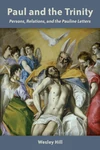
“Hill engages carefully and explicitly with some of the key resources of trinitarian theology -- in particular, the relational understanding of personhood -- to illuminate both Paul’s thinking about Jesus within the identity of God and modern attempts to grasp it. . . . Welcome, courageous, and deeply informative.”
Paul, Judaism, and the Gentiles
Biblical Studies & Commentaries
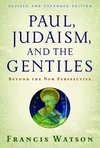
“Here we return to Watson's brilliant suggestion in 1986 that Paul's justification texts and arguments can only be comprehended as they are located in their underlying missiological and sociological dynamics — in particular, in the radical sectarian break made by the apostle's churches away from orthopractic Judaism. Updated, and with links to his other important works explained, the result is vintage Watson — a series of creative if not provocative theses, argued combatively, with enviable clarity, and with impressive learning.”
Paul, Philosophy, and the Theopolitical Vision
Philosophy
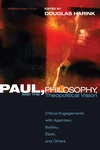
“"In this wonderful collection of essays, an adept team of scholars, expertly marshaled and framed by Douglas Harink, engages with the intriguing conversation currently unfolding between the apostle Paul and certain modern European theorists. The result is a dialogue rich with insights flowing in both directions--from modern theory to new (or recovered) angles of illumination on Paul, and from the apostle's charged texts back to the presuppositions and conceits of modern theory. That the view of Paul often pressed is 'apocalyptic,' in the sense of drawing on the seminal work of J. Louis (Lou) Martyn, makes the analysis still richer. The result is a book that both educates and delights.”
Christian Living
“Wood deftly traces the insights flowing from a Christ-centered account of God, through a church that is spiritually resourced through contemplation and prayer, to engagements with a violent world by way of a patient enactment of peace. . . . The result is a gift to the confused, a challenge to the compromised, and a balm to the weary—in short, a light in a dark place. A book to read, ponder, discuss, enact, and treasure.”
Ethics, Culture & Social Issues
“Walking in the footsteps of Michelle Alexander and Bryan Stevenson, Dominique Gilliard lays out here the history and structure of mass incarceration in the United States, touching on all its sinister complications and biases; the equally sinister theological and scriptural moves that have accompanied it; and, most important of all, the powerful alternative vision and program that the church can—and must—now embody as it begins to dismantle this horror. A sustained, passionate, prophetic, and constructive work.”
Biblical Studies & Commentaries
“Beverly Gaventa’s commentary on Romans is a special event. It evidences, as it carefully works through Paul’s text, her trademark accuracy and lucidity. And it engages the secondary literature with a masterful touch; only the most influential and helpful insights are noted and engaged. The result is a commentary that combines to an unusual degree clarity, economy, and profundity. These features of her commentary alone warrant our gratitude. What marks her reading as special for me, however, is the role played by powerful theological claims. Following in the footsteps of her mentor, Lou Martyn, the result is—although here, and finally here, for Romans—a gripping challenge from a divine word that reveals itself within history. And so the word that first challenged the Roman Christians as they listened to Paul’s letter being presented by Phoebe—and also had some of its more difficult paragraphs explained—reaches out again through Gaventa’s presentation to challenge its readers today, who listen to Paul by way of this signally-important, modern letter-bearer and her explanations.”
NOTE: Only includes books currently in our catalog; not necessarily a complete list.
Biblical Studies & Commentaries
Biblical Studies & Commentaries
Theology
Theology
Theology
See something wrong on this page? Report a problem