George Pattison
Biography
George Pattison wrote Kierkegaard and the Crisis of Faith.
Bios generated by automated processes. · Report a problem
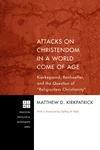
Attacks on Christendom in a World Come of Age
Theology
“Kierkegaard and Bonhoeffer are undoubtedly two of the greatest figures of modern theology, and there has been much speculation and suggestion as to the influence of the one on the other. However, Kirkpatrick is the first to have documented the scope of Bonhoeffer's reading of Kierkegaard and laid the foundations for a proper scholarly assessment of their relationship, including recognition of their differences. But he does more than this, since he goes on to explore the interweaving of shared themes in their two bodies of work and to show how they combine to offer both a powerful critique of conventional Christianity and a vision for the renewal of Christian discipleship. Kirkpatrick's work is an excellent example of how to combine Christian commitment and scholarly rigor and may be strongly commended to all contemporary Christians who are seriously concerned about the church's uncertain, intellectual response to modernity.”
Theology
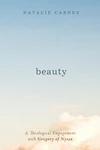
“Attentive, as many recent theological writers are not, to the dangers of beauty and of the ideologizing of beauty in bourgeois discourse, [Carnes] takes us from the modern alternatives of functionality or distinterestedness to the complementarity of gratuity and fittingness. Through Gregory's writings this is shown to illuminate both the sufferings of Christ and, poignantly, the human sufferings exemplified by his sister's breast cancer. The book reminds those of us who have read less of Gregory than we should have how much we are missing.”
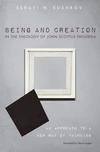
Being and Creation in the Theology of John Scottus Eriugena
Theology
“Sergei Sushkov’s new study presents widely-neglected Eriugena as a thinker for our time, offering a holistic view of Christian faith that chimes with broad contemporary trends in spirituality. At the same time as drawing on Russian scholarship in the field, Sushkov also offers a fascinating insight into the possible links between Eriugena and Islamic philosophy, reinforcing his contemporary relevance.”
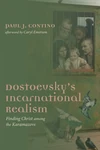
Dostoevsky's Incarnational Realism
Arts & Literature
“Paul J. Contino’s avowedly Catholic reading of Dostoevsky’s great Orthodox novel shows how Dostoevsky’s ‘hero,’ Alyosha Karamazov, is more than just a naïve youth or holy fool. Rather, he exemplifies a Christian personalism that combines Christ-like humility with a realistic view of the good and bad in others and the practical sense to apply this knowledge for their benefit. As such he becomes a model for all concerned with the fate of personality in the modern world.”
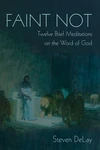
Bible Studies & Devotionals
“Steven DeLay is an unapologetic exponent of the theological turn in phenomenology, but here he writes in more direct layman’s terms about how the contradictions and frustrations of the human condition point us towards the life of faith. These twelve meditations show how the promise of eternal life provides a basis on which to affirm the value, dignity, and meaning of human life.”
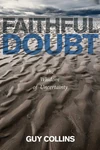
Philosophy
“From Star Trek and The Hunger Games to Žižek, Agamben, and Derrida, and from the theology of Saint Thomas to Kierkegaard and Honest to God, Faithful Doubt presents a powerful body of evidence in favor of the view that believers and atheists alike are ill-served by the 'God wars' of the last decade. Guy Collins persuades us that there is indeed a wisdom in uncertainty and that faith itself is helped by the admission of doubt.”
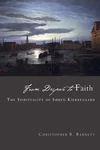
Philosophy
“Building on a strong historical and textual base and easily readable, Christopher Barnett's new book opens up an original reading of Kierkegaard as spiritual writer. This is a Kierkegaard, whose sense of the religious life as a progressive deepening 'from despair to faith,' not only draws on the theological and historical sources long familiar to scholars but also finds nourishment in contemplating clouds, oceans, birds, and flowers and in meditating on biblical icons of faith, from Job to Anna, and from Paul to the sinful woman who washed Jesus' feet with her tears.”
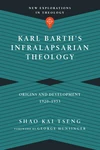
Karl Barth's Infralapsarian Theology
Theology
“Shao Kai Tseng's new book tackles a problem that many have regarded as metaphysical and, as such, impossibly obscure. However, Tseng's study shows not only that the choice between a supralapsarian and infralapsarian view was of perennial concern to Barth but that it also dovetails with central aspects of his christological thinking. Tseng approaches the subject by means of a careful scrutiny of key texts as well as of relevant secondary literature. He has an exceptional and welcome ability to juggle the highly technical vocabulary of Reformed dogmatics in such a way as to show how the issues are of importance to all Christian thought.”
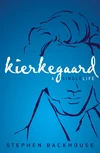
History & Biography
“Drawing on the wealth of new biographical material that has become available in the last twenty years, Backhouse’s life of Kierkegaard sets the Danish thinker in his time and place and does so with confidence and verve. Few books about this most subtle and elusive of figures could be described as page-turners, but Backhouse combines a fast-moving style with a strong grasp of the big issues that makes this a compelling read. For those who have not yet read Kierkegaard himself, this will leave them wanting to do so—which must be the best outcome for any work of this kind.”
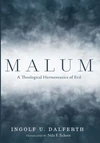
Theology
“In Malum, Dalferth applies a rigorous and unremitting intellectual passion to the so-called ‘problem’ of evil, covering an exceptional range of theological and existential sources. Malum shows that theodicy, long the focus of theological approaches to evil, has been a false friend and that the lived experience of how God overcomes existential experiences of evil offers both a sufficient and a better way. . . . Few books really merit the designation ‘paradigm shifting.’ This does.”
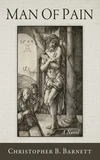
Fiction
“Nothing goes according to plan or as the reader might expect in the quixotic adventures of self-appointed apostle Howard Lamb and his foul-mouthed sidekick Bobby Ray. Man of Pain takes us on a roller coaster of absurdity, tragedy, and spiritual insight—a journey that veers from the hilariously funny, through the wildly satirical, to the poignant and searing existential question as to what God might be asking of us in our confused and confusing times.”
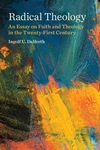
Theology
“Radical Theology provides a fresh perspective on the development of hermeneutical theology in the latter part of the twentieth Century. It illustrates some of the key points of interaction between phenomenology and theology. It shows how hermeneutical theology is radical theology and, as such, intensely relevant to our contemporary theological situation. And, not least, it argues for hermeneutical theology to be understood as fully and properly theological by virtue of the centrality of the question of God. As such, hermeneutical theology is more than a sub-section of cultural studies and more than an exercise in subjective self-understanding: it is confronting the question as to what God can mean for us as creator and redeemer and how our life is transformed when brought into dialogue with the revelation of God. No passing phase, hermeneutical theology remains an integral part of any serious theology that would be true to its name.”
Reinventing Liberal Christianity
Theology
“This is an ambitious work that deals with central issues in contemporary public life and does so by delving into past and present theological debates. . . . It covers a wide range of sources, theological and secular, spanning the modern period, and Hobson’s style, as ever, combines clarity, boldness, and a certain dispatch with a good grasp of the material.”
Silence: A User's Guide, Volume One
Prayer & Spiritual Formation
“Silence: A User's Guide is about silence--and also about words: about words that drown out silence, about poetic words that lead us deeper into silence and the community to be found in silence, about the mistranslated words that confuse the texts that speak most eloquently of silence, and about restoring the power of those great elementary words such as 'lo,' 'see,' 'yea,' and 'behold' that bring us closest to the truth of silence.”
Silence: A User’s Guide, Volume Two
Prayer & Spiritual Formation
“This second volume of Maggie Ross’ s Silence: A User's Guide helps readers apply the lessons of the first and to introduce silence into their reading of spiritual classics, Old and New Testament scriptures, and the practice of liturgy (where silence is all too often lacking). As Maggie Ross points out, there is no fundamental opposition between words and silence, but to hear spiritually profound silence we must learn to read anew, letting the manifold meanings of key words resonate so as to open up the portal of silence . . . This is a book modestly capable of opening new worlds of understanding.”
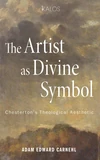
Arts & Literature
“By contextualizing Chesterton's intellectual beginnings in late Victorian aesthetics, Adam Carnehl reveals the deep roots of his subject's theological vision and that vision's ultimate coherence. At a time when theology is again turning to the arts, Carnehl is able to show that Chesterton remains a resource for serious theological reflection, over and above the sometimes-polemical apologetics of his later years. Admirably clear, The Artist as Divine Symbol fills an important gap in the literature.”
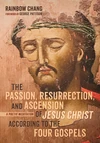
The Passion, Resurrection, and Ascension of Jesus Christ According to the Four Gospels
Arts & Literature
Foreword
(wrote the foreword)
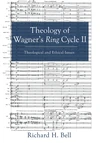
Theology of Wagner’s Ring Cycle II
Theology
“Richard H. Bell’s new book argues that we can interpret Wagner’s Ring cycle as a Christian allegory. Bell’s meticulous scholarship dismantles the prejudice that Wagner’s worldview was essentially non- or even anti-Christian, exploring the composer’s relation to contemporary German philosophy, to Lutheran teaching, and to notes for a planned five-act opera on the life of Jesus. Clearly written and thoroughly researched, this is a book that will illumine, provoke, and even edify its readers.”
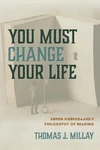
Philosophy
“Reading is on its way back and there is a growing literature relating to what it means to read well. Thomas J. Millay’s new book shows that Kierkegaard can make an important contribution to the discussion, as well as reminding us that reading is not an end in itself but is to help us change our lives.”
NOTE: Only includes books currently in our catalog; not necessarily a complete list.
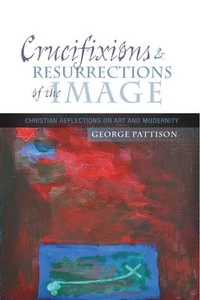
Crucifixions and Resurrections of the Image
Arts & Literature

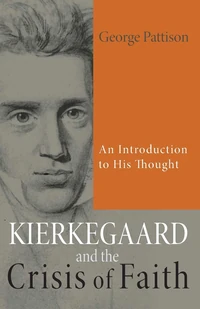
Kierkegaard and the Crisis of Faith
Philosophy
Philosophy
See something wrong on this page? Report a problem