Gijsbert Van den Brink
Biography
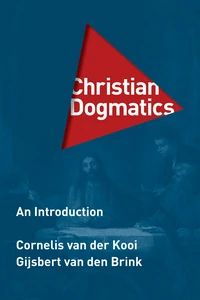
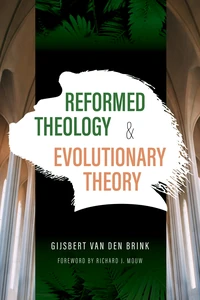
Gijsbert Van den Brink wrote Reformed Theology and Evolutionary Theory, and co-wrote Christian Dogmatics with C. Van der Kooi.
Bios generated by automated processes. · Report a problem
Theology
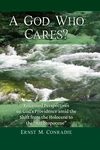
“Ernst Conradie continues to write frenetically on the current ecological predicament, as if his life is at stake—which it actually is, along with all life on Earth. Revisiting the classical doctrine of divine providence, in this new publication he probes how the story of God’s conservation and governance of the world might continue now that the planet transitions from a relatively stable Holocene into a much more precarious “Anthropocene”. Conradie raises many pertinent and disconcerting questions rather than offering easy (or not so easy) answers—but his writing is pervaded by a profoundly Christian sense of hope amid today’s planetary distress.”
Theology
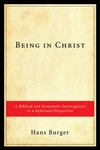
“This is a thorough-going study in which the voices of Scripture, the Reformed tradition, and contemporary theological thinking are brought into interplay with each other in a very careful and creative way. The drive behind the probing historical, biblical, and theological analyses is crystal-clear: the author's wish to remedy the 'neglect of Christ' in post-Barthian theology and to retrieve a clear sense of the way in which Jesus Christ determines not only the past but also the presence of the believer's relationship with God. In this connection, Burger's proposal for enriching classical Reformed theology with a biblically informed notion of participation in Christ deserves serious consideration, to say the least. For clearly, Jesus Christ is just too important for faith to remain merely a figure from the past.”
Theology
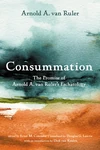
“This fascinating collection of van Ruler’s essays on eschatology is very timely. It becomes available in an escapist era—believers of all stripes looking away from the world’s structural sorrows, e.g. climate change, by taking refuge in an imagined future paradise. Van Ruler argues that—Christianly speaking—the eschaton is nothing else than this earthly, historical existence fulfilled and redeemed. Consummation, aptly contextualized by Ernst Conradie, excellently elaborates and illustrates this point of view.”
Theology
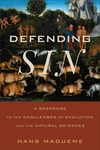
“This is one of the most detailed, perceptive, and well-researched critiques of theistic evolution I have ever seen. Hans Madueme’s response to the theological challenges posed by evolutionary biology and some other parts of the natural sciences stands out by its boldness as much as by the fair and respectful way in which he treats his opponents. Even though at the end of the day the book’s main argument has not convinced me, I profoundly benefited from Madueme’s sound scholarship and from the countless pertinent observations he makes along the way.”
Jesus Christ, Hermeneutics, and Scripture
Theology
“This timely book thoroughly elaborates in all possible directions its key insight, which the author hammers home with clarity and boldness: theology should no longer search for a rational foundation of ‘rock-bottom knowledge,’ thus joining modernity’s epistemological obsession. Instead, it should find its starting point in saving relationships of trust as these are mediated by a faithful listening to the gospel. Thus, Christ is again seen as the radiating center of the faith.”
John Brown of Haddington on Frequent Communion
Preaching & Worship
“Dr. Soderberg puts us greatly in his debt by republishing for a contemporary audience John Brown of Haddington’s apology for a more frequent celebration of Holy Supper. Having previously explored the post-Reformation debates on communion frequency on both sides of the Atlantic, Soderberg now helps us to see the present-day relevance of one of the most extraordinary sources he came across in his doctoral work. It is my hope that this 18th century treatise will help all those with an interest in the issue of communion frequency to make up their minds in a more well-considered way, and where appropriate make decisions that will strengthen and deepen the faith of their communities.”
Science & Faith
“Whereas many introductions to science and faith suggest that there is one and only one correct model for envisioning their relationship, Joseph Vukov convincingly shows that things are more complex than that. Indeed, even though ‘dialogue’ is often the most fruitful model for approaching issues in science and religion, in some cases we might better keep the two apart or acknowledge that there is a real conflict between them. Dr. Vukov ably and accessibly illustrates these various options, all the while pointing to the importance of intellectual humility in navigating them.”
Taking a Deep Breath for the Story to Begin
Theology
“This book (and the series) promises to become a very important and timely project – highly ambitious (but feasible) in its aims and scope, wide-ranging in its scholarship, and above all very much ‘geared to the times’. Ernst Conradie takes up the complex conundrums raised by the Anthropocene with full seriousness, approaching them from a theological perspective which enables him to explore the most profound and disturbing questions. Conradie has also shown that he is able to gather a very diverse group (‘diverse’ on different counts) of scholars around him, inspiring them to cooperate with him and serving them with his wide knowledge and insights in the questions at hand.”
The Christian Intellectual Tradition from the Reformation to the Modern Era
World Religions
“For those of us searching for a life worth living, nothing is so formative and beneficial as a liberal arts education. Circling around the famous ‘big questions,’ this volume provides a magnificent introduction to the Western liberal arts tradition, illuminating it from a Christian perspective that fosters key intellectual virtues like empathy, critical sense, and humility.”
Theology
Foreword
“In this book Dr. Hausoul bridges the gap between mainstream Christian theology that accepts historical biblical criticism (Moltmann, Rahner, et al.) and a classical Reformed theological approach (Beale). Overcoming mutual caricatures, he shows how both traditions can seriously learn from each other. His endeavor results in a detailed, extensive, and highly instructive study of the biblical topic of cosmic eschatology—a theme that rightly receives increasing theological attention today.”
Theology
“First it was Kuyper, then Bavinck followed—and now it is time for a third Dutch theologian to be rediscovered and appropriated by the American audience: Arnold van Ruler. This selection of his theological essays, sketching the contours of an ecologically sensitive Christian doctrine of creation, could not be timelier. Indeed, as editor Ernst Conradie rightly points out, Van Ruler’s theology displays ‘the most radical and consistent affirmation of creatureliness imaginable.’”
NOTE: Only includes books currently in our catalog; not necessarily a complete list.
See something wrong on this page? Report a problem