Hans Boersma
Biography
Hans Boersma wrote Heavenly Participation, Scripture as Real Presence, and Sacramental Preaching.
Bios generated by automated processes. · Report a problem
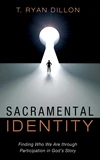
Theology
“Few issues are as germane to our cultural moment as that of personal identity. T. Ryan Dillon, having learned from personal struggle, rightly suggests that one’s identity both requires stability and must speak to the particularities of one’s own situation. Where the ‘authenticity model’ fails to properly account for the former, the ‘in Christ model’ often does not deal adequately with the latter. Many who are personally struggling with their identity will take great courage from Dillon’s sacramental approach of the Great Tradition.”
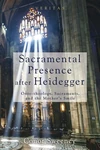
Sacramental Presence after Heidegger
Theology
“Conor Sweeney's is a welcome new voice in the burgeoning choir of theologians returning to metaphysics. Carefully critiquing postmodern Heideggerian approaches to sacramental presence, he invites us to recognize the sacraments' transcendent love in the mother's smile. With this evocative use of Hans Urs von Balthasar, Sweeney sets us on the right path: an approach to sacramentality that moves beyond the flat horizons of language and time.”
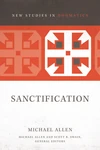
Theology
“Holiness is good news, Allen reminds us, for sanctification is all about God sharing his own holiness with us in Christ. As he unpacks this gospel of holiness, Allen presents a marvelous “minor dogmatics,” ranging through a variety of doctrines, and grounding our holiness in the one and only place where it must originate—the eternal being of God himself. Steeped within Reformed catholicity, Allen’s biblical retrieval draws from a wide range of sources: patristic, medieval, and modern. The result is an irenic and deeply thoughtful book.”
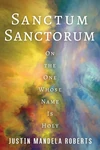
Theology
“Justin Roberts retrieves divine holiness by insisting it is the transcendental of the transcendentals. Just as white light contains multiple colors, so holiness is the hidden secret that contains the other transcendentals. Building on the participatory ontology of the patristic-medieval tradition, Sanctum Sanctorum articulates how it is that created beings participate in God’s superessential holiness. This is a remarkable study, faithfully yet creatively and boldly building on the broad tradition of the church.”
Theology
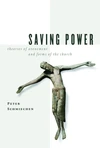
“Convinced that many of the church's problems may be traced to a lack of clarity in atonement theology, Peter Schmiechen presents a comprehensive range of atonement theologies with integrity, theological acumen, and, at times, surprising analyses. Refusing to reduce the meaning of Christ's work to one model or theory, Schmiechen boldly presents no less than ten theories, describing both their strengths and their weaknesses. Those who wish to immerse themselves in the broad spectrum of Christian reflection on the saving power of God in Jesus Christ will be impressed with the lucidity, depth, and congeniality with which he approaches each of the theories he discusses. Even where he feels the need to express his strong reservations, Schmiechen treads carefully, respectfully, and yet frankly.”
Theology
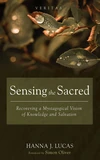
“Deeply rooted in patristic mystagogy, Hanna Lucas constructs a theology of learning that guides our faculties to receive God. Sensing the Sacred wisely counsels a return to an approach that integrates all learning—sensible, rational, and spiritual—into a unified process of capacitation for union with God. Teachers in every discipline, therefore, do well to heed Lucas’s salutary appeal for a return to mystery.”
Christian Living
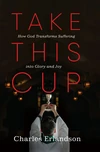
“The challenge this book places before us could not be more daunting. We are told to drink the cup of suffering. Charles Erlandson urges us directly to lift it to our lips—trusting that it is the cup of Christ. Pastorally sensitive and theologically astute, Take This Cup is a biblically shaped meditation on the meaning of suffering and on how we participate in Christ’s redemptive work by drinking from his cup.”
Theology
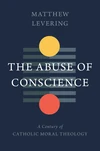
“This book offers a powerful critique of the centrality of conscience in Catholic moral thought. Matthew Levering shows beyond doubt that the post-conciliar elevation of conscience consists, ironically enough, of a spurious retrieval of earlier manualist casuistry. Levering’s alternative—a Christ-centered morality with charity at its heart—is a great deal more liberating than the heavy weight of untrammeled individual conscience. The Abuse of Conscience offers the indispensable historical narrative behind the moralism of contemporary culture.”
Theology
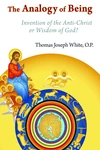
“A profound testimony to the enduring significance of the analogia entis debate between Erich Przywara and Karl Barth.”
The Ancient Story of God-With-Us
Christian Living
“Sensing his students’ loss of identity within a disenchanted world, Ray Robles offers the genuine antidote of stability found within ancient faith. The result is a much-needed book that turns to the Great Tradition of the church to make sense of the story of the Scriptures. Robles is rightly critical of early modern philosophical choices that have led to the fragmentation of being and the celebration of power. The Ancient Story of God-With-Us explains why we should avoid pitting Spirit over against tradition by offering a Spirit-guided return to the ancient faith. Readable yet well-informed, this book recalls why God is closer to us than we are to ourselves.”
Arts & Literature
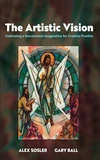
“The sacramental imagination proposed by Alex Sosler and Gary Ball is nothing less than a way of being in the world that recognizes divine presence in created things. Rejecting modern rationalist and spiritualist approaches to the arts, The Artistic Vision aims to rejoin earthly and spiritual realities. While notably inspired by the Oxford Movement—particularly the poet Christina Rosetti—Ball and Sosler have drunk deeply from the entire well of the church’s Great Tradition. Those struggling with questions regarding faith and the arts find in this book a faithful and inspiring guide to the beauty of mystery.”
Biblical Studies & Commentaries
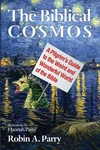
“A masterful exposition of the sacramental worldview of the Old Testament. . . . If you figure the Old Testament is simply incompatible with the Christian Platonism of the Christian tradition, you just may be startled by the insights of this book.”
Theology
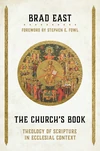
“How we understand the church determines how we understand Scripture. Brad East grounds this basic claim in a detailed examination of three key heirs of Barthian theology—Robert Jenson, John Webster, and John Howard Yoder. The corresponding threefold typology that results —church as deputy (catholic), church as beneficiary (reformed), and church as vanguard (believers’ church)—offers much more than a description of the ecclesial divides that undergird different views of Scripture. East also presents a sustained and well-argued defense of the catholic position: church precedes canon. At the same time, East’s respectful treatment of each of his theological discussion partners gives the reader a wealth of insight into the various positions. Future discussions about church and canon will turn to The Church’s Book for years to come.”
The Disputed Teachings of Vatican II
Theology
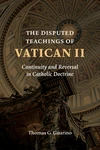
“This book is vintage Guarino—erudite, crystal clear, ecumenically sensitive—the product of deep love for the church.”
Theology
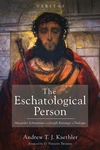
“Schmemann and Ratzinger may both have a relational understanding of personhood, but Andrew Kaethler draws out the differences with patience and transparency. Thoroughly at home in both the Eastern and the Western side of the dialogue, he sharply delineates the two positions. Kaethler’s bold and incisive censure of Schmemann as inconsistent and dualistic is sure to lead to an animated discussion about the way forward. As such, The Eschatological Person is a model of genuine ecumenical dialogue.”
The Eternal Generation of the Son
Theology
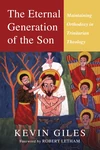
“Rejecting the biblicism at the root of problematic presentations of trinitarian doctrine among evangelical theologians, Kevin Giles mounts a vigorous defense of the Nicene teaching of the eternal generation of the Son. His book expounds with uncommon depth and lucidity both the biblical background and the traditional reception of the doctrine of the relation between the Father and the Son.”
Theology
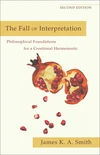
“With the absence of an 'interpretive police,' in the first edition of The Fall of Interpretation James K. A. Smith worried how to keep at bay the charge of relativism. This revised edition unambiguously affirms the particularity of the Nicene tradition as the locale for genuine interpretation of Scripture. Smith cogently argues that we need the church's authoritative theological interpretation of Scripture to live with the varying degrees of the author's 'real presence' in the text.”
The Fellowship of the Beatific Vision
Arts & Literature
“The Canterbury Tales do much more than narrate disparate and conflicting stories of a traveling band of pilgrims. Norm Klassen opens up the premodern horizons of the tales by explaining that Chaucer's 'oblique apologetic' intends to draw us into the sacramental ontology that animates the narrative. Klassen's exposition opens our eyes to the myriad ways in which the beatific vision is adumbrated in the midst of clashing voices and this-worldly realities that we inhabit.”
The Future of Orthodox Anglicanism
Theology
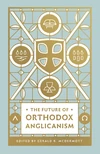
“Whatever the future of orthodox Anglicanism may look like, it seems safe to suggest that it will not be monolithic. The essays in this book discuss not just the future of orthodox Anglicanism but also its identity, and on both topics the authors arrive at varying and, at times, disparate conclusions. United in opposition to what Archbishop Foley Beach calls ‘neo-pagan’ Anglicanism, these authors represent a broad range of traditional Anglicanism. Warm kudos to Gerald McDermott for skillfully bringing together these insightful essays from across orthodox Anglicanism.”
Christian Living
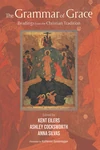
“This anthology is a remarkable accomplishment. Traversing the entire history of the church, every major Christian tradition, and a spectrum of literary genres, Eilers, Cocksworth, and Silvas take the reader on an exhilarating pilgrimage, centering throughout on the proximity of God. The result is a tremendous collection of writings that focus on the Christian life—the grammar of God's undeserved, transformative favor in Jesus Christ. The retrieval theology of The Grammar of Grace illuminates life with God as the pulsing heartbeat of the Christian tradition.”
NOTE: Only includes books currently in our catalog; not necessarily a complete list.
See something wrong on this page? Report a problem