Ian A. McFarland
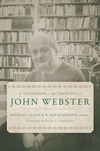
A Companion to the Theology of John Webster
Theology
“John Webster’s work was wide-ranging, profound, and, owing to his untimely death, all too provisional. While we can only lament that he was unable to complete the comprehensive theological statement that his Systematic Theology would have been, this exquisitely crafted volume provides an indispensable vade mecum for understanding Webster’s tireless pursuit of a truly theological theology.”
Apologetics
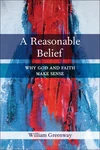
“Through a clear, concise, and compelling analysis of the `secular condition,’ Greenway embraces the discoveries of modern science while offering a forceful challenge to purely naturalistic accounts of reality. By arguing that multiple descriptive vocabularies are necessary to do justice to the full range of human experience, he steers artfully between the Scylla of substance dualism and the Charybdis of monist materialism. And his analysis of agape as the love that seizes us apart from any decision we can make gives eloquent testimony to his central claim: `Faith in God is reasonable, but faith in God is not the conclusion of an argument.'”
Counseling, Grief & Mental Health
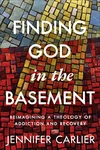
“There is no shortage of books on addiction, or even on addiction and the church, but none of them provides the kind of sustained reflection on Christian faith and practice found in Finding God in the Basement . Carlier’s argument, at once existentially gripping and theologically astute, offers a vision of salvation for those living with addiction that is as realistic in its analysis as it is uncompromising in its hope.”
Theology
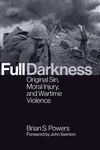
“Full Darkness is a book about many things, from nationalism and violence to sin and guilt. But it is at bottom a profound reflection on the redemptive power of the gospel—and how we all too often thwart it.”
Christian Living
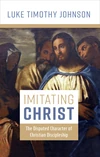
“With characteristic force and clarity, Luke Johnson argues that the last two centuries have seen the emergence of a deep fissure in Christian understandings of discipleship, with the transformation of society challenging the traditional focus on transforming the self. Beyond tracing the history of this development, moreover, Johnson’s assessment of these two models of discipleship makes Imitating Christ a touchstone for thinking about what it means to follow Jesus.”
Theology
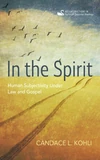
“By drawing on the full range of Luther's corpus, Candace Kohli challenges conventional assumptions and breaks new ground on the relationship between law and gospel in the Reformer’s thought. In the Spirit is historically compelling and dogmatically astute.”
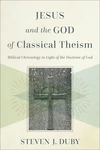
Jesus and the God of Classical Theism
Theology
“Over the past two centuries, theologians and biblical scholars alike have questioned the usefulness of concepts like aseity, simplicity, immutability, nature, and substance for Christian reflection on the God of Israel and the person of Jesus. Steven Duby counters that these concepts can play a truly ‘ministerial’ role in the life of the church by helping to defend the intelligibility and coherence of biblical teaching. Through exacting semantic and logical analysis, Jesus and the God of Classical Theism shows how the judicious use of metaphysical categories, far from obscuring or distorting Scripture’s message, might enhance our understanding of it.”
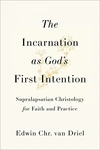
The Incarnation as God's First Intention
Theology
“In this wide-ranging study, Edwin van Driel not only makes his case for a radically supralapsarian Christology; he also works out its implications for topics ranging from the Trinity and creation to missions and everlasting life. Shaped by the conviction that, rather than being just a means to an end, the incarnation is itself the goal of God’s works, The Incarnation as God’s First Intention offers a powerful vision of what it means to confess Jesus as Emmanuel—God with us.”
Theology
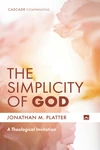
“It may be impossible to give a simple account of divine simplicity, but Jonathan Platter has done the next best thing: an introduction to this classic concept that is clear, concise, and yet remarkably wide-ranging. With a keen eye for the doctrine’s pastoral significance, Platter shows how simplicity, in pinpointing God’s difference from the world, is also the basis for God’s being supremely active in it.”
Theology
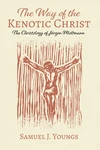
“Although Jesus stands at the heart of Jürgen Moltmann’s theology, systematic study of his Christology has been sorely lacking—until now. Drawing on the full range of Moltmann’s vast theological output, Samuel Youngs’s compelling identification of kenosis, or self-emptying, as the leitmotif of Moltmann’s Christology makes The Way of the Kenotic Christ required reading for all students of the late twentieth century’s most influential Protestant theologian.”
Theology
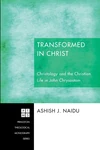
“"Naidu does a marvelous job of showing how Chrysostom's exegesis is driven by his concern for shaping concrete dispositions and practices of Christian piety. While giving due attention to the historical and dogmatic questions regarding the character of Chrysostom's Christology, Naidu succeeds in orienting the reader to the specifically pastoral concerns that defined this Father's approach to the biblical texts.”
Discipleship & Christian Education
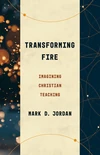
“Anyone who worries that reforming theological education means leaving books behind will have their suspicions disabused by this volume. Through a deft review of a range of classic texts, Mark Jordan defends the importance of books for Christian teaching by reminding us that the value of words lies not simply—or even primarily—in conveying information, but in their power to shape bodies, imaginations, and desires for life in the world. In so doing he provides a sterling example of what he himself calls for: not so much a book about teaching, but a book that teaches.”
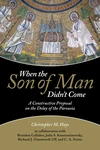
When the Son of Man Didn't Come
Theology
“A tour de force of collaborative scholarship, When the Son of Man Didn’t Come confronts the 'delay of the Parousia' by engaging with equal seriousness the findings of critical biblical scholarship and the dogmatic convictions of Nicene Christianity. Highlighting the conditional character of biblical prophecy, the authors show that God's promises function to activate rather than vitiate human agency, so that eschatological deferral, far from constituting an embarrassment for the church, confirms the graciousness of the Triune God as the One who has determined not to bring in the kingdom without us.”
NOTE: Only includes books currently in our catalog; not necessarily a complete list.
Theology
Theology
Theology
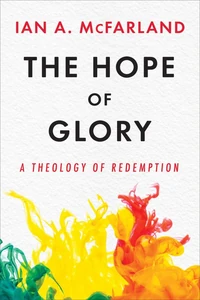
Theology
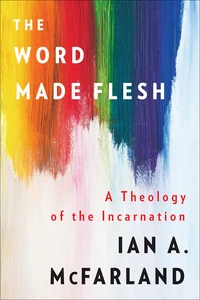
Theology
See something wrong on this page? Report a problem