James K. Beilby
Biography
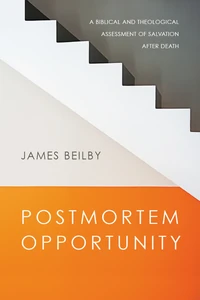
James K. Beilby earned a PhD at Marquette University. Beilby has served as professor of systematic and philosophical theology at Bethel University in St. Paul, Minnesota. Beilby's books include Postmortem Opportunity (2021) and Thinking About Christian Apologetics (2011), and Beilby edited Understanding Transgender Identities (2019).
Bios generated by automated processes. · Report a problem
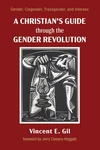
A Christian’s Guide through the Gender Revolution
Ethics, Culture & Social Issues
“Some Christians may wish for a return to simpler days when gender questions were ignored or brushed off with a quick application of a few Bible verses. But, if Christians are called to be salt and light in the world, and if we are called to love our neighbor as ourselves—and we are!—then it is crucial that Christians thoughtfully engage the difficult questions surrounding intersex and transgender. Happily, Gil provides a helpful guide to these labyrinthine issues. With an irenic spirit and an open mind, he helps us understand the questions better, and then steers toward helpful, workable answers that are biologically, theologically, and pastorally sound.”
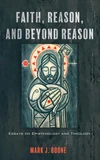
Faith, Reason, and Beyond Reason
Philosophy
“Drawing on an interesting variety of sources, Mark Boone develops a readable account of religious epistemology. He covers the usual suspects—Alvin Plantinga, Augustine, and William James—but also draws insights from Søren Kierkegaard, Jean-Luc Marion, and Islamic philosopher Allama Iqbal. The reader will benefit from the juxtaposition of these disparate voices. Also important is Boone’s attention to questions beyond assessing knowledge claims: How do these claims apply to the reliability of Scripture and what does it look like to act on knowledge claims? The net result is a degree of cohesion and narrative unity that is rare among collections of essays. A valuable resource!”
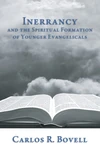
Inerrancy and the Spiritual Formation of Younger Evangelicals
Theology
“As the title indicates, Bovell is concerned for the spiritual formation of the next generation of evangelical Christians. His concern comes from the fact that evangelical leaders, institutions, and scholarly organizations like the Evangelical Theological Society and the Evangelical Philosophical Society continue to push the doctrine of inerrancy as an absolutely necessary component of orthodoxy. The commitment to inerrancy, says Bovell, handicaps the capacity of young evangelicals to fully engage critical questions regarding Scripture by placing them in an unnecessary and awkward "all-or-none" position: either inerrancy is true or Christianity is false. He recommends that the "dogmas of inerrancy should only be promulgated if those bits and pieces of historical and biblical data that do not necessarily cohere with the inerrancy dogma are considered with integrity and not explained away." Written for Evangelical teachers and leaders, Bovell's book considers a very important topic. There are an increasing number of evangelicals who, for a variety of reasons, are raising similar points. The fundamental question in this debate-a matter Bovell mentions, but does not discuss in sufficient depth-concerns the role of control beliefs. If one starts with the findings of critical biblical scholarship, then one is given a reason to move away from a strict formulation of inerrancy. But if one accepts the inerrancy of Scripture, then one has a reason to distrust the "received findings" of critical scholarship. Nonetheless, this is a very interesting volume. It is collegelevel appropriate and is must-read for students at Evangelical seminaries.”
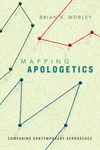
Apologetics
“Many works on Christian apologetics make the mistake of disconnecting arguments for the Christian faith from the specific assumptions, perspectives and theology of the person advancing those arguments. As an antidote to this disconnection, Brian Morley discusses a helpful range of Christian apologetic perspectives and uncovers how and why each perspective shapes their arguments as they do. Not only do we learn about various important Christian apologists—a worthwhile task in its own right!—we see powerful and tangible examples of how the roots of our theology connect to and feed the various branches of our apologetic arguments. Anyone who considers themselves a Christian apologist should read and benefit from Morley's important volume.”
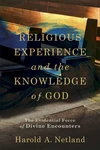
Religious Experience and the Knowledge of God
World Religions
“In a world that both elevates personal experiences to sacrosanct truth and denigrates or ignores the validity of contrary experiences, it is difficult to imagine a more timely, essential book. Netland charts a careful, clear path through the intricacies of the epistemology of religious experience. Cheers to a balanced, common-sense approach to this important issue!”
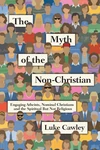
Evangelism & Missions
“Suppose Christians take seriously the call to spread the gospel, to answer questions about the faith and to give a reason for the hope that they have in Jesus Christ. If we shoulder this crucially important task, shouldn't we seek to engage and speak to actual people rather than our idealized notion of a 'non-Christian'? Absolutely! Luke Cawley shows us why and how. He combines a much-needed diatribe against 'one-size-fits-all' apologetics with some very practical and easily accessible suggestions on how engage in apologetics. I cannot imagine a better book for a community of people who desire to share their hope with a world that desperately needs Christ!”
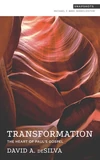
Theology
“Christian interaction with the world has long been hobbled by a stunted picture of what it means to be a Christian. We fail at what we are called to do, because we have far too narrow a picture of what we are called to be. David deSilva seeks to broaden our picture of the good news through a close reading of the Apostle Paul's writings. But do not misunderstand, deSilva's no revisionist. He is not rejecting traditional approaches to Paul, he is refocusing our attention on the big picture: The Christian life is about transformation. And I can think of no more timely and important message than that. A must read for any Christian who desires to take seriously the call to be salt and light in the world.”
NOTE: Only includes books currently in our catalog; not necessarily a complete list.
See something wrong on this page? Report a problem