James N. Anderson
Chance and the Sovereignty of God
Discipleship & Christian Education
“Is this the go-to book for a biblical theological perspective on chance, coincidence, randomness, risk, probability, prediction, and gambling? You bet it is! Dr. Poythress has hit another one out of the park. This book will transform the way you think about everything from quantum physics and weather forecasts to life insurance and card games.”
Excusing Sinners and Blaming God
Philosophy
“If God determines all things, including the evil actions of his creatures, doesn’t it follow by irrefutable logic that God must be culpable for those evil actions rather than the creatures? Au contraire, argues Calvinist philosopher Guillaume Bignon in this engaging yet rigorous work. Conversant with state-of-the-art literature on free will, this is one of the best defenses of theological compatibilism available today.”
Bible Studies & Devotionals
“Paul Jeon demonstrates the mind of a scholar and the heart of a pastor in this excellent daily devotional study of Paul’s letter to Philemon. Dr. Jeon is faithful to the divinely inspired text while drawing out practical lessons for our relationships with fellow Christians today.”
Christian Living
“One hears too often that presuppositionalists are opposed to the idea of natural revelation and reluctant to utilize it in apologetics. Nothing could be further from the truth, as John Frame demonstrates in Nature's Case for God. The created cosmos indisputably declares the glory of God, and the law of God is inscribed upon the human conscience, but (as Calvin famously noted) we need to put on the spectacles of Scripture to read the testimony of nature rightly. Frame does exactly this, offering us a biblical exposition of natural theology with his trademark clarity and insight.”
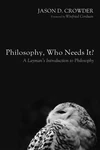
Philosophy
“For many Christians, philosophy is a four-letter word, and any Christian who goes so far as to study philosophy is to be regarded with suspicion, if not pity. In reality, however, everyone has a philosophy of some kind, whether they recognize it or not. The only question is whether they have a good philosophy. This splendid book is an invitation not merely to good philosophy, but to Christian philosophy: philosophy directed by the word of God and pursued to the glory of God. So come on in, the water's fine!”
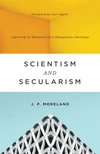
Apologetics
“Science is a gift from God, but scientism is an idolatrous perversion of that gift that is hostile to the Christian faith and to the proper practice of science. J. P. Moreland rightly contends that Christians need to understand what scientism claims, to recognize its pervasive effects in our society, and to expose its self-defeating pretensions. Moreland has been reflecting on these issues for decades, and I can think of no one better qualified to write on this topic. This incisive takedown of scientism is long overdue and most welcome.”
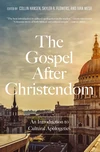
Apologetics
“The label may be relatively new, but from the time Paul first set foot in Athens, if not before, Christians have engaged in cultural apologetics. It is perennially necessary, but especially important for the church’s witness in the West today. This book helpfully covers the what, why, how, and where of cultural apologetics with material that is fresh, insightful, and eminently practical.”
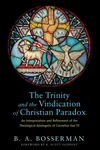
The Trinity and the Vindication of Christian Paradox
Apologetics
“The Trinity and the Vindication of Christian Paradox is ambitious in its scope, depth, and creativity. It is the first book-length exposition of Van Til's apologetic to give a leading role to his understanding of theological paradox, rather than treating it (as many other Van Tilians have done) as merely a supporting actor or a dispensable extra. In addition, Bosserman's development of Van Til's claim (that the ontological Trinity uniquely solves the ancient problem of the one and the many) moves the discussion forward in significant respects.”
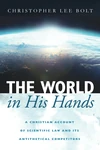
Science & Faith
“The Declaration of Independence famously speaks of ‘the Laws of Nature and of Nature’s God.’ Its authors were making an appeal to universal moral laws established in the natural order and they credited those laws to a divine author. In this excellent book, Christopher Bolt argues that such is also the case for universal scientific laws: these ‘laws of nature’ must also be credited to a divine author who originally created and even now continually sustains the physical cosmos. Bolt is not the first to argue for a theistic basis for science, but what’s unique about his book is that it makes the case for a distinctively Christian theistic basis. This is a splendid work of philosophical theology with important applications in Christian apologetics. I highly recommend it.”
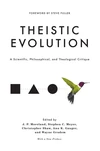
Science & Faith
“Evangelicals are experiencing unprecedented pressure to make peace with the Darwinian theory of evolution, and increasing numbers are waving the white flag. The tragic irony is that evolutionary theory is more beleaguered than ever in the face of multiplying scientific challenges and growing dissent. Until now there has been no consolidated scholarly response to theistic evolution that combines scientific, philosophical, and theological critiques. I was excited to hear about this ambitious project, but the final book has exceeded my expectations. The editors have assembled an impressive cast of experts and the content is top-notch. Theistic evolutionists, and those swayed by their arguments, owe it to themselves to read and digest this compendium of essays. This book is timely and necessary—quite literally a godsend.”
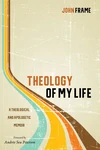
History & Biography
“John Frame's impact on the evangelical world can hardly be overstated, and the rich legacy of his works will bless generations to come. Dr. Frame's books have often provided glimpses of his own life experiences, but now his readers can appreciate the personal story behind those writings, a story that testifies both to divine mercies and to human weaknesses. This 'existential perspective' on the five-decade ministry of a Christian theologian is a fascinating narrative that intertwines the ordinary and the extraordinary, with encouragements and lessons for all of us, whatever our calling in Christ's kingdom.”
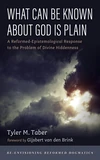
What Can Be Known About God Is Plain
Philosophy
“The problem of divine hiddenness, brought to prominence most recently by the work of J. L. Schellenberg, has provoked no end of discussion and debate among philosophers of religion of all stripes. It represents one of the most significant challenges to belief in God and especially to the strong claims about God’s self-revelation found in the Christian Scriptures. Various responses have been offered and defended, some more concessive than others, but until now there has been no extended treatment of the problem that draws self-consciously from the Reformed theological tradition and from Alvin Plantinga’s influential work on ‘Reformed epistemology.’ Tyler Taber’s book fills that conspicuous gap and does so with intellectual rigor and theological depth, yet in a way that is accessible even to non-specialists. Not only does this volume provide a robust Reformed-epistemological response to the problem of divine hiddenness, it also serves as a helpful introduction to Plantinga’s ‘Aquinas/Calvin model’ for warranted Christian beliefs. An impressive work of philosophical theology in its own right, it has valuable application to Christian apologetics and pastoral counseling. It should be considered essential reading for anyone perplexed by the problem of divine hiddenness.”
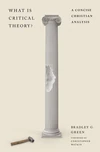
Ethics, Culture & Social Issues
“I’ve read numerous articles and books on critical theory, but Brad Green’s What Is Critical Theory? is the most lucid, insightful, and penetrating treatment I’ve encountered. His argument that critical theory is a kind of parasitic imposter that seeks to subvert and supplant a biblical Christian worldview is especially illuminating and powerful. I learned much from this book, and it will be my first recommendation for any Christian who wants to understand the challenge of critical theory and the ways in which it has infected Western culture.”
NOTE: Only includes books currently in our catalog; not necessarily a complete list.
Commentaries on the Book of Psalms, Volume 1
Translator
Commentary on the Book of Psalms, Volume 2
Translator
Commentary on the Book of Psalms, Volume 3
Translator
Commentary on the Book of Psalms, Volume 4
Translator
Commentary on the Book of Psalms, Volume 5
Translator
Theology
Christian Living
See something wrong on this page? Report a problem