James Wetzel
Biography
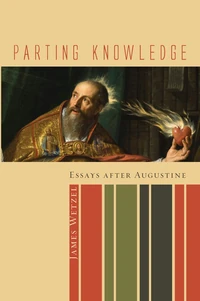
James Wetzel has served as Professor of Philosophy at Villanova University and as the first permanent holder of the Augustinian Chair in the Thought of St. Augustine. Wetzel wrote Parting Knowledge (2013).
Bios generated by automated processes. · Report a problem
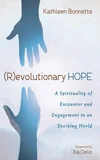
Theology
“Kathleen Bonnette is no fan of the hierarchal paradigm for the ordo amoris or the love that renders the cosmos a place of belonging. Hierarchies put people into their proper places. In what she advocates—a relational ethic with cosmic overtones—propriety honors love’s inventiveness. But Bonnette doesn’t just pit restless against rooted. She explores, together with her School Sisters, the art of relating to what resists relationship. This proves to be a bravely confessional venture.”
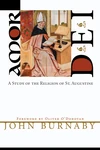
Theology
“John Burnaby limited the aims of his 1938 Hulsean Lectures to a patient exposition of Augustine's religion of divine love. The resulting book, Amor Dei, has earned its place among the handful or so of truly great studies of Augustine in modern times. No doubt the enduring power of Burnaby's study has had much to do with his ability to think with Augustine and not just about him and to bring to Augustine an ethical sensibility that is appropriately skeptical of one-sided goodness. For times still too enamored with ruthless simplifications of love, Amor Dei is a gift.”
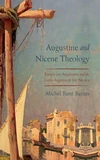
Theology
“In these masterful and edgy essays, Michel Barnes rescues Augustine from the zombiedom of neo-Scholastic Platonism and restores him to a vibrantly Latin tradition of reflection on the God who is Trinity. This is not a game of historical nicety. Barnes wars against modern moralism and its retrospective refusal to treat Scripture as an intellectual idiom. He is that rarest of intellectuals: a faithful reader.”
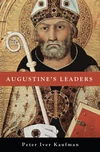
Theology
“Political Augustinianism is a venture into a mixed bag of expectations: expect the rare graces of chastened power, compassion, prudence, and humility, but expect as well the dogged persistence of a politics of stupid self-love. Although Peter Kaufman denies that the rare graces ever coalesce enough to draw self-love out of the orbit of stupidity--a claim about Augustine's expectations--he does not consign political Augustinianism to its traditional cul-de-sac of world-weary pessimism. Augustine's Leaders is Kaufman's rendition of the bishop of Hippo's brief on the positive responsibilities of leadership--pastoral and political--in an inescapably fractured order. Throughout this vivid and concise book, Kaufman brings the seasoned perspective of an accomplished and wide-ranging historian of political culture.”

Fiction
“D. A. Wood prefaces his exquisitely wrought epic poem with the conceit—or perhaps the conviction—that he is heir to a translation whose original, through theft and inadvertence, has been lost. Canaäd translates, by way of informed imagination, the lost religion of the Canaanites. Think of it as the prequel to the religion of Yahweh. But in place of a triumphalist monotheism, Wood paints the pathos of single-parent theism. Canaäd is a mythopoetic masterpiece.”
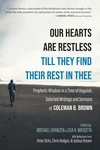
Our Hearts Are Restless Till They Find Their Rest in Thee
“This beautifully edited and orchestrated collection of sermons is a gift. Coleman Brown, beloved late chaplain and teacher at Colgate University, speaks here with pentecostal fire and a humility that is both miraculously honest and unsentimentally in favor of life. Brown reminds us, with unassuming wisdom, that great things are staked in the most ordinary of hearts.”
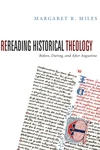
Theology
“For years Margaret Miles has been patiently honoring the question of the body in historical theology. In this collection of sixteen of her best essays, she tracks the ambivalences in Augustine's love of the flesh, finds a Platonism with an earthly pull, sustains her sense of an antique social location, and finishes with a flourish of mystics and reformers--all successors to an Augustinian passion. An historian of great cultural sensitivity, Miles is not afraid to meet the past under the skin of contemporary life (where it, in fact, has always been). In the art of critical sympathy, she has no peer.”
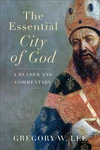
Theology
“Augustine desperately needs not just an editor but a wingman—someone to track his flight as he deep dives into cultural critique, metaphysical speculation, exegetical acrobatics, and otherworldly musings. Gregory W. Lee, one of the best of the new generation of political theologians, offers readers a framework for reading City of God: an introduction to the text and its context within Augustine’s political theology, an outline of the book’s contents, chapter intros, explanatory notes, expository essays.”
NOTE: Only includes books currently in our catalog; not necessarily a complete list.
Philosophy
See something wrong on this page? Report a problem