Jean Porter
Biography
Jean Porter wrote Ministers of the Law, The Recovery of Virtue, and Nature as Reason.
Bios generated by automated processes. · Report a problem
Ethics, Culture & Social Issues
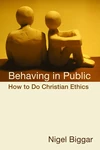
“How can the church witness effectively in public debates in modern, mostly secular societies, without either losing its integrity or imposing its perspectives on others? In this important new book Nigel Biggar maintains that the integrity of the Christian message should not be confused with distinctiveness. . . . Offers a nuanced yet demanding position on the public role of the church, cutting through unhelpful dichotomies and reminding us that theological seriousness need not be sectarian or intolerant.”
Contemplating the Future of Moral Theology
Theology
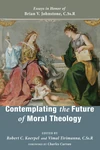
“Unlike many Festschriften, this volume reflects a unity of theme and approach, and it would serve as a good introduction to recent work in the field. As such, it is a fitting tribute to Professor Johnstone, whose long career has been distinguished by scholarly excellence, wide-ranging interests, and a commitment to ideals of dialogue and collegiality. This book is highly recommended to everyone who is interested in the current state of moral theology and its possible future trajectories.”
Ethics, Culture & Social Issues
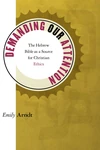
“This is a fully formed, sophisticated, and beautifully written book, offering an important contribution to the field of theological ethics. . . A fitting tribute to a scholarly career that was cut short all too soon.”
History & Biography
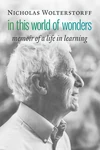
“Nicholas Wolterstorff is best known as one of the leading figures in the revival of Christian philosophy. But to those who have had the good fortune to meet him, he is even more remarkable for his open-minded readiness to engage with anyone, to learn from anything, and to bring his keen critical intelligence to bear on the most unlikely subjects. This memoir reflects that open-minded spirit, as it brings out the many communities, events, and relationships that have shaped him. Warmly recommended.”
Theology
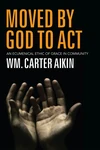
“In this first-rate study of ecumenical theology, Carter Aikin shows how Aquinas' doctrine of grace offers a resource for Protestant theology. He develops Aquinas' key insights in light of distinctively Protestant commitments to a confessing community, shaped by and answerable to Scripture, as the proper context for receiving and acting out of divine grace. This book offers a valuable contribution to an ongoing ecumenical conversation about the relevance of Aquinas for contemporary theology and moral and pastoral practice.”
Ethics, Culture & Social Issues
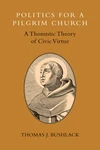
“Thomas Bushlack's account of the civic virtues provides a much-needed bridge between classical Thomism and the moral challenges and values of democracy and civic engagement. . . . This book is an important contribution to Thomistic ethics, but it also offers a great deal to anyone who cares about justice, the public sphere, or the social witness of the church.”
Ethics, Culture & Social Issues
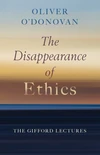
“In this challenging book, Professor Oliver O’Donovan argues that the discipline of ethics, considered as a branch of philosophy with close affinities to natural theology, depends on a theological construal of nature, history, and interpersonal agency. This is a powerful book, grounded in O’Donovan’s extensive reading in both theology and modern philosophical ethics, and informed by the distinctive theological vision that runs throughout all his writings. At the end of the day, this book offers more than a critique of contemporary ethics—it offers a starting point for a renewed discipline of moral theology, squarely grounded in a theological vision of reality, while also oriented towards the practical choices that we face.”
Theology
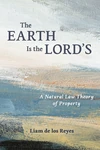
“In this groundbreaking book, Liam de los Reyes argues that the theory of property developed by scholastic jurists and theologians in the twelfth and thirteenth centuries offers a more satisfactory understanding of property rights than contemporary alternatives, above all the liberal theory defended by Locke and his followers. In sharp contrast to Locke, who defends a natural right to property, the scholastics hold that property rights are social constructs which are meant to promote the values of equality, subsistence, and freedom. This does not imply that property rights can just be set aside, but it does imply that these claims are to be interpreted in such a way as to give priority to those forms of distribution which promote wide access to shared resources. This book represents a major contribution to the growing field of economics and theology, and it will be essential reading for anyone concerned with building a more equitable and sustainable economic system.”
NOTE: Only includes books currently in our catalog; not necessarily a complete list.
Philosophy
Philosophy
Philosophy
Philosophy
See something wrong on this page? Report a problem