Jennifer A. Herdt
Biography
Jennifer A. Herdt has served as Gilbert L. Stark Professor of Christian Ethics at Yale Divinity School.
Bios generated by automated processes. · Report a problem
Ethics, Culture & Social Issues
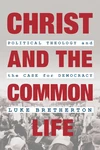
“Breaking the spell long cast over political theology by Augustine’s vision of the two cities, Luke Bretherton reads faithful pilgrimage to the heavenly city through the lens of a different journey, that of a certain man going down from Jerusalem to Jericho, and the one who was his neighbor. Politics is neighboring, negotiating a common life between friends, strangers, enemies, and the friendless, and political theology requires a kaleidoscopic approach, brilliantly instantiated in this book, that disrupts canon, shifts geography, and eschews sovereign placement in favor of active listening. A transformative contribution!”
Theology
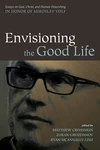
“What is the good life, the genuinely flourishing human life? This volume of essays by distinguished American and European theologians furthers the generative life work of Volf and his conviction that we flourish in joyful communion with God and one another. But how are ordinary forms of creaturely well-being related to this ultimate vocation, and how can this vision of the good life come to terms with the full spectrum of human diversity? If ever there was a time when the world needed to come together in serious engagement with these questions, it is now.”
Theology
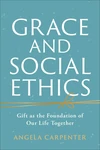
“In a culture obsessed with success and achievement, anxiety is always lurking. How easily even Christians lose sight of the fact that all we are and all we have is gift. In this wise and wide-ranging book, Carpenter deftly guides her readers through the findings of evolutionary anthropology and social psychology and into the thickets of contemporary debates around work, criminal justice, and gun control. Along the way, she uncovers the profound implications of the experience of grace for human sociality and builds a robust case for a social ethics deeply rooted in Reformation theology. Grace and Social Ethics is balm in Gilead!”
Theology
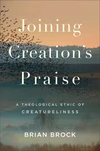
“How can we late moderns experience being at home in the cosmos? Brian Brock proposes an answer that lies in an ethic of creatureliness, unfolded through a wide-ranging interpretation of the primeval history of Genesis. Seeing creation through the ethos of scriptural peoples challenges a host of contemporary assumptions, freeing Christians to abandon anthropocentrism and find Sabbath rest. Although this book is sure to delight some and disturb others, even readers who construe creatureliness in ways different from Brock will learn much from the workings of his expansive scriptural imagination.”
Philosophy
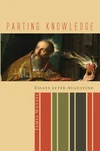
“These are indeed 'essays after Augustine'; steeped in Augustinian scholarship, but not content with mere erudition, they remind us of the self-involving character of true philosophy and lure us into its pursuit. Wetzel loves the Augustine who is more certain of having received than of what he knows, and these pages invite us to walk with and after this Augustine.”
History & Biography
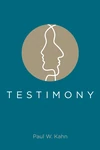
“War and trauma, sex and betrayal, memory and truth, faith and authenticity—Kahn’s struggle to make sense of his mother’s late-life confession of adultery and his father’s endless rage lead him on a journey into the marrow of existence. This is not merely a memoir, but an offering, one that is unfailingly honest but not brutally so, probing but never voyeuristic; Kahn redeems the tragedy of his parents’ lives by attending to them in both their high drama and their prosaic mundanity, by affirming that they matter, that he cares. It is also, by the same token, a confession, an act of faith, a declaration that since love is real, it is possible to live in the face of death. What sort of religious act is possible for one bereft of tradition, ritual, and myth? In Testimony, Kahn has shown us.”
Christian Living
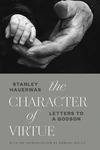
“In this series of intimate and luminous reflections, annual letters to a godson, Stanley Hauerwas lifts up a rich array of virtues. He does so not in order to exhort their cultivation but to display how they ride on the back of compelling practices and forms of life that we discover along the way.”
Theology
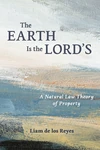
“Amidst a lively theological literature examining capitalism and the economy, surprisingly little attention has been paid to the question of property. Liam de los Reyes’s new book shows the vital importance of moving beyond the analysis of the market, consumption, and commodification, to ask whether adequate justification exists for the institution of private property. What emerges is a natural law theory of property capable of distinguishing legitimate from misguided critiques of markets and capitalism. A much-needed contribution!”
Science & Faith
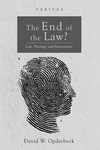
“If human moral agency is an illusion, perhaps law is merely a tool for the manipulation of human behavior. This is the perspective defended by reductionistic ‘neurolaw,’ drawing on recent developments in neuroscience. In this extraordinarily wide-ranging and vigorously argued book, legal theorist and theologian David Opderbeck shows how reductive neurolaw is self-defeating and how the emergentism and non-reductive physicalism embraced by many contemporary theologians continue to employ a problematically physicalist notion of causality. Building instead on the new Aristotelianism in the philosophy of science, with its non-reductive understanding of the relationship between brain states and human decisions, Opderbeck defends an approach that recovers formal and final causes, pointing unapologetically to love as the reason and end of creation, and to the law of love as a constituent element of human nature. Only if the order of creation flows from the order of love that is the law of God’s own being, he contends, is it possible to recover an adequately non-reductive account of how accountable human persons exist within the context of physical laws of nature. A vital contribution to an important cluster of debates.”
Arts & Literature
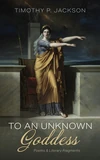
“One of this generation’s most ardent defenders of Christian agape here turns his hand to poetry, and with it those other Greek loves, too, eros and philia. Witty, profound, and endlessly absorbing, these verses trace the transfiguration of love found and lost, in conversation with writers across the ages—a latter-day knight of faith inviting us along on his quest for an unknown goddess.”
Theology
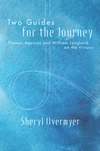
“Deftly juxtaposing Thomas's Summa Theologiae and Langland's Piers Plowman as twin guides for the journey of the soul back to God, Overmyer displays sacramental theology as the intimate companion of social criticism. The journey is one of formation in the virtues and most especially of growth in the infused supernatural virtue of charity, fed by the grace of the sacraments but blocked--as Langland's trenchant allegory reveals--by the refusal of love.”
Christian Living
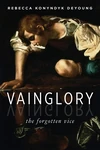
“In disarmingly conversational prose, DeYoung deftly unravels the twisting paths traced by the desire for glory as it roots itself ever more deeply in our characters. But she does not simply leave us in vainglory’s clutches. In conversation with Augustine, Aquinas, and the Desert Fathers, she canvasses traditional spiritual practices that re-open possibilities for truthful self-communication, and she points us to our call to become transparent to God’s glory as vessels of God’s self-giving love.”
Theology
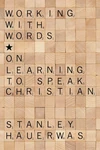
“Working with Words displays more clearly than ever before the basso ostinato that is Wittgenstein's imprint on the Hauerwasian dialect . . . This is vintage Hauerwas.”
No books by this person in our catalog yet.
See something wrong on this page? Report a problem