John Dominic Crossan
Biography
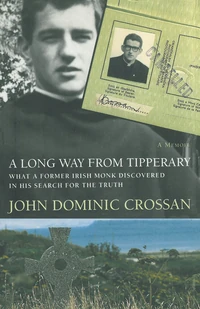
John Dominic Crossan is Professor Emeritus of Religious Studies at DePaul University in Chicago and a cofounder of the Jesus Seminar, which Crossan also previously co-chaired. Crossan formerly served as chair of the Historical Jesus Section of the Society of Biblical Literature. Crossan's books include Render Unto Caesar (2022), A Long Way from Tipperary (2020), and Resurrecting Easter (2018).
Bios generated by automated processes. · Report a problem
Theology
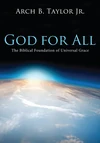
“God For All interweaves a complete survey of the entire Christian Bible with the author's personal and denominational pilgrimage. It interprets that Christian Bible--positively, powerfully, and persuasively--with a vision both Christian in its particularity and ecumenical in its universality. Read this book because it offers a profound basis for dialogue between religions. Read this book because it challenges every religion to imagine a God that is for all of the world and for all of the world's peoples.”
Biblical Studies & Commentaries
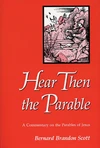
“Bernard Brandon Scott's Hear Then the Parable is a superb synthesis of where we have come from in terms of literary analysis and where we are going in terms of social analysis.”
Biblical Studies & Commentaries
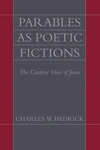
“Jesus told parables. Gospel writers give them diverse readings. Modern exegetes give them even more diverse readings. Hedrick chronicles both diversities and then poses a new question. How would those parables, precisely as poetic but realistic stories, have sounded to Jesus' first hearers 'in the context of Israel's fictions about itself'? His book emphasizes original audience reaction, and its signal achievement is to have said something new, interesting, and provocative in the very crowded field of parables research.”
Biblical Studies & Commentaries
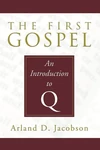
“An excellent, long-overdue, and extremely thorough analysis of Q, not just as a source for Matthew and Luke, but as a much earlier gospel in its own right, a gospel with its own redactional history and its own quite distinctive theology.”
Biblical Studies & Commentaries
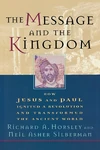
“This powerful and persuasive book illustrates the strength of the message of Jesus and Paul, the kingdom of God in the hamlets of Galilee, and the churches in the cities of the Roman empire as they stood together against cosmic and imperial, and personal and individual, evil.”
Biblical Studies & Commentaries
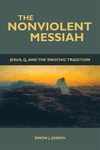
“In his bold new book, Simon Joseph confirms what many have suspected for some time: Jesus was completely, consistently, and incontrovertibly nonviolent. Joseph serves as a reliable guide through a plethora of ancient sources and the tangle of modern scholarship to get us as close as possible to the earliest Jesus traditions. His book is meticulously researched and graciously argued. From this point forward, nobody can suggest Jesus was violent without first contending with the very formidable evidence Joseph has mounted to the contrary. A much needed book!" —Eric A. Seibert Messiah College "This is an all too rare attempt to integrate scholarship on Second Temple Judaism with the study of the historical Jesus." —John J. Collins Yale Divinity School “The Nonviolent Messiah offers a new understanding of the term 'messiah,' a remarkable feat in itself. The book should be required reading for all serious students of the historical Jesus, especially those interested in the study of Jesus as messiah, Son of Man, the New Adam, and the herald of God’s eschatological Jubilee.” —James A. Sanders Professor emeritus, Claremont School of Theology and Claremont Graduate University "Simon Joseph provides a helpful new entry into understanding the peaceable way of Jesus. By drawing on heretofore underutilized sources, Joseph underscores that nonviolence should be central to our evaluation of what constituted the message of the historical Jesus. This massively researched and clearly written study makes Jesus's message of peace available in fresh and helpful ways." —Ted Grimsrud Eastern Mennonite University "Did Jesus promote apocalyptic violence or nonviolent social reform? Or do these categories lead us astray? Revisiting the social, cultural, and theological matrices of Second Temple Judaism, Simon Joseph offers us the finest book to date on the topic of Jesus and nonviolence. Joseph’s findings will incite controversy, but this book is a discerning and compelling look at Jesus' earliest socio-political message." —Anthony Le Donne Author of The Historiographical Jesus: Memory, Typology, and the Son of David and The Wife of Jesus: Ancient Texts and Modern Scandals "Simon's book argues—powerfully and persuasively—that first common-era century Judaism evoked both a violent and a nonviolent messianic option. Furthermore, the work shows that Jesus deliberately and self-consciously chose that latter alternative even unto martyrdom. After this book’s challenge, the debate is no longer the Jesus of History or the Christ of Faith. It is now whether, be it as Jesus in academy or Christ in church, that figure is one of violent or nonviolent resistance to inequality, injustice, and oppression.”
Biblical Studies & Commentaries
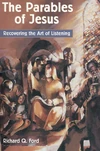
“One feature makes this book special, another makes it extraordinary. It is not new for biblical scholars to move into realms of psychotherapy where they walk as amateurs. It is much more novel for a professional psychotherapist to move into biblical studies with enough preparation to be far beyond amateur standing. But it is this book's subtitle that makes it extraordinary. It is about the lost art of 'listening,' about dialogues rather than twin simultaneous monologues, about personal and social interaction, especially in cases of inequality. With care, delicacy, and tenderness, Richard Ford listens to parable characters reacting to one another, imagines client and therapist in analogous situations, and teaches us all to shut up long enough to hear another's voice.”
Biblical Studies & Commentaries
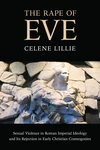
“Celene Lillie’s The Rape of Eve is both ground-breaking and breathtaking. Her three Nag Hammadi texts, On the Origin of the World, The Reality of the Rulers, and the Secret Revelation of John oppose Roman imperial theology not just in itself but as the present material investment of a primordial cosmic aberration. This changes absolutely how we read these three texts—and other “Gnostic” ones like them as well.”
NOTE: Only includes books currently in our catalog; not necessarily a complete list.
History & Biography
Biblical Studies & Commentaries

Biblical Studies & Commentaries
Biblical Studies & Commentaries
Biblical Studies & Commentaries
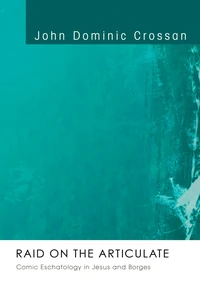
Biblical Studies & Commentaries
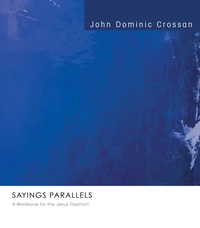
Biblical Studies & Commentaries
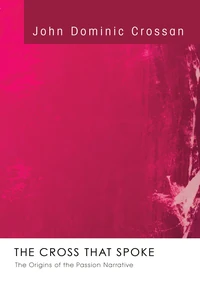
Biblical Studies & Commentaries
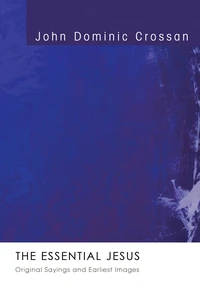
Biblical Studies & Commentaries
See something wrong on this page? Report a problem