John Hedley Brooke
Biography
John Hedley Brooke is Emeritus Professor of Science and Religion at Oxford University.
Bios generated by automated processes. · Report a problem
History & Biography
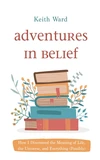
“Keith Ward’s captivating autobiography will delight his many admirers and impress a wide readership drawn to the big questions in philosophy and religion. Full of self-deprecating humor and sardonic aphorisms, it combines the serious reflections of a connoisseur of the world’s great religions with often hilarious accounts of turning points in his life that apparently originated in mistakes. How a one-time atheist became a distinguished idealist philosopher and adventurous Christian theologian makes for an utterly absorbing read.”
Science & Faith
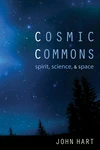
“John Hart invites us to join him in . . . a powerful and moving commentary on human failure and insensitivity where indigenous, terrestrial civilizations have been encountered, suppressed, and even destroyed. Writing as a Christian ethicist deeply concerned about ecological destruction, he resists the shallowness of those scientists who glibly advocate our colonization of other worlds in order to escape a doom-laden earth. You don't have to believe in UFOs to appreciate his compelling argument.”
Theology
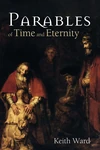
“Keith Ward’s instructive account of the New Testament parables, and of the assumptions that underpin modern and revisionist interpretations of them, is both imaginative and enthralling. Critical of overly politicized and reductionist portrayals, Ward detects hidden spiritual meanings in the parables that disclose a self-understanding in Jesus consonant with the cosmic interpretation placed on his life in St. John’s Gospel. This is a detective story with a difference, one that envisages a final sharing of all in a universal union with Christ, whose call for self-renunciation movingly pervades the text.”
Theology
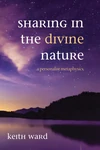
“Never one to shirk the big questions, Keith Ward devotes his new book to a critical analysis of what it means for God to be God. He clearly differentiates his own understanding of Christian theology from the views of those who insist that a maximally perfect God must be simple, immutable, and impassible. Taking his scalpel to Thomist scholarship, he laments its over-dependence on the metaphysics of Aristotle and offers instead a sparkling defence of a God passionately affected by what happens in an alienated and suffering creation, ultimately destined for union in Christ. Innovative and nuanced, Sharing in the Divine Nature is an exciting exploration of the respects in which a perfect God may be said to have many unactualized potentialities.”
Science & Faith
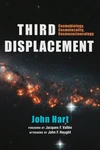
“The Third Displacement marks the consummation of years of reflection on the psychological, spiritual, and ethical ramifications for humankind should the de-centering associated with Copernicus and Darwin be completed. This is a serious, distinctive, and thought-provoking exploration from an author who engagingly, if controversially, affirms that contact has already occurred.”
Science & Faith
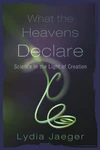
“Readers of Lydia Jaeger's arresting book may at first be surprised to find favorable references to 'creationism' and 'creationists,' terms that so often connote anti-evolutionary rhetoric and religious fundamentalism. But they should not be deceived. Her object is not to defend populist religious movements but to reinstate a sophisticated theology of creation having distinguished precedents within Christian tradition, and a Protestant Reformed tradition in particular. The universe she describes is one in which everything that exists is radically dependent on a Creator God whose wisdom and faithfulness guarantee the order of nature. Despite many competing accounts of nature's 'laws,' and despite current critiques of the applicability of the concept, Dr. Jaeger gives a spirited defense of a philosophy of science in which physical laws are still best understood as divine legislation. A bold and challenging essay.”
No books by this person in our catalog yet.
See something wrong on this page? Report a problem