John S. Kloppenborg
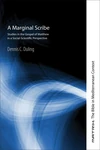
Biblical Studies & Commentaries
“"Dennis Duling's A Marginal Scribe is to date the most thorough, methodologically consistent, and nuanced application of social-science models to the gospel of Matthew”
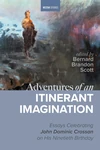
Adventures of an Itinerant Imagination
Biblical Studies & Commentaries
“The twenty-one essays in Adventures of an Itinerant Imagination comprise a series of conversations with Crossan’s oeuvre and the foundational contributions that he has made to a breathtaking variety of foundational topics: the poetics of biblical language; the historical Jesus and the historical Paul; method and theory in biblical studies; the reach of imperial ideology; and the public import of scholarship on the Bible.”
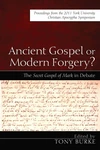
Ancient Gospel or Modern Forgery?
Biblical Studies & Commentaries
“Ancient Gospel or Modern Forgery? brings together most of the key supporters and detractors of the authenticity of the Secret Gospel of Mark in a balanced, probing, and illuminating book. . . . Although this book, carefully crafted by Burke, cannot be said to have brought closure on the issue, it has laid to rest many of the specious and illogical claims that have littered the discussion until now. We can only hope that the ground has now been cleared for a more balanced and scientific assessment of the Mar Saba manuscript.”
Biblical Studies & Commentaries
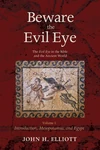
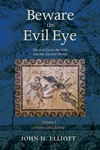
“Evil Eye beliefs and practices are founded on coherent pre- modern theories of vision and make sense in cultural situations where the vagaries of chance, accidents, disease, and death impinge on all aspects of human life. Elliott’s two volumes offer the teacher an invaluable resource for helping students think about practices that have had salience from the times of the Sumerians until our day.” “It is impossible in a review adequately to describe the breadth of Elliott’s work, since he seems to have ferreted out of 2000 years of ancient cultures practically every instantiation of Evil Eye belief and practice, of which there seem to be hundreds of variations. The two volumes are splendidly illustrated throughout with photographs and drawings of hundreds of amulets, gurines, mosaics, and inscriptions. This collection will become a standard reference work in ethnography.”
Biblical Studies & Commentaries
“John Elliott's Beware the Evil Eye is not simply a marvelous collection of literary texts, material objects, and gestures that bear on the 'evil eye;' it is ethnography at its best. Elliott not only collects a wealth of texts from Mediterranean antiquity and shows how numerous vocabularic items that might be misunderstood by the modern reader in fact betray beliefs in the evil eye. He has also collected material objects from as far afield as Sri Lanka and modern Britain, and discusses the varied bodily gestures used to ward off the evil eye and its moral locomotive, envy. Importantly, Elliott shows that evil eye practices are not to be dismissed as irrational, but are rational inferences from ancient understandings of the physiognomy of the eye and the nature of vision, and serve to makes sense of the vagaries of human experience. Elliott's achievement does not stop here: he demonstrates how evil eye beliefs are implicated in human envy, boasting, and other ordinary activities, and assembles a wealth of material objects and gestures that serve as prophylaxes against the evil eye. This will be a standard textbook in ethnography.”
Cynicism and Christianity in Antiquity
Biblical Studies & Commentaries
Foreword
(wrote the foreword)
Early Christ Groups and Greco-Roman Associations
Biblical Studies & Commentaries
“Early Christ Groups and Greco-Roman Associations is a superb collection of essays that cover a broad range of aspects of ancient clubs and associations, and which shows how knowledge of their practices illumines our understanding of Pauline and other early Christ groups. This is an essential primer for the study of the social context of early Christianity.”
Biblical Studies & Commentaries
“James M. Robinson is rightly credited with initiating and nurturing the modern study of the Sayings Gospel Q, the hypothetical source that lies behind much of the sayings material in Matthew and Luke. In these essays, the fruit of more than forty years of research, Robinson elaborates a portrait of the historical Jesus and his utopian vision of the Kingdom of God, consisting of reliance on God as birds and plants rely on God, and on a program of human sharing and debt forgiveness. Not since Adolf von Harnack's 1908 The Sayings of Jesus has Q been so deftly quarried to construct a compelling portrait of the historical Jesus.”
Biblical Studies & Commentaries
“Cromhout's book takes on a key question in the study of the Sayings Gospel Q, that of the kind of Judaism that the document presupposes. He shows convincingly how Q both manifests a Judaism that is both in significant continuity with other forms of Judaism, but also departs from traditional convenantal nomism. Jesus and Identity is splendidly conceived, sophisticated in its argument, and important in its conclusions.”
Jesus Tradition, Early Christian Memory, and Gospel Writing
Biblical Studies & Commentaries
“Penned by the leading expert in the interface between orality and writing, Jesus Tradition, Early Christian Memory, and Gospel Writing is not only a meticulously attentive reading and an incisive critique of the history of scholarship on the relationship among the Synoptic Gospels. It is also a rereading of that history that engages recent insights into the cognitive aspects of reading and writing and the operation of memory and commemoration. Kirk exposes and exorcizes many of the ghosts that have troubled the history of the Synoptic problem and offers new ways forward. This is a landmark in scholarship on the gospels.”
Jewish Literature between the Bible and the Mishnah
Biblical Studies & Commentaries
“When Jewish Literature between the Bible and the Mishnah was first published in 1981 it quickly became a standard. Nickelsburg's second edition is a thorough revision and reorganization that updates all of the bibliographies and substantially expands the treatment of Qumran documents. Lucidly written, this second edition offers a reliable and clear map of the complex and varied terrain of the literature of second Temple Judaism. Ideal for teaching purposes.”
Jewish Literature between the Bible and the Mishnah, 2nd Ed.: Stand-alone CD-ROM
Biblical Studies & Commentaries
“When Jewish Literature between the Bible and the Mishnah was first published in 1981 it quickly became a standard. Nickelsburg's second edition is a thorough revision and reorganization that updates all of the bibliographies and substantially expands the treatment of Qumran documents. Lucidly written, this second edition offers a reliable and clear map of the complex and varied terrain of the literature of second Temple Judaism. Ideal for teaching purposes.”
Biblical Studies & Commentaries
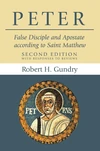
“Peter, long thought to be ‘prince of the apostles’ and one of the heroes of the Gospel of Matthew, is shown here to be neither. This extraordinarily closely argued volume by Robert Gundry offers a compelling case that Matthew constructs the figure of Peter as a failed disciple and an apostate. . . A courageous book that will require scholars to reassess how the Peter of Matthew came to be, in Gundry’s words, ‘airbrushed’ and turned into a model of disciple and central figure in ecclesiastical memory.”
Puzzling the Parables of Jesus
Biblical Studies & Commentaries
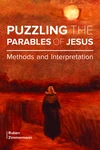
“Zimmermann’s Puzzling the Parables of Jesus offers a comprehensive, but eminently readable review of the last century of scholarship on the parables, making sense of its tangled history. His own approach, which negotiates the conversations between historical, literary, reader-oriented and theological approaches, will quickly become a standard reference for the study of the parables of Jesus.”

Biblical Studies & Commentaries
“Eric Eve’s Solving the Synoptic Puzzle offers a clear and balanced discussion of the Synoptic Problem. The appeal of the book, both for the teacher and the student, is that it presents the Synoptic Problem with its complexity in a remarkably clear, accessible, and balanced fashion. Competing synoptic hypotheses are given their due while Eve makes a credible case for the Farrer hypothesis.”
Biblical Studies & Commentaries
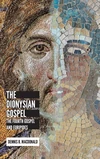
“Ever since C. H. Dodd and Rudolf Bultmann, echoes of Dionysos have been posited on the intellectual horizon of the first Cana sign in the Fourth Gospel. Employing the model of rhetorical emulation or mimesis, MacDonald takes these suggestions to a new level, arguing that the author has engaged with the god of the Bacchae not only in John 2 but throughout, depicting Jesus as a god in human guise coming to his own. As ever, MacDonald’s work is provocative, ambitious, erudite, and deeply engaged with current scholarship on the gospels.”
The New Testament in Cross-Cultural Perspective
Biblical Studies & Commentaries
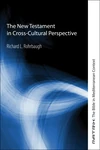
“Rohrbaugh's sensitivity to the social dynamics of Mediterranean cultures allows him to read familiar stories in an unfamiliar and yet highly convincing manner. He repeatedly exposes the ethnocentric nature of many modern interpretations, and illustrates how a knowledge of Mediterranean anthropology casts an entirely different light on the significance of the parables and sayings of Jesus. Clearly written and argued, The New Tesament in Cross-Cultural Perspective can serve also as a primer for Mediterranean anthropology.”
Biblical Studies & Commentaries
“With The People of the Parables , the reader is transported into the world of first-century Galilee to encounter the people and objects that populate the parables of Jesus—shepherds, estate managers, farmers, tax collectors, vineyards, day laborers, and many more. Culpepper’s characterizations are comprehensive and meticulously researched, allowing the reader fully to enter into the dynamics of the parables. The People of the Parables fills a critical lacuna in the study of the parable of Jesus. Essential reading.”
Biblical Studies & Commentaries
“Among those works that argue for Thomas's dependence on the Synoptic Gospels, this one by Mark Goodacre is rare for taking Thomas seriously as a literary work rather than merely dismissing it as a secondary compilation. Though not an exhaustive or definitive treatment of Thomas, this book merits serious consideration. Goodacre's arguments, always incisive and well considered, invite an equally serious response.”
NOTE: Only includes books currently in our catalog; not necessarily a complete list.
Biblical Studies & Commentaries
Biblical Studies & Commentaries
See something wrong on this page? Report a problem