Joseph A. Bracken
Biography
Joseph A. Bracken wrote The One in the Many and The Divine Matrix, and co-wrote Self-Emptying Love in a Global Context with Robert T. Sears.
Bios generated by automated processes. · Report a problem
Theology
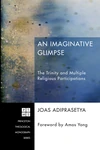
“Adiprasetya's book lifts perichoresis out of its original, strictly theological context--the Christian doctrine of the Trinity--into a broader philosophical context, namely, a new paradigm for the One and the Many as applied to interreligious dialogue.”
Philosophy
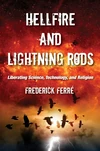
“Ferré has succeeded admirably in showing the linkage between science, technology and religion.”
Science & Faith
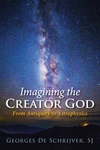
“"Fr. Georges DeSchrijver is one of only a handful of contemporary writers on religion and science who exhibits equal competence in the history of Western philosophy and theology and in natural science from ancient times to contemporary quantum theory. Most writers are experts in one area or the other but not both. Hence, Fr. DeSchrijver's defense of a Trinitarian process-oriented understanding of the relation between religion and science deserves careful reading. Moreover, he explains subtle arguments from both philosophy/theology and natural science in relatively straightforward terms suitable for the educated lay reader. The book is thus suitable for use in undergraduate classrooms.”
Science & Faith
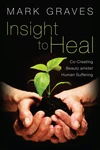
“"This book reads like a contemporary version of Augustine's Confessions. It is grounded in a religious conversion that resulted over time in a remarkable change of life for the individual. Likewise, it incorporates a surprising amount of contemporary philosophy, theology, and natural science (in this case, neuroscience) into a hierarchical system based on the notion of creativity and emergence of new forms. Finally, like the Confessions it takes time to think through and digest.”
Theology
“I appreciate the way in which Powell uses the dialectic of identity and difference first to explain a communitarian model of the Trinity and then to set forth an up-to-date understanding of the natural world. He gracefully integrates current scientific data from the natural and social sciences with a conceptual scheme derived from philosophy and theology. I recommend this book...”
Theology
“This book calls into question the historical Christian approach to the relation between religion and science. Other religious traditions are considered inferior to the way that science supports the belief system of Christianity. Why not try the non-dual approach to world religions where each needs the other to be authentically itself?”
Theology
“Whapham’s careful analysis of the historical development of Wolfhart Pannenberg’s theological vision in terms of a series of books on specific doctrinal beliefs over the years that culminated in his three-volume Systematic Theology was quite valuable to me in thinking through the complex role that Christian theology and Christian theologians should play in contemporary society. In particular, I valued Pannenberg’s (and Whapham’s) focus on the public character of theology with its emphasis on interdisciplinary work in religion and science, the anticipation of a full reconciliation of reason and revelation, etc. Furthermore, Pannenberg’s explanation of the doctrine of the Trinity in terms of the unity-in-diversity among the divine persons gives one reason to believe that the pattern of unity-in-diversity of parts or members is all-pervasive in the world of creation.”
Theological Reflections at the Boundaries
Theology
“Paul Ingram is one of relatively few Christian systematic theologians to synthesize reflections from his work in interreligious dialogue (especially the Buddhist-Christian exchange) and from his study of the ongoing exchange between philosophically oriented natural scientists and scientifically minded Christian philosophers/theologians. The present book represents the latest stage in his thinking on these matters. As Ingram himself comments, the experience of cognitive dissonance in comparing and contrasting quite different points of view on foundational issues may be often quite unsettling, but it seems to be the only way to keep growing intellectually, morally, and spiritually.”
Theology
“As a longtime participant in the ongoing Buddhist-Christian dialogue and as a student of the philosophy of Alfred North Whitehead, Paul Ingram is well equipped to mediate a "trialogue" between the worldviews of Christianity, Buddhism and contemporary natural science. Written in a conversational rather than a heavily academic style, Wrestling with God' challenges Christians, Buddhists and natural scientists to reach out to one another for assistance in dealing with the complex ethical issues of our times.”
NOTE: Only includes books currently in our catalog; not necessarily a complete list.
World Religions
Science & Faith
See something wrong on this page? Report a problem