Kenneth Keathley
Biography
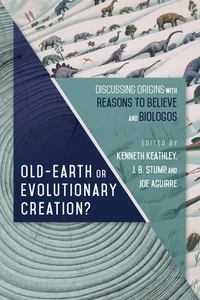
Kenneth Keathley has served as professor of theology at Southeastern Baptist Theological Seminary in Wake Forest, North Carolina, and as director of the L. Russ Bush Center for Faith and Culture. Keathley edited Old-Earth or Evolutionary Creation? (2017).
Bios generated by automated processes. · Report a problem
Apologetics
“When people ask for a good book to read about the age of the earth, I have a new favorite to recommend: Controversy of the Ages. With remarkable clarity, this book provides historical and theological context to the young-earth/old-earth controversy. But Cabal and Rasor move beyond mere description and prescribe the way to move forward—the Galileo approach. This is an important book, and it needs to be read by pastors, college and seminary students, and all who care about science and faith issues.”
Corporate Decision-Making in the Church of the New Testament
Church Leadership & Ministry
“Jeff Brown presents a strong biblical case that congregations in the New Testament were engaged in every level of decision-making. Whether electing leaders or enacting discipline, the normal practice was for the local assemblies to resolve issues in a corporate manner. I recommend Brown's work highly.”
Does Science Make God Irrelevant?
Ethics, Culture & Social Issues
“Here’s a helpful book that is also fun to read. Hans Madueme explains the relationship between faith and science with wit and humility. More importantly, he directs our awe and amazement of creation to its proper aim—to worship of the Creator.”
Encountering God through the Church
Theology
“We were created by God for himself and we are meant to enjoy him forever. Encountering God through the Church demonstrates that God is advancing his kingdom through the church. Howell gives us a powerful reminder that the church is the means by which we encounter God and experience him most fully. I highly recommend this book.”

Theology
“Kirk MacGregor has written a game-changer. He demonstrates that Molina’s understanding of the nature of grace was much more evangelical than what is commonly perceived. MacGregor shows that Molina didn’t develop the notion of middle knowledge simply for the sake of philosophical speculation, but because of his deep concern for pastoral ministry. This book will become an invaluable resource in Molinism studies.”
Molinist Philosophical and Theological Ventures
Philosophy
“Is Molinism biblical? Scripture does not explicitly present God’s knowledge of creaturely freedom as residing logically in a middle category between his natural knowledge and his free knowledge. Nothing so thorough can be found. But the Bible does affirm various truths, principles, and concepts that, when put together, fit very well in the Molinist system. MacGregor demonstrates that yes, Molinism is indeed very biblical.”
On the (Divine) Origin of Our Species
Science & Faith
“Through the years Darrel Falk and I have had our disagreements. Yet after every encounter with him I have come away with a better understanding of the issues involved and an awareness of his gentle Christian spirit. Those same traits come through in his latest book. Regardless of where one stands on the question of human origins, the reader will find On the (Divine) Origin of Our Species informative and edifying.”
Theology
“With some of the presentations I identified closely; with others I disagreed strongly. But this is the way a multiview book is supposed to be. Original Sin and the Fall provides a wide spectrum of positions, ranging from Reformed to Eastern Orthodox and beyond, and each of the five authors provides a strong, well-written chapter. This book serves as an excellent survey of the current debate about the doctrine of original sin.”
Theology
“The New Testament presents union with Christ as a central feature of soteriology. Yet generally evangelicals have not fully appreciated the implications of the concept. Gifford's clear and helpful work makes real strides in addressing this shortcoming.”
Science & Faith
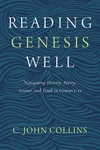
“In Reading Genesis Well, C. John Collins teaches us how to be good readers of Genesis 1–11. Collins guides conservative readers between the twin errors either of interpreting the text in a woodenly literalistic fashion or of segregating Genesis and science into entirely different realms. Rather, he leads the reader to approach Genesis with linguistic and literary tools provided by C. S. Lewis. The result is an excellent theological reading of the first chapters of Genesis.”
Science & Faith
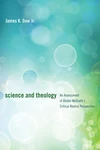
“Currently there are fruitful conversations going on between the practitioners of theology and science, and evangelicals are providing significant voices in the discussion. With his synopsis and assessment of Alister McGrath's 'scientific theology,' James Dew demonstrates why McGrath's paradigm of critical realism deserves serious consideration.”
Science & Faith
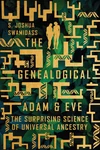
“Many Christians struggle with the challenge of mainstream science, especially on human origins. This book changes the game. The focus on genetic ancestry distracted us from genealogical ancestry. Scripture does not speak of genetics, but it does emphasize genealogy, presenting Adam as the genealogical ancestor of the human race. In terms that nonscientists can understand, Swamidass shows how scientific findings in genetics are entirely compatible with this biblical claim. The Genealogical Adam and Eve is creating a new conversation about human origins, and it is essential reading for everyone at the intersection of science and faith.”
The Generations of Heaven and Earth
Science & Faith
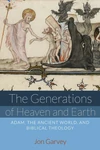
“The genealogical Adam model is an exciting development in the discussion about human origins. Garvey uses the model as the starting point for further explorations, and he proceeds with both creativity and classic Christian commitments. The result is not so much a radical revision of traditional Christian doctrine as it is a revisiting of certain biblical themes that have been underexplored. The Generations of Heaven and Earth makes a significant contribution and it is a must-read for those interested in the science-faith conversation.”
Theology
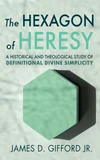
“Athanasius began his defense of the incarnation with a discussion of creation because he realized that the two doctrines were inexorably linked. Gifford argues that the Western church’s failure to follow Athanasius’s lead has resulted in many of the theological and practical woes that modern culture endures today. Provocative and wide-ranging, the Hexagon of Heresy demonstrates the problems inherent with the neo-Platonic definition of divine simplicity.”
What Hath Darwin to Do with Scripture?
Science & Faith
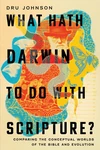
“What hath Eden to do with the Galápagos Islands? As Dru Johnson explains, more than one might expect. We who live in a culture of affluence have difficulty grasping how powerful the message of Edenic flourishing would have been to the original audience, a culture threatened constantly by scarcity and violence. Johnson demonstrates that Moses and Darwin dealt with many of the same subjects but came to very different conclusions.”
NOTE: Only includes books currently in our catalog; not necessarily a complete list.
See something wrong on this page? Report a problem