Kenneth P. Minkema
Biography
Kenneth P. Minkema co-edited Sermons by Jonathan Edwards on the Matthean Parables with Adriaan C. Neele and Bryan McCarthy, and wrote the forewords to Jonathan Edwards on Worship and The Global Edwards.
Bios generated by automated processes. · Report a problem
History & Biography
“In studies of early American evangelicals and evangelicalism that seem to dominate the landscape these days, Charles Chauncy is usually trotted out in a couple of paragraphs to represent the reactionary 'Old Lights' who were so shortsighted as to oppose the Great Awakening, and Jonathan Mayhew is mentioned in passing as an inlet of soulless rationalism on the road to Deism. But John Oakes' dual biography of these two rich and formative figures shows that these characterizations are too pat, too simplistic, and that a new, comparative approach to their religious and political thought reveals that 'traditional Calvinists' such as Chauncy and Mayhew are vital to understanding the great changes that occurred in the period from the Awakenings to the Revolution. In the process, Oakes shows that both of these figures had many points of similarity but were also unique thinkers and actors in their own right.”
History & Biography
“As the key founder of Springfield, Massachusetts, William Pynchon has been used by historians to show the economic origins of New England. But as David Powers shows, Pynchon was every bit as much an intercultural pioneer and religious figure with unorthodox ideas. This first book-length biography of Pynchon brings to bear new knowledge and approaches to the settlement period of New England, to give us a portrait of a person who was as complex as the Puritan movement from which he came.”
History & Biography
“Sometimes, if they’re lucky—or blessed—a historian can look back over the course of their life and realize that their work has coherence, meaning, and brings continual discovery. Happily, David Kling shares his instructive and ever-deepening odyssey into the world of Jonathan Edwards and generations of his followers in this volume. In these pages, Kling emerges as an insightful guide to the profound importance of Edwards and the Edwardseans not only in American but in global religious history.”
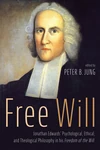
Philosophy
“Jonathan Edwards’s treatise on Freedom of the Will is one of the most important, and also one of the most demanding, works in philosophical theology from the modern era, but any who commit themselves to serious engagement with it will be rewarded. This new study guide will be helpful to students on many levels and to church study groups seeking to understand Edwards’ magnificent view of God and of the human person.”
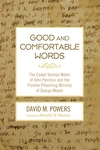
History & Biography
“These series of sermons from the 1640s, recorded by Pynchon as Moxon preached, reflect both a particular religious culture and the difficulties faced by the English settlers—an impressive reconstruction. Even more impressive, however, is the work Powers has done to retrieve these words. Deciphering seventeenth-century script is challenging enough, but he has done the hard detective work of figuring out obsolete shorthand systems, and the result is this real national treasure.”
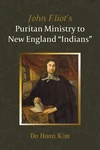
John Eliot’s Puritan Ministry to New England “Indians”
History & Biography
“Seventeenth-century puritan divine John Eliot, known as the ‘apostle to the Indians,’ is most famous for establishing a network of ‘praying towns’ for native converts in the colony of Massachusetts Bay. Traditionally viewed as a ‘missionary,’ Kim argues that applying categories of modern Christian missions to a figure such as Eliot—and particularly Eliot—is misleading. In this revisionist study, Kim argues that it is more historically sensitive and illuminating to understand Eliot as a minister employing Reformed understandings of pastoral theology in a unique context.”
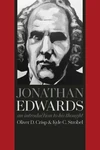
History & Biography
“Written by two of the most astute contemporary commentators on Jonathan Edwards, this volume performs a valuable service by focusing on salient topics in Edwards’s philosophical thought that are currently engaging the wider community. By highlighting these themes, the authors make Edwards part of a long tradition while also marking his unique, sometimes vexed, solutions to many key philosophical and theological questions.”
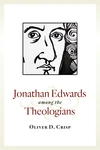
Jonathan Edwards among the Theologians
Theology
“This welcome volume brings together the most important essays on Jonathan Edwards by the most important of his interpreters in this generation. Crisp defines and tackles pressing issues in Edwards studies in an expert and game-changing way.”
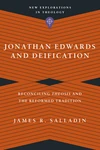
Jonathan Edwards and Deification
Theology
“Divinization, theosis, participation, and synonymous concepts are engaging scholars of Christian thought, particularly those who consider the eighteenth-century British-American theologian Jonathan Edwards. While saintly participation in God is usually associated with Eastern Orthodoxy, Jim Salladin recommends Edwards as an intentionally Reformed thinker whose formulation of deification involved a supernatural communication of divine grace and fullness to the regenerate, a union of natures that maintained the Creator-creature distinction. Here, Edwards emerges not only as a significant historical figure but also as a resource for contemporary consideration.”
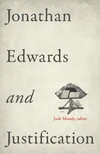
Jonathan Edwards and Justification
Theology
“In 1734, at the beginning of the Connecticut Valley revival that ushered in the Great Awakening, Jonathan Edwards preached on the controversial doctrine of justification. Critics found ‘great fault’ with him for ‘meddling’ with it, and he ‘was ridiculed by many elsewhere.’ So today, those who engage in discussions about the nature of justification may find themselves the objects of criticism and ridicule, but the subject is a vital one, precisely because it has been and remains divisive. And it is particularly important in understanding Edwards, because his view on justification has been hotly debated. This volume combines informed historical context and contemporary appropriation, with the aim of considering Edwards ‘responsibly and correctly.’ What emerges is a balanced assessment of Edwards as an orthodox thinker, yet one with ‘creativity, spice, and derring-do.’”
Jonathan Edwards and the Immediacy of God
Theology
“Joining a conversation about Edwards’s vision of God’s immanence in the world and in the human soul, John Carrick focuses on the concept of ‘divine immediacy’ as a ‘thread’ that connects the eighteenth-century theologian’s thoughts on creation, the will, ecclesiology, and spiritual experience. While for some, such an emphasis raises questions, what is important in considering someone like Edwards is not the extent to which he conformed to prescribed standards, but to understand why and how he came to formulate the positions he did in an era full of challenges.”
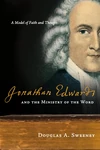
Jonathan Edwards and the Ministry of the Word
History & Biography
“Strangely, it has taken nearly three centuries for us to realize the obvious: that Jonathan Edwards had a lifelong love affair with the Bible. Doug Sweeney has been at the forefront of elucidating Edwards the exegete and the biblical foundations of his theology. In this new work, Sweeney shows the vital, reflective and informed connections between Edwards' Biblicism and his calling as a 'faithful minister of the Word.' Even more, Sweeney points out the extent to which Edwards' more formal theological formulations arose directly out of his local pastoral experience. This study will be a blessing to pastors, preachers and spiritual leaders, who can learn from Edwards' faith, thought and experience.”
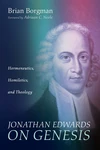
Biblical Studies & Commentaries
“This study adds to the growing body of literature that considers Edwards as an exegete, and helpfully focuses our attention on his exposition of texts from the book of Genesis, which, with its accounts of creation and the fall, was a major object of examination in the early modern period. Here, then, we see Edwards as a participant in a community of students of the Bible. But we also see his unique employment of that study, not only in his reflections on specific passages, but also for developing vital loci such as the imago Dei, or image of God. Even more, we are treated here to the connection between Edwards’s exposition and his preaching, showing the intimate relation these pursuits had for him and the way they informed each other.”
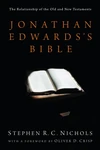
Theology
“This is the first full-length study of Edwards' virtually unknown but vitally important harmony project, revealing the depth and breadth of his biblicism, including his striking focus on prophecy, typology, and doctrine--an ambitious if unrealized goal here sensitively reconstructed and examined.”
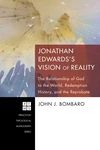
Jonathan Edwards’s Vision of Reality
Theology
“A bold and carefully crafted challenge to current interpretations of Edwards, this work seeks a synthesis of those who insist that Edwards was an orthodox thinker and those who portray him as a modern one. Beginning with Edwards' theocentricity, with its vision of the unity of all in and for God, it grapples with what is for modern minds the more distasteful aspects of his theology--his adherence to the teachings of reprobation and the eternal destruction of the damned.”
History & Biography
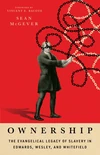
“Among the tragic inheritances of the English Dissenters in America are the oppressive inequities they built and perpetuated around race and ethnicity, the dispossession of Indigenous peoples, and the condoning and expansion of enslavement. If Whitefield, Wesley, and Edwards were not 'founding fathers' of the United States, they were spiritual founders of America's evangelical tradition. These figures' involvement in, support for, or silence about the sin of slavery need to be confronted andowned without attempts to make excuses for them. McGever's work is part of the critical work of reassessing claims about our origins as a 'Christian nation.'”
NOTE: Only includes books currently in our catalog; not necessarily a complete list.
See something wrong on this page? Report a problem