Kevin Hart
Biography
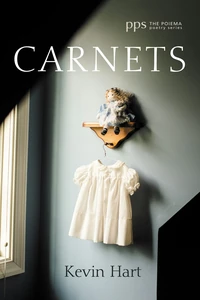
Kevin Hart wrote Carnets.
Bios generated by automated processes. · Report a problem
Theology
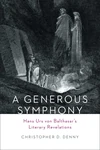
“What are Hans Urs von Balthasar’s virtues as a literary critic? Christopher Denny answers the question as clearly, roundly, and thoroughly as one could ever hope. He recognizes Balthasar’s most searching insights into European literature and its traditions, yet is also attentive to Balthasar’s blind spots and to new possibilities that emerge when we read Balthasar with care. A Generous Symphony is essential reading for anyone interested in the field of religion and literature.”
Philosophy
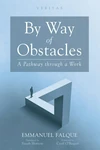
“Emmanuel Falque gives us in By Way of Obstacles a way of negotiating his prolific work. Here, we see Falque being formed as a thinker by Miguel de Unamuno on the one hand, and by Mikhail Bulgakov and Nikolai Berdyaev on the other. Always, too, we find him meditating on the meaning of experience, the exposure to peril that marks all genuine philosophical and theological thought.”
Philosophy
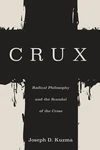
“CRUX is a perfect book: it allows the reader no exit. We are made to face the Cross in all its irruptive horror, without the slightest balm of liberal or conservative theology. It is terrifying, and the love it bespeaks is equally terrifying. Once we begin reading it, we are never allowed to turn our heads away.”
Philosophy
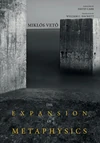
“From one of the foremost scholars of German Idealism in our day there comes a book that gives us his personal vision of metaphysics. Miklos Vető’s The Expansion of Metaphysics presents a Christian metaphysics, one broadened from classical and romantic models to take proper account of the image, the new, and the singular, and finished with a capacious and engaging understanding of essence. Among other things, this is a book of wisdom. No one who reads it can remain unchanged by its teachings.”
Theology
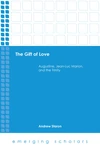
““The Gift of Love shows us, in three large steps, how to read Augustine's great book De Trinitate. After a thorough examination of the text, we pass to an equally detailed consideration of Jean-Luc Marion's phenomenology of givenness, and then, at last, Augustine's meaning becomes clearer than before. We cannot receive the triune God in terms of our concepts; rather, we must allow ourselves to receive Him as He gives himself, and in so doing be transformed in ways we cannot anticipate and control. A remarkable performance!"”
Arts & Literature
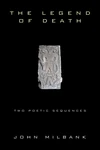
“That John Milbank is an original and powerful theologian is well known. That he is a poet of lyrical and epic sensitivities will now become well known. Here we find piercing lyrics such as 'Ode to Night,' 'Winter Interior,' and 'Cosmos.' Here we find American and British landscapes, alive with history and nature: squirrels in 'sculpted motion' and a day 'brushed with lemon.' And here too we find the ambitious long sequence, 'The Legend of Death,' which, with its concatenation of story, creed, and place, is itself a theological work, one that could only be written as a poem.”
Philosophy
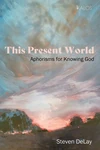
“In Greek the word ‘aphorism’ means ‘from the horizon’; it bespeaks a speech that limits and defines. If God is the horizon of all possible horizons, our speech about him will be aphoristic at times: pithy, sharp, pointed. Steven DeLay is drawn to this very speech, which directs us, as he says, ‘back to the reality of life.’ This Present World is a book about tasting evil, hearing God, and longing for the Kingdom.”
Theology
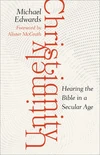
“Michael Edwards reminds us that it is dangerous to read the Bible. His piercingly beautiful essay restores the surprising strangeness of the text. I was moved and disturbed and felt often I was experiencing the full reality of Scripture for the first time. We desperately need people with Professor Edwards’s poetic and philosophical skill to awaken us from rationalist readings to experience the Person who haunts the text. The meditation on the nature of translation as a spiritual practice was particularly insightful, and the work itself owes some of its power to the fact that it is the work of an Englishman, writing in French, and then ably translated by John Marson Dunaway. I learned so much: about the Lord’s Prayer as poetry, the relation of faith to reality, and the potency of church architecture and ancient stones alike to prompt us to believe in the existence of a world ‘that responds to this aspiration and this reserve.’ Christians will find their faith made startlingly strange, while nonbelievers will be beguiled by this elegant, nonpietistic presentation of the compelling nature of faith.” —the Rev’d Canon Alison Grant Milbank, author of God and the Gothic and professor of theology and literature, University of Nottingham “Eureka! Michael Edwards’s pungent, wise, and simple book on how Christianity interrupts and reorders our lives is now available for English readers. If you want to know what the Bible says about knowing God, about faith, hope, and joy; if you want to read some of the best pages ever written on the Lord’s Prayer; if, in short, you want to know how to hear the Bible, read this book.”
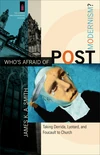
Who's Afraid of Postmodernism?
Theology
“Who's Afraid of Postmodernism? will be a boon for those working in and for the churches, especially in the world of evangelicalism. It will wean them from unexamined commitments to modernity and introduce them to a world of new ideas that are perhaps more useful to Christianity than they would have ever thought possible.”
Philosophy
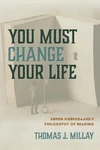
“Reading well was once regarded as the first step one takes in a process that leads to the contemplation of God. Augustine and Kierkegaard knew that, each in his own way. Thomas J. Millay judiciously and clearly points us back to them while letting us see the limits of their visions. We can only benefit by reading this elegant book.”
NOTE: Only includes books currently in our catalog; not necessarily a complete list.
Arts & Literature
See something wrong on this page? Report a problem