Kevin J. Vanhoozer
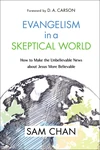
Evangelism in a Skeptical World
Evangelism & Missions
“Every Christian has an implicit theology: a set of beliefs about God and about what God was doing in Jesus Christ. To communicate this good news—the gospel—to others is every believer’s privilege and responsibility. Sam Chan’s book helpfully shows how to do this in a way that fits our twenty-first-century multicultural contexts.”
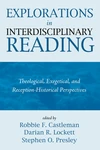
Explorations in Interdisciplinary Reading
Biblical Studies & Commentaries
“'Interdisciplinary reading' may not sound particularly exciting, but as a veteran of similar campaigns myself, I know how fraught they can often be. I therefore congratulate the editors for putting together this collection of essays that chart the way forward to the promised land of theological interpretation of the Bible. I was particularly struck by the exemplary interpretive practice of Irenaeus, and by the importance of contexts other than those of the original historical authors.”
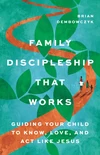
Family Discipleship That Works
Marriage, Family & Relationships
“C. S. Lewis once described the task of discipleship as making 'little Christs,' and he said the church exists for nothing less. So does the family, as this book by Brian Dembowczyk helpfully reminds us. Family Discipleship That Works encourages parents to help their children become actors in the Bible's story of redemption by learning to act in ways that embody the mind and heart of Jesus Christ. Home, neighborhood, school, and church here become the stage for living out the faith in embodied ways in everyday situations. Imitation of Christ, meet improvised discipleship!”
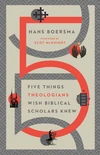
Five Things Theologians Wish Biblical Scholars Knew
Theology
“With apologies to Shakespeare, we have to admit the impediments to the marriage of true minds before we can reconcile them. Communication lies at the heart of healthy relationships, and Boersma does a good job of sharing what's on his theological mind to his biblical scholar counterpart. My prayer is that this exchange will lead not to another battle for the Bible (Why do the theological disciplines rage?) but, rather, to a closer working relationship between biblical scholars and theologians. For exegesis and theology are joined at the hip, and a dislocated hip only cripples the body of Christ.”
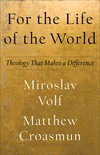
Theology
“Articulate[s] with breathtaking clarity the urgency and weight of genuine theology is the perfect riposte both to critics like Richard Dawkins who say that Christian theology is good for nothing and to theologians who are so focused on God that they overlook the world. Volf and Croasmun argue that theology makes a difference precisely because it is about human flourishing. This is a brave and bracing proposal to rethink theology's role and relevance by recovering its original concern with the fundamental question of human existence: How do we live a flourishing life with others in this world, the home of God?”
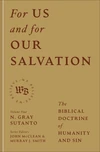
Theology
“The sum of wisdom, says Calvin, consists in the knowledge of God and the knowledge of ourselves, though today it is hard to say which is more contested. What is humanity, that God is mindful of us and gracious toward us? This volume offers a much-needed Reformed-catholic retrieval of a much-disputed doctrine. Like the doctrine of God, theological anthropology touches every part of Christian theology and is indispensable to any coherent theological system. In the absence of creedal formulations, Sutanto's concluding twelve theses are especially welcome.”
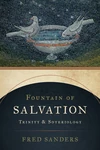
Theology
“To paraphrase Kant: the Trinity without salvation is empty, an intimidating abstraction; salvation without the Trinity is blind, an inexpressible experience. Sanders here strikes the perfect balance between the triune God of the gospel and the gospel of the triune God, offering a compelling argument for both their proper distinction and their proper relation. Thanks to this Fountain of Salvation, my cup of theology runneth over. I can't wait to assign this refreshing cup of cold water to my students.”
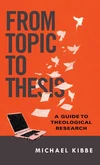
Discipleship & Christian Education
“Kibbe's From Topic to Thesis is a concise but complete course in the art and science of theological research and writing, complete with five sharply focused aims and objectives: find, gather, understand, enter into discussion, establish. Unlike assembly instructions for things like bookshelves, Kibbe's directions are easy to follow, providing everything one needs to know to write and sustain a theological thesis (except the theology). I said 'thesis' and not 'topic' because Kibbe encourages me not to confuse them (a topic is a subject area; a thesis is a specific claim about that area). This is only one of the many practical bits of wisdom readers will find herein.”
Theology
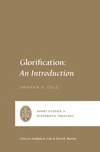
““Glorification is not merely one of many biblical themes. As Graham Cole compellingly argues, it is a one-word summary of the whole biblical story. The Creator God has in Christ begun—and is through the Spirit continuing—to complete a building project drawn up before the foundation of the world: the creation of a cosmos and a human community that would reflect God’s own glory. Why is there something rather than nothing? To communicate God’s greatness. This is the Christlike vocation in which the redeemed already participate and for which they continue to hope. Glorious!"”
Counseling, Grief & Mental Health
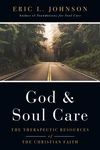
“Augustine's Soliloquies includes a dialogue between himself and his Reason, who asks him what he wants to know: '"I want to know God and the soul." "Nothing more?" "Nothing at all."' Eric Johnson wants to know how God heals the soul. This book is his answer. It's a work of radical Christian scholarship that lets theology into the driver's seat of psychology from the start. The result is a salutary theology that features the psychological health-giving implications of various Christian doctrines, united by a common trinitarian framework. This is the main course for which Johnson's Foundations for Soul Care was the appetizer. Christianity as theo-therapy: Augustine would no doubt be pleased.”
God Is Impassible and Impassioned
Theology
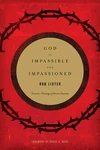
“Rob Lister boldly goes where few evangelicals have gone before in this very helpful study of how best to make sense of what Scripture says about God’s emotions. Lister does away with caricatures of the Patristic tradition as having sold out to Greek philosophy, surveys contemporary evangelical positions on divine impassibility, and provides a constructive hermeneutical method and theological model for doing justice both to the impassibilist tradition and to biblical language about divine emotions. As G. K. Chesterton observes, ‘an inch is everything when you’re balancing,’ and to Lister’s credit he completes his routine without falling off the balance beam that is systematic theology.”
Theology
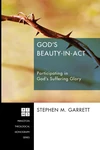
“Garrett's book is an altarpiece with two panels and a hinge, a fitting structure for a work that depicts the cross as the enactment of God's beauty. . . . This study of Trinitarian theology presents the Son as the expression of the Father's glory, and the Spirit its impression. God's Beauty-in-Act describes how Christ's cross transforms our imaginations, enabling the church to participate in the dramatic movement that defines the beat of God's own heart.”
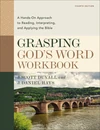
Grasping God's Word Workbook, Fourth Edition
Biblical Studies & Commentaries
“A wonderfully user-friendly book for serious readers who desire to journey into the world of the Bible.”
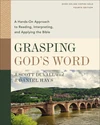
Grasping God's Word, Fourth Edition
Biblical Studies & Commentaries
“A wonderfully user-friendly book for serious readers who desire to journey into the world of the Bible.”
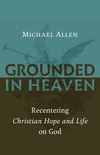
Theology
“Christians the world over pray as Jesus taught them, saying, ‘Thy will be done on earth as it is in heaven.’ Michael Allen digs up new treasures from this phrase, arguing that heavenly hope—for eternal life in fellowship with the triune God—ought to inform our earthly way of life. The four chapters in this book work variations on the theme that the norms for Christian behavior today (ethics) are related to our hope for tomorrow (eschatology). Contra Marx, it turns out that heaven is not the opiate of the people, lulling them into indifference to present injustices, but a potent stimulant to work for the good of others, denying oneself and, in the process, communicating God’s goodness and displaying God’s coming kingdom. Allen’s call to heavenly-mindedness on earth is a provocative corrective to the contemporary emphasis on earth-bound conceptions of heaven.”
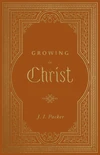
Christian Living
“J. I. Packer was first and foremost a catechist, someone who teaches Christians everything they need to know in order to grow in Christ and become good citizens of the gospel. Packer is here in fine form, ‘packing’ a lot into unpacking the three formulas that have historically been central in making disciples: the Apostles’ Creed, Lord’s Prayer, and Ten Commandments. As he shrewdly points out, no one is a Christian by instinct; one has to learn faith in Christ. It is only fitting, then, that he includes a study of baptism, the practice that goes hand in glove with becoming a Christian. For dying and rising with Christ, which baptism enacts, is the way we live and grow in Christ.”
Theology
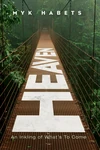
“Here is a book that enables parents to give biblical answers to the hardest questions children typically have about life after death. And as the best children’s stories are equally enjoyable for adults, so Myk Habets’s book on heaven is written for Christian believers who are willing to listen to the Bible like little children: with imagination, trust, and joy. To such young theologians belong the kingdom of heaven.”
Hermeneutics as Apprenticeship
Biblical Studies & Commentaries
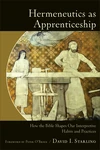
“Hermeneutics as Apprenticeship is a refreshing and important call to think of biblical interpretation not in terms of mastering the text but of learning the craft of interpretation from the biblical authors themselves. Such apprenticeship is ultimately less methodological mastery than spiritual formation. Starling focuses on the way the biblical authors themselves received earlier texts and composed Scripture by means of inner-biblical interpretation. In an age of pervasive interpretive pluralism, where no single interpretive practice stands out as authoritative, Starling's case for contemporary interpreters to become apprentices to the biblical authors who know how to read the Bible, and themselves, in the light of Christ is a suggestion as timely as it is welcome.”
Christian Living
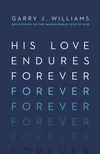
“The title says it all: fickle human love is not the measure of God’s love. Williams roots our understanding of the biblical claim that ‘God is love’ in the biblical descriptions of the triune God’s being perfect in love (in himself) and acting out of love (for us). In contrast to the many contemporary theologians who associate God’s love with his vulnerability, Williams rightly emphasizes the sovereignty of God’s love, even when that love involves something as apparently ‘weak’ as Jesus’s death on a cross. For anyone wanting to learn to ‘speak Christian,’ this book will help because it rightly parses the grammar of ‘God is love.’”
Theology
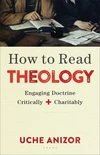
“I have long believed that the Golden Rule applies to how we read theology. To substantiate my belief, I can now point people to Uche Anizor's book. We live in a toxic age of ever-increasing polarization, where charitable discourse is too often the exception rather than the rule. Anizor calls us to read others as charitably as we can before criticizing them as fairly as we can. This is just the tonic we need. How to Read Theology does not simply prescribe but also casts a vision and offers concrete guidance for anyone who wants to become the kind of person who can read theology well. Anizor convincingly argues that the charitable reading is also the most intelligent reading. So take, read, and in reading learn how to read even better.”
NOTE: Only includes books currently in our catalog; not necessarily a complete list.
See something wrong on this page? Report a problem