Kevin J. Vanhoozer
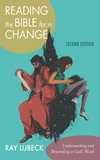
Reading the Bible for a Change, Second Edition
Biblical Studies & Commentaries
“Ray Lubeck is a wonderful guide for anyone who wants not simply to read the Bible but to understand and follow it: its words, its arguments, its overarching story line, and the one it is about: Jesus Christ. The whole book is preparation for the journey of Bible reading as discipleship, the life project of following Christ, of grafting the story of our life onto his. Take and read. Take and follow!”
Reading the Old Testament as Christian Scripture
Biblical Studies & Commentaries
“Whether the Old Testament was authoritative for Christians was the first controversial question that confronted the early church. If only they had had access to this wonderful resource! Sadly, the Old Testament remains a stumbling block for many. Gignilliat and Thomas make what could easily be a crooked way straight, deftly attending to, and balancing, each book’s literary integrity, place in the canon as a whole, and relation to Christ. Highly recommended!”
Apologetics
“This is the latest horse to be added to the small but important new stable of works on the importance of the imagination for Christian apologetics. Instead of trying to fight our secular age on its own turf, Bailey shakes its modernist foundations and challenges its underlying social imaginary. Reimagining Apologetics takes up the unfinished task of George MacDonald, Marilynne Robinson, and other culture creatives to draw upon the resources of the imagination in order to help doubters gain a sense of what authentic Christian faith looks and feels like when it is embodied both in fictional characters (literature) and local communities (church). This is a vision-casting book about apologetic vision casting.”
Remembrance, Communion, and Hope
Preaching & Worship
“Todd Billings here challenges churches in many confessional traditions to take up his Reformed catholic wager to theologize and see that the Lord’s Supper is good, that reflecting on and celebrating communion are ways of being drawn more deeply into reality of the gospel, namely, life in Christ. The contents page sets the table, the chapters serve up the main courses, and the conclusion brings this theological feast to a sumptuous end.”
Renewing Biblical Interpretation
Biblical Studies & Commentaries
“Church History is in large measure the history of biblical interpretation. And almost all contemporary cultural and intellectual movements eventually show up in biblical interpretation as well. Both modernity and modern biblical studies are showing signs of aging, and it is agreed that the critical approach that has dominated the discussion for the last two hundred or so years has obscured the Bible's role as the Church's authoritative Scripture. All the more reason to be grateful, then, that there is now an academic seminar devoted to the project of recovering a theological dimension to the interpretation of Scripture. This first volume holds out the hope that certain hermeneutical developments will lead not only to the renewal of biblical interpretation, but to the renewal of the Church itself.”
Theology
“The title says it all: representing Christ to one another in the church and others outside it—which is to say, participating in the royal priesthood of believers—is the great privilege and responsibility of every Christian. Anizor and Voss rightly call attention to this important theme, explaining its Christocentric-Trinitarian grounding, its biblical unfolding from Adam to Christ and its historical development, especially its recovery by Martin Luther at the time of the Reformation. They also call for a recovery of the royal priesthood in the contemporary church and the seven priestly practices that are vital to the church's ministry and mission. This is a fine example of theology retrieval for the sake of church renewal.”
ReSourcing Theological Anthropology
Theology
“Calvin famously claimed that there is no knowledge of self without knowledge of God. Barth amended the motion, insisting that there is no knowledge of God without knowledge of Christ. Cortez here extends the logic further, arguing that, theologically speaking, there is no knowledge of self apart from knowledge of the humanity of Christ. Christology does not simply supplement but constitutes the most important things we know about our own humanity. This is a bold claim, to be sure, yet Cortez clearly provides biblical grounding for it and anticipates the likely objections, thereby putting flesh on what many theologians thinly assume but never thickly describe—namely, how, why, and where Christology ought to inform anthropology.”
Theology
“Moffitt argues compellingly that while Jesus’s death on a cross completes the earthly work of salvation, his priestly work in heaven continues, and this too is part of his saving, and atoning, work. This collection of essays is not simply a rethinking but a Copernican Revolution in atonement theology, both because it concerns the movement of a celestial body (the risen and ascended Jesus Christ) and because it calls for a reversal of some traditional soteriological polarities.”
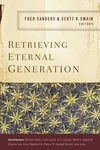
Theology
“This is the best single study examining one of the most important yet neglected aspects of the Christian doctrine of God, namely, the idea of the Son’s eternal begottenness, that singular procession of the Son that grounds the Son’s earthly mission (incarnation), and hence the ultimate basis (“before the foundation of the world”) of Christmas. The authors display the wisdom of retrieving theological light from the patristic past, light that is just as valuable and vital today as it was in early Christianity. Retrieving Eternal Generation is an encouraging display of how biblical studies, church history, and systematic theology can work together to the glory of God, recovering from the past and commending for today the confession of Jesus Christ as the “only begotten” Son of the Father, Light from Light, very God from very God.”
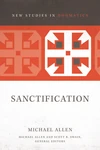
Theology
“John B. Webster,† Professor of Divinity, St Mary’s College, University of St Andrews, Scotland, UK”
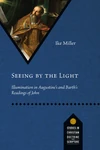
Theology
“One way to summarize the story of the Bible is to say, with Jesus (quoting Isaiah 9:2), 'The people who walked in darkness have seen a great light.' Today there is conflict not only between the kingdoms of light and darkness but also over rival sources of light. Moderns, who previously celebrated the light of reason, are now groping for ways to cope with post-Enlightenment, postmodern blues. Ike Miller has written a tract for the times that sets forth a Christian theological account of how the God who is light distributes his light to the world in Jesus Christ via the Spirit-illumined readings of the biblical texts that testify to him. This is a dogmatic account of the triune economy of illumination that, in shedding light on Augustine and Barth and other readers of Scripture, participates in the very phenomenon it describes. Take up and see!”
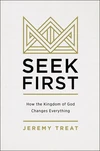
Christian Living
“In my day people searched for themselves by going to India, practicing Transcendental Meditation, or just going surfing. Today people surf the internet, search for themselves online, hire personal life coaches, and attend enrichment seminars in a never-ending quest for self-fulfillment. Jeremy Treat speaks a prophetic and urgent note to the generations: what matters most is seeking not yourself but the kingdom of God. Seek First is a clearly written and much-needed book that explains what Jesus meant by commanding his disciples to seek first the kingdom of God. Spoiler alert: it’s not about doing one more thing but about inhabiting the framework that makes sense of and rightly orients everything else. Treat offers the best kind of life coaching: pastoral, theological direction for experiencing the reign of Jesus Christ in every aspect of our lives. Read this book, seek the kingdom, and discover the meaning of life.”
Sit on Our Hands, or Stand on Our Feet?
“Systematic theologies offer little help in knowing what to do in the face of major catastrophes, or what to say when one comes face to face with anguished victims. The great merit of Abbott's book is that he thinks theologically about just such practical matters relating to distinctly Christian disaster management. He builds in interesting ways on my own approach to theology as theatrical direction for practical understanding: drama of doctrine, meet human trauma. Abbott shows in compelling ways how pastoral carers formed by the story of Christ can help heal the wounds to personal narratives shattered by disaster.”
Apologetics
“If human beings are not simply rational animals, as Aristotle thought, but storytelling animals, what are the implications for Christian apologetics? In our post-Christian society, the Bible is no longer considered “the greatest story ever told,” if it is told at all. Today, various stories pit one community’s identity and interests against others. Accordingly, those who wish to defend gospel truth must learn how to recover the plausibility, goodness, and beauty of the Bible’s account of what God is doing through Jesus Christ to make things right. Telling a Better Story proceeds with proper confidence to do just that. Josh Chatraw is faithfully attuned to the biblical text while listening with one ear cocked to the various cultural texts (including films) that compete for the attention and allegiance of our hearts and minds. The way forward, he rightly argues, is to show that the Christian story answers our burning questions and leads to flourishing communities. By telling a better story, and embodying it, we “take captive every thought to make it obedient to Christ.”
Biblical Studies & Commentaries
“This study of the book of Acts presents Luke not only as author but also as exemplary historian, storyteller and theologian. Luke's three-stranded cord of authorial discourse is on conspicuous display in his composition of Peter's, Stephen's, Philip's and Paul's speeches. Where other textbooks often focus on the narratives in Acts (e.g., Pentecost) and the practices of the early church, Padilla highlights the speeches in Acts and their continuing significance, going beyond the call of New Testament duty by dialoguing with postliberal theologians and asking whether they can do justice to the speeches in Acts and in particular their truth claims. The result is an introductory text that not only illumines the book of Acts, but also encourages Christians today to 'act out the acts of the apostles' (John Donne), to speak out their speech acts.”
Theology
“Christian theology is never more countercultural, or theological, than when it speaks of God’s attributes; they challenge humanity’s puny and often idolatrous ideas of divine perfection. Bray makes a concise yet important contribution to this project by distinguishing God’s essential and relational attributes, and by showing how this distinction preserves the integrity of our relationship to the one true God. Christians can train themselves for godliness (1 Tim. 4:7) and teach in ways that accord with godliness (1 Tim. 6:3) only if they have some idea of what God is like. Indeed, if Calvin is right, we can achieve knowledge of ourselves only by understanding what God is like, for humans are created in his image. For all these reasons, what could have been an abstract discussion of God’s being is anything but that. Highly recommended!”
World Religions
“I teach a whole course on what makes theology Augustinian because I believe Augustine has much to offer today's church. I therefore welcome and resonate with the thought experiment behind The Augustine Way--namely, to articulate what Augustine would likely say and do as a pastor and defender of the faith if he were alive today.”
Theology
“Who wouldn’t want Augustine as a local church pastor? Scintillating biblical commentary, penetrating cultural analysis, profound theological reflections—what’s not to like? Joey Sherrard, a pastor charged with discipling others, has made Augustine his mentor, and in this book he shares with us what he has learned about Augustine the person and his habitual pastoral practices. The topics Sherrard selects are apt, the pastoral practices he examines are edifying, and the wisdom he gleans from Augustine’s writings is richly instructive. He has clearly learned much from his mentor, and we (pastors or not) who take up and read Sherrard can learn from him too.”
Theology
Foreword
“This is the kind of theology that edifies the church. While many theoretical discussions about certain far-flung doctrines may be hard to relate to the everyday life of the Christian, this discussion of God's beauty is different. Sound doctrine is always salutary, but it does not always stir the heart. By way of contrast, this study of the beauty of the Lord aims not only to give the reader right understanding, but also right heartedness: a right perspective on and a passion for the fittingness of God's plan of redemption.”
NOTE: Only includes books currently in our catalog; not necessarily a complete list.
See something wrong on this page? Report a problem