Kutter Callaway
Biography
Kutter Callaway co-wrote Watching TV Religiously, Deep Focus, and The Aesthetics of Atheism with others.
Bios generated by automated processes. · Report a problem
Ethics, Culture & Social Issues
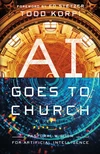
“Given the scale and pace at which AI technologies are advancing, it's impossible to know precisely what our techno-future holds. In AI Goes to Church, Todd Korpi wisely resists the urge to predict the future and instead focuses our attention on what people of faith can do in the present to leverage AI technologies for the sake of God's mission in the world. It's a faithful and generative approach that will be helpful for Christians of all stripes, regardless of how much or how little they know about the possibilities and pitfalls of AI. I highly recommend it.”
Ethics, Culture & Social Issues
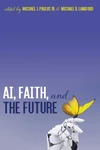
“In a context increasingly pervaded by artificial intelligences of various kinds, the contributors to AI, Faith, and the Future have given us something that is not usually found or even pursued in most discussions on AI: wisdom. The book provides a helpful model for how we might navigate the ever-emerging landscapes of contemporary life. In doing so, it allows us to imagine a technological future that is not only possible, but good.”
Theology
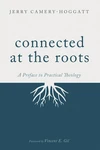
“There are a number of skills that contemporary Christians in the West need to develop, but I cannot think of a more urgent one than critical thought. As a particularly able teacher in this respect, Jerry Camery-Hoggatt’s Connected at the Roots provides Christians with a set of tools for understanding more deeply how our minds (and the minds of others) work. In doing so, he introduces the reader to a second, and perhaps even more important, skill for persons living in late modern society: empathy. I highly recommend it.”
Arts & Literature
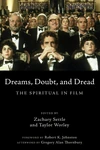
“Before it is anything else, film is an event. Thus, to truly understand the significance of the cinema in the contemporary world, we must attend more fully to the concrete, irreducibly embodied experience of filmgoing. By analyzing a wide array of films in explicitly phenomenological terms, the essays in this volume grant us unique insight into the powerful, enlightening and, indeed, even spiritual encounter that takes place within the cinematic event. I highly recommend it.”
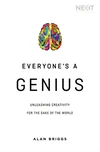
Church Leadership & Ministry
“For anyone interested in cultivating genius in themselves and others, this book is for you. I highly recommend it.”
Dr.
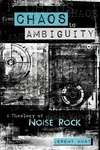
Arts & Literature
“From Chaos to Ambiguity is poetic, constructive, and, frequently, brilliant. Indeed, there exists nowhere in my knowledge such a comprehensive collection of interviews and first-hand accounts of noise rock, which opens all kinds of generative theological possibilities. This work stands out as a singular, substantive contribution to the theological discourse on popular music. I highly recommend it.”
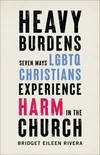
Church Leadership & Ministry
“Many Christians think the gospel is something ‘those other people over there’ need. In truth, it’s Christians who are most in need of hearing the good news of Jesus Christ, and this is especially the case in the church’s treatment of LGBTQ persons. Heavy Burdens is the gospel the church needs to hear. I don’t just recommend that you read it; I dare you to. I pray that we all have the courage to heed the wisdom of Rivera’s words.”
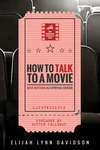
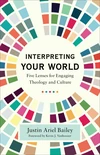
Theology
“Reading Interpreting Your World was a lot like listening to a new album from one of my favorite bands. As I moved through the chapters, I encountered the kind of theological music I would love to make myself, if only I had half the imagination or skill. Equal parts innovative, surprising, and enlightening, this book sings. It should be required reading for any person of faith who is asking how to engage culture in more robust and life-giving ways—which is to say, everyone should read this book. I cannot recommend it highly enough.”

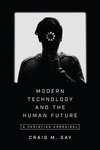
Modern Technology and the Human Future
Ethics, Culture & Social Issues
“Craig Gay is neither a luddite nor a technophile. He's something much different—a thoughtful, engaged theologian grappling with some of the core questions raised by modern technology and its apparent move toward disembodied life. Like Ellul and Postman before him, Gay notes many of the ills of technological society, but he moves beyond these seminal voices by offering a constructive rather than merely descriptive account. Even for someone like myself who tends to be a bit more optimistic regarding the theological potential of modern technology, Gay offers a helpful corrective that is as incarnational as it is hopeful. I recommend it.”
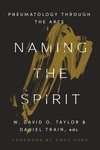
Theology
“There are books about the Spirit. And then there are books animated by the Spirit. In Naming the Spirit, W. David O. Taylor and Daniel Train have brought together a collection of authors and artists who are not simply talking about the third person of the Trinity but are creating theological works that are drenched in the presence and activity of the rûaḥ ʾĕlōhîm—the life-giving breath of God. I cannot recommend it highly enough.”
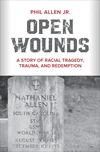
Ethics, Culture & Social Issues
“It is only in the most technical sense of the word that Phil Allen Jr. was once a doctoral student of mine. In actual fact, in numerous ways that extend far beyond the classroom, I am his student. It is an honor to learn from him. Full Stop. But in times like this, his wisdom has never been more necessary and urgent, for it quite literally concerns the difference between life and death. I can't force you to sit at Phil's feet as he teaches us. But I invite you to do so. Speaking from personal experience, I promise you that, if you do, you will never be the same.”
Arts & Literature
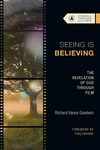
“Protestant theology has never known quite what to do with visual images of any kind, much less moving images. In Seeing Is Believing, Richard Goodwin short-circuits the ambivalence toward the visual that has long defined (Protestant) theological engagements with film. In doing so, he doesn't merely invite us to clarify our vision with respect to the theological significance of film. Rather, as if we were Neo emerging from the Matrix, Goodwin asks us to consider what might transpire if we actually used our eyes, perhaps for the very first time.”
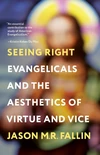
“Jason Fallin provides both a helpful diagnosis and a possible prescription for the root cause of this seeming contradiction. For good and for ill, Evangelicals understand and interpret their world not in terms of ethical philosophy, or politics, or even theology, but primarily on aesthetic grounds. Fallin rightly points out that, to overlook the aesthetic dimensions of the Evangelical vision is not only to mis-diagnose its problematic tendencies and entertain unworkable alternatives. It is also to fail, ourselves, to see the world rightly.”
NOTE: Only includes books currently in our catalog; not necessarily a complete list.
Marriage, Family & Relationships
See something wrong on this page? Report a problem