Laura Nasrallah
Biography
Laura Nasrallah co-edited Prejudice and Christian Beginnings with Elisabeth Schüssler Fiorenza, and contributed to Paul within Paganism.
Bios generated by automated processes. · Report a problem

Biblical Studies & Commentaries
“A Lens of Love: Reading the Bible in Its World for Our World excels in bringing together intellectual engagement and a passionate love of God and Scripture. Clearly and beautifully written, it sets a model for how to do biblical theology right—how to come together and reason, how to live faithfully toward justice. It shows how to bring practical theology and social ethics together and inspires its readers to live out a just and faithful Christian identity.”
Biblical Studies & Commentaries
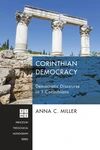
“Miller's book shows that discourses about democratic assemblies (ekklesiai) in Greek cities were still vibrant in the first century CE, despite the hegemony and bureaucratic structures of the Roman Empire, and it uses this insight to help us to understand the power of the term ekklesia which the earliest communities of Christians adopted for themselves, as is reflected in Paul's letters. The book's implications extend far past the field of New Testament Studies, into Roman history and women's studies, and her work provides food for thought as we consider present-day debates about democracy and the public square, as well.”
Biblical Studies & Commentaries
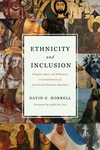
“This book treats some of the most important issues of our time, in New Testament studies and beyond: race, ethnicity, and Christian claims to universality and superiority. Participating in an important discussion spearheaded by womanist and African American hermeneutics, Horrell’s book magisterially teaches about the intricacies of ancient texts and the problems of the history of scholarship. It details ancient discourses of ancestry, marriage, way of life, homeland, peoplehood, and conversion. Ethnicity and Inclusion concludes with a call for the field to investigate its own provincialism, and the unnamed whiteness of much of New Testament scholarship.”
Insights from African American Interpretation
Biblical Studies & Commentaries
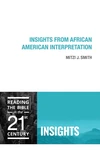
“This book is a rich introduction to the history of the use of the Bible by and in relation to those of African descent, an excellent introduction to African American biblical hermeneutics, and an up to date survey of womanist interpretation. In lucid prose, it helps us to understand the Bible—with all its visionary and all its problematic texts—in a new light. You’ll know more about ancient history and about the importance of the Bible for Black Lives Matter after reading this book.”
World Religions
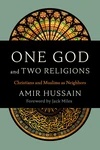
“Societies, University of Notre Dame, and author of What Is a Madrasa? With fragments of memoir, content that introduces the reader to Islam, and commentary on recent events in politics and religion—from 9/11, to the “Muslim ban,” to visual representations of the Prophet—this clearly written book gently works to clarify what Islam is and to create bridges between Muslims and Christians, particularly in a US context. You’ll learn about American Muslims and Muslim cool, about Islam’s origins and its five pillars, about jihad and the veil and Muslim hip-hop. You will meet boxer Muhammad Ali in a new light. You will remember that enslaved Africans came to North America carrying with them knowledge of the Qur’an. You will understand better that Islam is internally diverse, both in the US and more broadly, as the author guides you to understand everything from Sunnis to the Nation of Islam. Hussain’s own experiences as a Muslim immigrant to Canada, a transplant to the United States, and a teacher at a Roman Catholic university are foundations for some of the book’s reflections and reveal him as a kind, thoughtful, clear guide and teacher.”
Women's Socioeconomic Status and Religious Leadership in Asia Minor
Biblical Studies & Commentaries
“Using literary and epigraphic sources, Bain's book helps us to understand the role of women in religion, closely investigating gender, economics, and status in an area of the ancient Mediterranean world in which many of the earliest Christian texts were produced. Bain’s analysis covers not only wealthy patronesses; she also delves into the lives of slave women. By bringing to the fore the economic issues in the study of ancient women and religion, Bain contributes to conversations in multiple fields: New Testament and early Christian studies, of course, but also Roman history and women’s studies.”
NOTE: Only includes books currently in our catalog; not necessarily a complete list.
See something wrong on this page? Report a problem