Loren Wilkinson
Biography
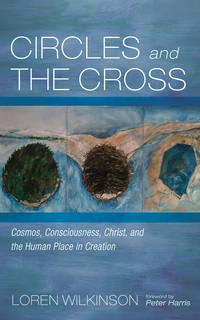
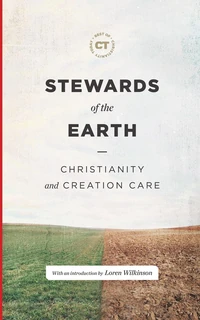
Loren Wilkinson is professor emeritus of philosophy and interdisciplinary studies at Regent College in Vancouver, BC. Wilkinson wrote Circles and the Cross (2023), edited Earthkeeping in the Nineties (2003), and wrote the introduction to Stewards of the Earth (2022).
Bios generated by automated processes. · Report a problem
Ethics, Culture & Social Issues
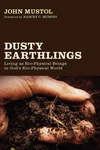
“Mustol has unfolded, with a physician's insight, the richness--and crucial import for our time--of the biblical teaching that we share our dusty, creaturely status with the whole earth. At the same time, he expounds brilliantly on what it means to be made in the image of God. I will not teach another class on earthkeeping without requiring or recommending this splendid book. It is thorough, careful, brilliantly researched, readable, and very wise.”
Theology
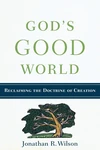
“God’s Good World is a very important book. By pointing out how a robust doctrine of creation has been missing—from the church, from education, and from society at large—Jonathan Wilson shows why evangelical engagement with our world is so feeble. He then lays the foundation for a much richer life through showing the necessary connections between redemption and creation. Most important, he shows how we can build on that trinitarian foundation—in our attitudes towards the body, ‘consuming,’ the internet, business, and much more—all in the light of transformed worship. All Christians should read this book.”
Modern Technology and the Human Future
Ethics, Culture & Social Issues
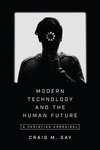
“This superb book is crucially important in four ways. First, it provides a lucid and chilling overview of what we all know in our bones but find it hard to talk about coherently: the more that technology—especially automation, our devices, and the internet—makes our life easier, the less that increasingly disembodied life seems to flourish. Second, it shows how, through a series of well-meaning mistakes (the ways we have shaped our science, our religion, and our commerce, and then let them reshape us), we got ourselves into a fix. Third and most important, it outlines how a forgetfulness of the beliefs that shaped our culture—creation, incarnation, redemption—have led to our current problems with disembodiment and psychic homelessness. As Gay puts it, 'When the trajectory of modern technological development is away from ordinary embodied existence it is at odds with God's purposes for his world.' But fourth—and here this book departs from most other laments about modern technology—the book ends with a robust and detailed survey of some of the ways (from how we eat to what and how we worship) that we can re-member what our skewed technologies have dis-membered. Everybody who wants to recover their full humanity should read this book.”
Science & Faith
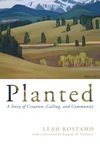
“The righteous person, says the psalmist, is like a tree planted by the waters. In this delightful book Leah Kostamo describes what it feels like to be (sometimes reluctantly) one of those trees, planted by the waters of God's good creation. With humor, irony, wisdom, and a refreshingly iconoclastic voice, Planted blooms and flourishes--with fruit every thoughtful Christian needs to enjoy.”
Christian Living
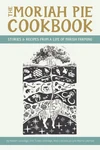
“All cookbooks are ‘religious,’ but they usually hide that fact. Re-lig-ion is related to lig-ament, what holds things together. So we all have religion, like we all have ligaments, though we usually don’t think about them. The Moriah Pie Cookbook is the story—made up of many stories—of the way food—growing it, cooking it, eating it, sharing it—holds us together. It shows us the links—between trees, bees, soil, weather, meals, neighbors, and marriage—through the stories of one unlikely restaurant in one small community in Norwood, Ohio. The stories range from funny to sad. But by the end of the book (as Erin’s great picture on the cover shows) we know that what holds us together, in food, faith and friendship, is costly Love—which ‘bids us welcome.’”
Arts & Literature
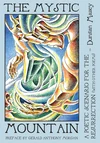
“Dunstan Massey’s illustrated poem, The Mystic Mountain, is a perfect wedding of text and image by one artist that has not been seen since at least the work of William Blake. By making the resurrection visible he has made it believable. Even more, Dunstan’s text speaks to our deepest longings—not only to escape the conquest by death, but also to be fully known and loved—there is no work in poetry, art, or Christian spirituality which gives such flesh to the hope of Resurrection. A magnificent achievement!”
Ethics, Culture & Social Issues
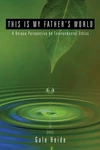
“Gale Heide demonstrates, with remarkable clarity, that the care and love of creation are a central part of what it means to be a new creature in Christ. But this book is no doctrinaire tract for a barely baptized 'Christian' environmentalism. Heide shows with gentle insight the weakness in the foundation of all mere 'environmentalisms'. . . . God's creation--sometimes splendid, sometimes gritty--breaks through often in the book. Like much of the Bible, this book is written by one who knows intimately the behavior of animals, the glory of night skies, and the smell of the wind across open range. It is earthy, accessible, and wise.”
NOTE: Only includes books currently in our catalog; not necessarily a complete list.
Science & Faith
See something wrong on this page? Report a problem